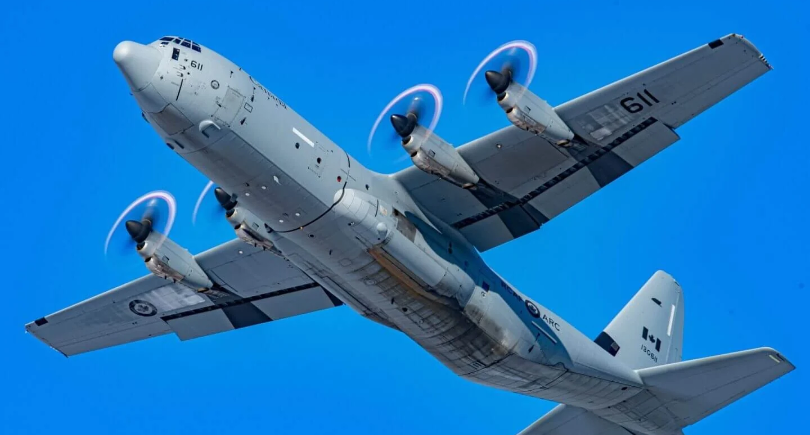

The investment will support the development of iMAPLE, an AI-driven competency management platform designed to improve maintenance efficiency, workforce readiness and sustainment capabilities for the Royal Canadian Air Force’s CC-130J Hercules fleet.
Lockheed Martin Canada is investing $10 million in Canadian-developed artificial intelligence technology to modernise maintenance and workforce management for the Royal Canadian Air Force (RCAF)’s CC-130J Hercules fleet. The initiative aims to strengthen aircraft sustainment, improve maintenance planning and enhance operational readiness through AI-enabled decision-making.
The investment will support the development of the Intelligent Maintenance, Asset, Personnel and Learning Environment (iMAPLE), an AI-powered competency management platform being developed through a collaboration between Lockheed Martin Canada, the RCAF and Canadian technology company Contextere.
Contextere specialises in AI-powered workforce solutions that turn institutional knowledge into actionable insights for personnel who maintain, operate, and sustain mission-critical assets. Through iMAPLE, the partners aim to improve how workforce competencies support maintenance tasks, helping ensure personnel have the skills and knowledge to perform their assigned responsibilities.
The platform is expected to support data-driven sustainment decisions, improve maintenance efficiency, and contribute to greater aircraft availability. By integrating workforce expertise with AI capabilities, the initiative also seeks to address the long-term technical and personnel requirements associated with maintaining military aircraft.
AI-driven sustainment and workforce readiness
Beyond its financial contribution, Lockheed Martin will serve as a consultative artificial intelligence and machine learning partner throughout the project. Its responsibilities will include providing validated machine-learning methodologies, conducting quality reviews, transferring knowledge and advising on the design, testing and optimisation of AI components.
The collaboration brings together defence manufacturing, Canada’s domestic AI sector and the RCAF to develop technology tailored to military sustainment requirements. It also creates opportunities to expand the platform’s applications across other defence and aerospace programmes, with potential for future export opportunities.
The initiative aligns with Canada’s Defence Industrial Strategy and its National Artificial Intelligence Strategy, AI for All. By developing and applying Canadian intellectual property, the programme aims to strengthen domestic AI capabilities and support the country’s long-term aerospace sustainment requirements.
Stephen Fuhr, Canada’s Secretary of State for Defence Procurement, said the investment demonstrates the economic and industrial benefits of Canada’s Industrial and Technological Benefits Policy. He noted that the partnership supports defence capability development, creates opportunities for Canadian workers and contributes to the growth of a sovereign AI ecosystem with export potential.
Gabriel Batstone, CEO and co-founder of Contextere, said the initiative reflects a shared commitment to connecting people, knowledge and technology in the future of sustainment. He added that iMAPLE builds on Canadian intellectual property while supporting the armed forces, strengthening the domestic industrial base and creating opportunities for skilled trades.
Kristen Leroux, vice-president and regional executive for Canada and Latin America at Lockheed Martin, highlighted the collaboration’s role in demonstrating how Canadian innovation can contribute to a sovereign defence and dual-use technology ecosystem.
Supporting the CC-130J Hercules fleet
The RCAF has relied on the Hercules family of aircraft for decades, with the CC-130J Super Hercules supporting its military transport and operational requirements. Sustaining the fleet requires effective maintenance planning, appropriately trained personnel and access to technical knowledge throughout the aircraft lifecycle.
Lockheed Martin’s investment in iMAPLE forms part of its economic impact commitments associated with the CC-130J In-Service Support programme. Canada acquired 17 CC-130J Super Hercules aircraft, and the company reports that the purchase and associated support activities have generated more than $4.7 billion in economic benefits for Canada under the Industrial and Technological Benefits Policy.
The investment also builds on Lockheed Martin Canada’s broader economic contribution. Over the past five years, the company has contributed $3.6 billion to Canada’s gross domestic product and supported an average of 4,561 jobs annually.
As defence operators seek to improve fleet availability while managing increasingly complex maintenance and workforce requirements, AI-enabled sustainment platforms such as iMAPLE could offer a pathway to more efficient maintenance processes and skills management. The initiative also highlights the growing role of domestic AI development in strengthening defence readiness and creating technologies with potential applications beyond Canada’s military aviation sector.