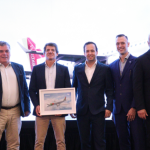
India’s aviation sector is scaling at a pace that is beginning to test the limits of its supporting ecosystem, particularly in terms of skilled manpower. Against this backdrop, the recent Memorandum of Understanding (MoU) between the Directorate General of Civil Aviation and Gati Shakti Vishwavidyalaya signals a timely and strategic intervention aimed at addressing one of the industry’s most pressing structural gaps.
The agreement, signed by DGCA Director General Faiz Ahmed Kidwai and GSV Vice Chancellor Prof Manoj Choudhury, focuses on developing a skilled talent pipeline across key domains such as aviation engineering and aviation management. The signing ceremony was attended by Civil Aviation Minister K. Rammohan Naidu and Railway Minister Ashwini Vaishnaw, underscoring the government’s cross-sectoral commitment to workforce development.
While India continues to position itself as one of the fastest-growing aviation markets globally with large-scale aircraft orders, expanding route networks, and increasing passenger traffic, the availability of skilled manpower is emerging as a critical constraint.
The challenge is no longer limited to pilot shortages or frontline operational roles. It extends deep into technical domains, particularly aircraft MRO where the demand for licensed engineers, certified technicians, and specialised support personnel is rising sharply.
India’s civil aviation minister Ram Mohan Naidu, speaking at the event, highlighted that workforce readiness will be central to sustaining the sector’s long-term growth. While infrastructure and policy reforms have laid the foundation, the next phase of growth will depend on the industry’s ability to build and retain a highly skilled workforce.
The implications of the talent gap are most visible in the MRO segment. India has witnessed a steady expansion in its MRO ecosystem, with the number of organisations increasing from around 160 to over 240 in recent years. This growth has been driven by policy support, cost competitiveness, and a push towards localisation.
However, capacity expansion without parallel investment in human capital risks creating operational bottlenecks.
Also Read: Swiss International Air Lines appoints Thoralf Wagner as head of technical division
MRO operations are inherently skill-intensive, requiring precision, regulatory compliance, and continuous upskilling in line with evolving aircraft technologies. A shortage of trained personnel can directly impact turnaround times, increase dependence on foreign MRO facilities, and limit India’s ability to fully capitalise on its domestic market potential.
In this context, the DGCA–GSV partnership is expected to play a critical role in aligning academic training with industry requirements. By focusing on industry-ready skill development, the initiative aims to reduce the gap between theoretical education and practical application.
The MoU also reflects a broader policy direction, moving towards the development of a fully integrated aviation ecosystem in India, encompassing manufacturing, maintenance, and training.
The minister also emphasised that building an aviation manufacturing ecosystem remains a key priority, and that workforce development is an essential enabler in this journey. The government’s efforts in recent years, particularly in strengthening the MRO sector, are now being complemented by initiatives aimed at creating a sustainable talent pipeline.
Adding to this, Minister Vaishnaw highlighted that GSV has already established collaborations with over 60 industry partners, positioning itself as a hub for industry-aligned education. He further proposed the establishment of a Centre of Excellence in precision manufacturing engineering at the university, which could support both aviation and broader industrial requirements under the Viksit Bharat vision.
For the aviation and MRO sectors, the significance of this MoU lies not just in training numbers, but in its strategic intent. India’s ambition to become a global aviation and MRO hub will depend on its ability to transition from ad-hoc workforce development to a structured, long-term talent strategy. This includes not only increasing the number of trained professionals but also ensuring regulatory certification, specialisation in next-generation aircraft platforms, and alignment with global quality standards.
As fleet sizes grow and aircraft utilisation intensifies, the pressure on maintenance systems will only increase. In such a scenario, workforce capability will become a key differentiator, impacting operational efficiency, safety outcomes, and global competitiveness.
The DGCA–GSV MoU represents an important step in recognising and addressing the human capital dimension of aviation growth. While challenges remain in scaling and retaining talent, such collaborations provide a framework for bridging the gap between policy intent and industry execution.
For India’s MRO sector infrastructure and investment must now be matched by an equally strong focus on people because in the next phase of aviation growth, it is capability over capacity that will define success.