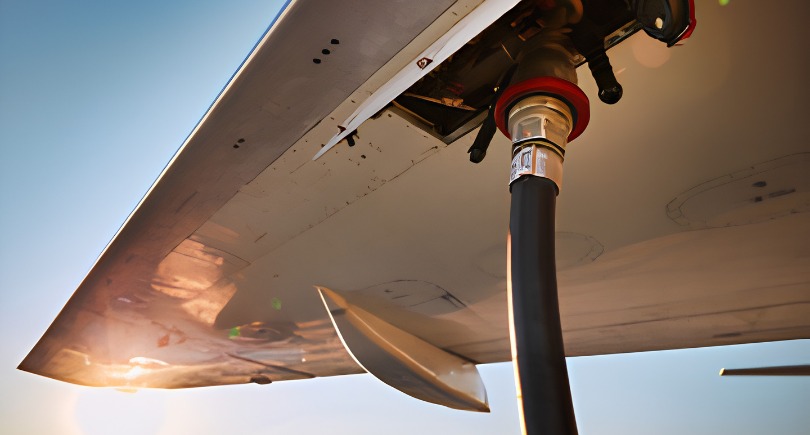

The UK government has announced a new £219 million Low Carbon Fuels Fund (LCFF) to boost domestic sustainable aviation fuel (SAF) production, support economic growth, and create thousands of skilled jobs across the country. The initiative will open for applications in mid-July, offering £93 million over the next two years to help innovative companies develop low-carbon fuel projects that are closest to commercial production. The funding forms part of the government’s broader strategy to establish the UK as a global leader in sustainable aviation fuel and other low-carbon energy technologies.
New funding builds on previous SAF investments
The latest funding package builds upon the £198 million Advanced Fuels Fund (AFF), which has supported cleaner aviation technologies since 2022. According to government estimates, domestic low-carbon fuel production could contribute up to £5 billion to the UK economy by 2050 while strengthening the nation’s position in the rapidly growing global SAF market.
Aviation, Maritime and Decarbonisation Minister Keir Mather described the investment as the next stage in Britain’s green aviation transformation. He emphasized that the funding will encourage innovation, create high-skilled jobs, and help the UK lead the development of future aviation fuels while supporting economic growth and cleaner travel.
SAF industry expected to drive jobs and net-zero aviation goals
Sustainable Aviation Fuel is considered one of the aviation sector’s most important decarbonisation technologies. Produced from sustainable feedstocks and waste materials, SAF can reduce lifecycle greenhouse gas emissions by an average of 70% compared to conventional jet fuel.
The government believes that expanding domestic SAF production will attract private investment into new production facilities, create long-term employment opportunities, and support the aviation industry’s net-zero commitments.
The growing sector is expected to generate opportunities across engineering, manufacturing, construction, and scientific research, helping to build a highly skilled workforce for the future.
Government launches review of SAF mandate
Alongside the funding announcement, the UK government has launched a Call for Evidence on the Sustainable Aviation Fuel Mandate. The mandate requires an increasing share of jet fuel supplied in the UK to be sustainable, beginning at 2% in 2025, increasing to 10% by 2030 and reaching 22% by 2040.
The review will assess future global SAF supply projections and examine how different sustainable fuel pathways can support the achievement of these targets. Officials stressed that overall mandate targets are not being considered for reduction, with discussions focused on strengthening and adapting the framework as the market evolves.
Industry welcomes government support
Industry leaders welcomed the funding announcement as a positive step toward scaling domestic SAF production.
Keith Packer, MD of British Sugar, highlighted the company’s British BioJet project at its Wissington site, which is exploring the development of a demonstration plant capable of producing 1,500 tonnes of SAF using ethanol-to-jet technology derived from existing waste feedstocks.
Jennifer Holmgren, chief executive of LanzaTech, said the funding reinforces the UK’s leadership in sustainable aviation fuel production. She noted that LanzaTech is developing a SAF facility in Humberside that could eventually supply approximately 1% of the UK’s total jet fuel demand while creating jobs and supporting regional economic growth.