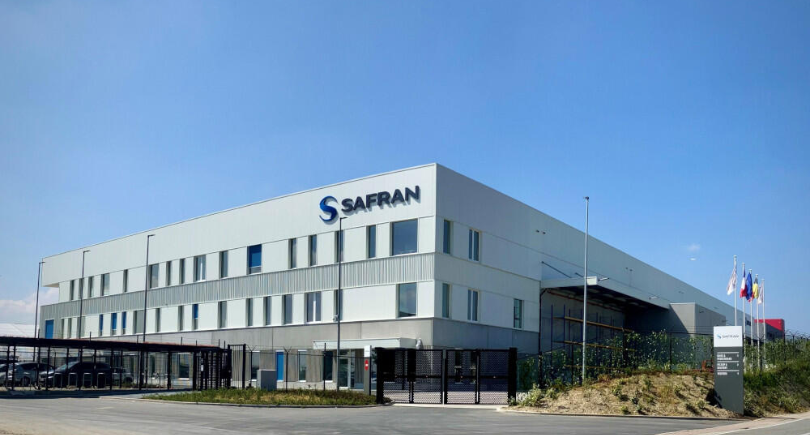

In a strategic move to strengthen its global supply chain and support rising demand for aircraft engines, Safran Aero Boosters is set to open a new subsidiary, Safran Booster Components, in Welkenraedt, Wallonia, Belgium.
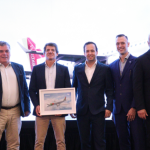
This was announced by François Lepot, CEO, in the presence of regional government representatives, marking a significant step in Safran’s long-term industrial expansion strategy while also contributing to the reindustrialisation of the Wallonia region.
The new facility will focus on the manufacturing of aircraft engine compressor components, critical elements that directly influence engine efficiency, performance, and reliability. The plant represents an investment of approximately €125 million and is being developed through a collaborative partnership model. Safran Aero Boosters will hold a majority stake of 56 per cent, alongside Wallonie Entreprendre (33 per cent) and the Belgian Federal Holding and Investment Company (SFPIM), which will hold 11 per cent.
The investment comes at a time when global demand for commercial aircraft engines is accelerating sharply. Production rates are set to increase across several major programmes, including the LEAP engines powering the Airbus A320neo, Boeing 737 MAX, and COMAC C919, as well as the GEnx engines for the Boeing 787 and the GE9X engines for the Boeing 777X.
Also Read- Atlas Air reinforces long-term aftermarket engagement with 40 engines from Rolls-Royce
To support this ramp-up, Safran is expanding its industrial capacity and, importantly, duplicating production sources. This approach is aimed at reducing supply chain risks and ensuring continuity of supply for key customers such as Safran Aircraft Engines and GE Aerospace.
From an MRO standpoint, this expansion is particularly relevant. Increased production capacity for engine components not only supports OEM manufacturing but also strengthens the availability of parts for maintenance, repair, and overhaul activities over the lifecycle of these engines. Compressor components, in particular, are subject to high operational stress and require precision manufacturing to meet stringent performance and durability standards.
The Welkenraedt facility will become an integral part of Safran Aero Boosters’ broader industrial network in Belgium, complementing existing sites in Milmort, Liers, and Marchin. This distributed manufacturing model enhances resilience by spreading production across multiple locations, reducing the risk of disruptions.
Such an approach aligns with broader industry trends, where OEMs are increasingly focused on building robust, geographically diversified supply chains capable of withstanding geopolitical uncertainties and demand fluctuations.
The new plant will be housed in an existing 18,000 square metre industrial building previously occupied by Copeland, which is currently phasing out operations at the site. By repurposing existing infrastructure, Safran is minimising additional land use, an important consideration in today’s sustainability-driven industrial landscape.
The facility will incorporate advanced industrial technologies, including automation, digitalisation, and robotics, to meet global aerospace manufacturing standards. These capabilities are expected to enhance production efficiency, quality control, and traceability, factors that are increasingly critical in both manufacturing and MRO environments.
The project is also expected to generate around 100 jobs, contributing to regional economic development while supporting the aviation sector’s need for skilled talent.
The Welkenraedt site is expected to become operational by 2028 and will play a key role in enabling Safran to meet future demand across its engine programmes. By investing in additional capacity and strengthening supplier ecosystems, the company is positioning itself to support both production ramp-ups and long-term aftermarket requirements.
As engine programmes scale up globally, ensuring a steady and reliable flow of high-quality components will be essential not only for OEMs but also for the broader MRO ecosystem. Safran’s latest investment underscores the growing importance of aligning manufacturing expansion with lifecycle support capabilities.
With this development, Safran Aero Boosters reinforces its leadership in compressor technology while advancing a supply chain strategy that prioritises resilience, sustainability, and long-term growth.