
Leasing Strategies
As regional aviation enters a new phase of growth, aircraft lessors are taking on an increasingly strategic role in supporting fleet availability, managing technical assets and helping airlines navigate a complex aftermarket environment. For TrueNoord, which has grown its portfolio to more than 100 aircraft, the next phase is centred on combining fleet expansion with access to newer-generation aircraft, technical expertise and flexible asset solutions.
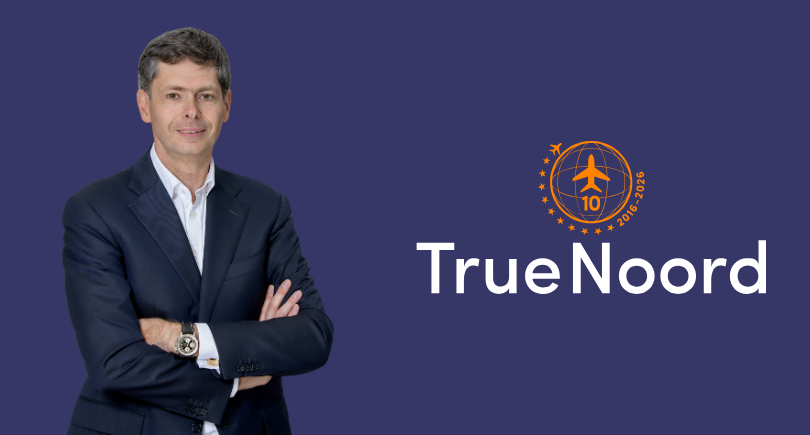
The lessor’s recent order for 20 Embraer E2-195 aircraft marks an important step in that strategy, while its experience with engine availability, supply-chain disruption and lifecycle asset management highlights how the role of lessors is evolving beyond simply providing aircraft financing. In this exclusive interview with MRO Business Today, TrueNoord CEO Anne-Bart Tieleman discusses their growth journey, its latest-generation aircraft strategy, the growing importance of engine and component availability, supply-chain challenges, digitalisation, sustainability and the future of the regional aircraft leasing market.
Q. TrueNoord has grown from a niche regional aircraft lessor to a global platform with more than 100 aircraft over the past decade. Looking back, what have been the defining milestones that shaped this journey, and what lessons have emerged from navigating changing market cycles?
A. Our growth has been facilitated by two things, one the support of our shareholders, and secondly the commitment of a knowledgeable team.
The opportunity to grow as a professional lessor in the regional aircraft market was very much facilitated by our shareholders. In particular, they supported our vision regarding the expansion of the aircraft leasing market. It was very important for us to know that if we needed further capital to grow our portfolio of aircraft, our shareholders were there to fund that growth.
As we increased the TrueNoord aircraft portfolio, we also needed to gradually add people to our team. We have been lucky to find experienced and professional people wanting to join TrueNoord and wholeheartedly support the business from the day they joined the Company. Maintaining a strong business culture based on trust, humility, respect and teamwork has helped us stay focused and successful as markets have adapted, and global economies have fluctuated with political change. We do conduct our business in a very direct manner, but always with an open mind. We make sure that what we offer our regional airline customers makes sense and helps them to be successful in their business operations.
Q. Your recent direct order for 20 Embraer E2-195 aircraft marks a significant milestone for TrueNoord. What strategic factors influenced this investment, and how do you see next-generation regional aircraft transforming airline fleet economics and operational efficiency?
A. When we found ourselves with a portfolio of more than 100 aircraft, a stable revenue stream of lease income, and credit ratings from Fitch and S&P, we believed we were ready to take the next step. This culminated in TrueNoord placing a significant order for our own latest technology aircraft with one of the leading aircraft manufacturers in our market segment of 50-150 seat aircraft. After intensive research we decided to place an order with Embraer for the E2-195 aircraft type.
As a lessor it is important for your existing clients and potential customers to offer the best service that we can. And we are of the opinion that part of our relevance finds its strength in having the ability to deliver aircraft the moment our customers need them. So, by having an order stream of factory new, latest technology aircraft, we certainly expect to play a role in supporting these operators with their fleet planning.
Another factor to consider is that by adding factory new aircraft to our fleet of aircraft under lease we keep a relevant and flexible fleet for customers in the future. We see that as leases come to the end of their term relatively young aircraft are being returned. These aircraft of between 7 to 12 years of age are mostly still relevant for airlines that are looking for new aircraft to grow their fleet. However, not being able to add young aircraft to a lease portfolio could, over time, have a negative effect if a lessor is only able to offer older aircraft for lease.
Q. Aircraft leasing is increasingly extending beyond financing to include technical asset management and lifecycle support. How is TrueNoord working with airlines, OEMs and MRO providers to maximise aircraft availability, residual value and long-term fleet performance?
A. This is something which we keep top of mind as we see that in certain situations clients are asking for more support than just the provision of an aircraft on lease. It might be that this is the result of less-certain operational performance of new technology aircraft.
For example, the introduction of new technology engines has become an issue over the last decade. At TrueNoord, we believe it is important to understand that these engines are state-of-the-art and realise just how difficult it is to get these super-performing engines manufactured by the hundreds. However, we do see improved performance, which clearly shows that the engine manufacturers are getting to grips with this situation.
Q. As regional fleets become more technologically advanced, predictive maintenance, digital asset management and data-driven decision-making are becoming increasingly important. How do you see digitalisation changing the relationship between lessors, operators and the aftermarket over the next decade?
A. That is a good question and a development we keep a sharp eye on. Airines in general are very well equipped to monitor and manage the technical status of their own fleet achieving high levels of professionalism. By definition, a lessor is certainly not able to do this alone.
However, lessors do have the ability to support airlines in maintaining their operation with spare parts that are very capital intensive, particularly engines. This is undeniably relevant nowadays, where latest technology engines have been shown to have shorter “time on wing”. These new-gen engines are in high demand and over the last decade we have seen an increase in the engine leasing business to meet the rapidly growing need for temporary engine availability.
This is also true of previous generation engines where the period an airline can continue to operate with temporary engines might be shorter than the time they would get with completely overhauled engines with new life limited parts installed. Choosing the right option can be a hefty investment decision for an airline.
Lessors can therefore be considered better positioned to make these asset focused decisions. Because such an investment in an aircraft or an engine, needs to make its money over time, a lessor has the ability to move the asset from airline to airline and therefore extend the “economic” life of the aircraft.
Of course, this all depends on the demand for a particular type of aircraft. Therefore, for lessors too, it is not without risk to make such investments.
Q. Supply chain disruptions continue to impact aircraft deliveries, spare parts availability and maintenance schedules across the industry. How is TrueNoord adapting its leasing and fleet planning strategies to help airline customers navigate these ongoing challenges?
A . Supply chain disruption is universal problem whether you’re an airline or lessor, and our industry has still not found a new equilibrium. Lessors are currently being confronted with long waiting times for engine overhauls, or the availability of painting slots for example, especially when an aircraft needs to be delivered in a new livery. It is sometimes just down to planning and being on top of things, being ahead of the game.
Sometimes a lessor like TrueNoord can support an airline because of its global connections. A lessor might have a better relationship with an OEM or MRO because of its fleet size and overall business. Whereas an airline client would be unable to offer more business than just the fleet it operates and inevitably be more regionally focused.
Step by step things are improving, but the overall consensus is that this situation will last at least until the end of this decade.
Q. Sustainability has become a key consideration for airlines when making fleet decisions. Beyond fleet renewal with fuel-efficient aircraft such as the Embraer E2 family, what role do you believe aircraft lessors can play in supporting airlines’ environmental and operational sustainability goals?
A . This is a difficult question, because in the end we only deliver a specific service. Lessors like TrueNoord simply provide airlines with a costly asset (an aircraft) which we finance, but we do not operate. It is the airline’s operational objectives and its fleet planning that drives the demand for those aircraft. So, it is important that we make sure we can offer the latest technology aircraft to our customers, and that the aircraft we have available are fuel-efficient.
To take this a step further, TrueNoord is also involved with new technology aircraft that are still in development. Advances in technology that are being studied and turned into usable applications is something we enthusiastically follow. We do this via close cooperation with these initiatives – sharing our knowledge of commercial operations of aircraft, and assisting with the development of a sound financial offering of these new aircraft to the aviation market. This is something that will take several years, but we believe by being fully aware of what is happening in the market with technological developments, we will be best positioned to be part of these new developments and at the forefront of changes in the market.
Q. Regional aviation plays a vital role in connecting underserved communities and supporting economic development. Which markets or regions do you believe present the strongest growth opportunities over the next five to ten years, and how is TrueNoord positioning itself to capitalise on these opportunities?
A. We see opportunities in every part of the world. From supporting connectivity across large land masses like Africa or India, to helping fledgeling airlines in remote island communities expand their service. TrueNoord has an open mind, we look at every business case on its own merits and are proud that our fleet is genuinely global with diverse operators delivering essential services on modern and fuel-efficient turboprops and regional jets designed to fly across all terrains and weather conditions. The future is exciting and we have the foundations and the confidence to focus on any region that presents opportunities for our business and our airline customers to thrive.
Q. As TrueNoord enters its second decade with new investors, an expanding fleet and a strengthened market position, what is your long-term vision for the company, and how do you see the regional aircraft leasing sector evolving amid rapid technological change and growing demand for flexible fleet solutions?
A. With the recapitalisation of TrueNoord, we feel we are very well positioned to face the next phase of growth in our sector, leasing 50 to 150 seat aircraft to our airline customers. We will focus on our further expansion of present and latest technology aircraft to service th growing demands of our customers, because that is where the development is coming from. With our financial strength and our fleet offerings, TrueNoord is very well-positioned to support this expanding market.
In the longer term, I really do hope that TrueNoord will also be the first regional aircraft lessor that can offer next-generation aircraft, electric or hybrid-powered. That would be the next major step forward for our industry.