
India’s civil aviation industry is entering a decisive new phase one that will fundamentally reshape not just airline networks, but the country’s MRO ecosystem. With Air India inducting its first custom-built Boeing 787-9 Dreamliner after privatisation, IndiGo taking delivery of its first Airbus A321XLR, and hundreds of widebody and long-range narrowbody aircraft scheduled for induction over the next decade, India is on the cusp of a widebody-led aviation expansion. This surge is set to redefine MRO demand patterns, investment priorities and the competitive landscape for domestic maintenance providers.
The fleet is changing and so will MRO…
India is no longer a narrowbody-only aviation market. Long-haul international expansion, growing premium traffic and hub-building ambitions are driving airlines towards larger and longer-range aircraft. Air India alone has ordered 220 Boeing and 350 Airbus aircraft including A350 widebody and 787 Dreamliners creating the largest widebody induction programme in Indian aviation history.
IndiGo’s induction of the A321XLR, an aircraft capable of flying transcontinental routes traditionally operated by widebody aircraft signals another major shift. The XLR will push heavy maintenance demand into longer-range, higher-value maintenance regimes, bringing engine shop visits, composite airframe repairs and advanced component support sharply into focus.
Is Indian MRO heading from outsourcing to ownership?
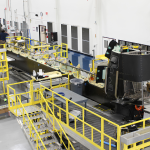
Under Tata Group ownership, Air India has moved decisively to reclaim control over its MRO destiny. A key pillar of this strategy is the development of its widebody MRO facility in Bengaluru, in partnership with Singapore-based SIA Engineering, one of the world’s most respected MRO organisations. The facility is expected to support heavy checks, structural work and advanced component maintenance for Dreamliners and A350 aircraft.
This move marks a direct shift from exporting MRO dollars overseas to retaining high-value maintenance within India and eventually exporting MRO services regionally. This is not just a cost-control measure. It is a strategic plan to build proprietary maintenance capability, create skilled jobs and position Air India as a maintenance hub for South Asia.
What happens to AIESL then?
AI Engineering Services Limited (AIESL), once Air India’s in-house MRO arm, is now on the path to privatisation and this opens up one of the most critical and intriguing questions in India’s aviation ecosystem. With Air India building its own modern MRO capability in Bengaluru and working closely with SIA Engineering, the role of AIESL is poised for a reset.
There are three possible strategic paths
Scenario 1: Air India reabsorbs AIESL
A strategic reacquisition would allow Air India to integrate line maintenance, component shops and base maintenance, consolidate technical manpower and rapidly expand domestic heavy maintenance capacity However, given Air India’s focus on fresh investments and new-generation MRO infrastructure, this remains uncertain.
Scenario 2: AIESL becomes India’s independent MRO champion
Privatisation could position AIESL as a neutral, multi-airline MRO platform supporting Air India, IndiGo, Akasa Air and foreign carriers turning it into India’s first truly global-scale independent MRO organisation.
Scenario 3: A Strategic investor steps in
With Adani Group already having acquired Air Works and Indamer Aviation, speculation is mounting on whether it could look at AIESL to consolidate its aviation services portfolio and build an end-to-end MRO empire. If that happens, India could see the emergence of its first private-sector MRO superpower.
Thus, the coming decade might witness a sharp rise in widebody and long-range narrowbody heavy checks, increased engine and landing gear MRO demand, strong growth in component repair and parts pooling and greater pressure on hangar infrastructure and skilled manpower
India’s MRO market currently valued at around $4 billion could double well before 2030 if policy support aligns with fleet growth.
The tide is turning
For the first time, India’s aviation growth is being accompanied by serious, structured investment in domestic MRO capability. Air India’s in-house build-up, IndiGo’s long-range ambitions, AIESL’s privatisation and rising private-sector interest together signal a historic pivot, the one that could finally move India from being an MRO importer to becoming a regional maintenance hub. With the widebody wave the MRO race has already begun in the country. And this time, India is no longer content to watch from the sidelines, it is preparing to lead.