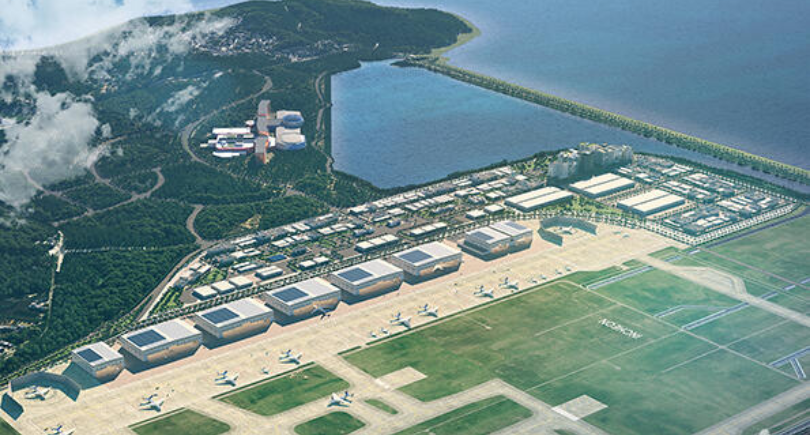

South Korea is building an integrated aircraft conversion, maintenance and painting ecosystem to reduce overseas dependence and capture a larger share of the global MRO market
As countries across Asia race to strengthen their aviation maintenance capabilities, South Korea is making a bold move to position Incheon International Airport as one of the region’s leading Maintenance, Repair and Overhaul (MRO) hubs. At the centre of this strategy is an ambitious plan to create a fully integrated aviation services ecosystem where aircraft can undergo passenger-to-freighter (P2F) conversion, maintenance and painting, all within a single location.
The initiative is designed not only to capture a larger share of the rapidly growing global MRO market but also to reduce South Korea’s dependence on overseas maintenance providers by bringing aircraft servicing back home.
First aircraft conversion programme underway
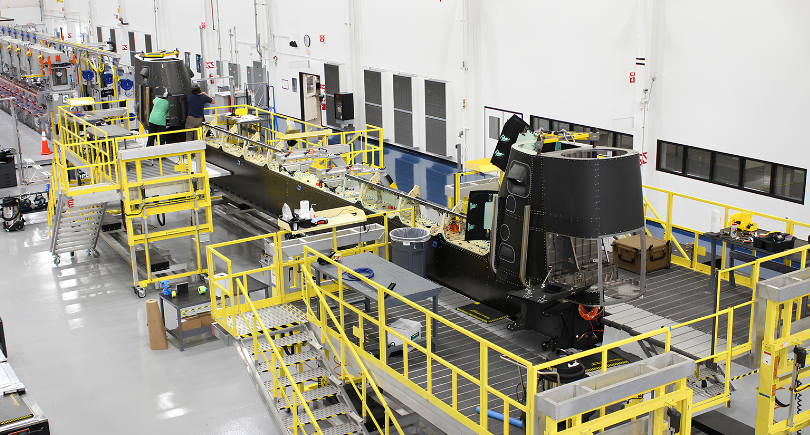
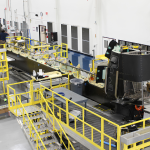
Incheon International Airport Corporation has announced that its first Passenger-to-Freighter (P2F) conversion project is progressing steadily following the completion of the airport’s first dedicated conversion facility within its Advanced Aviation Complex.
The facility inducted its first Boeing 777 conversion aircraft in May 2026, with work currently around 40 percent complete. The aircraft is expected to roll out in October this year.
One of the programme’s most technically demanding milestones has already begun—the installation of the Main Deck Cargo Door, regarded as one of the most complex stages of any freighter conversion programme.
Also Read – Safran Landing Systems partners with Aequs to strengthen aerospace supply chain in India
The process involves precision cutting of the aircraft fuselage, installation of the oversized cargo door and reinforcement of the aircraft structure to ensure it maintains the same structural integrity and safety standards as the original passenger aircraft. This stage requires highly specialised engineering expertise and is widely considered the defining phase of a successful P2F conversion.
Building more than a facility
For Incheon Airport, the project is about much more than aircraft conversions. The airport is developing a comprehensive aviation industrial ecosystem through its Advanced Aviation Complex, a dedicated aerospace development spanning approximately 2.35 million square metres.
The long-term vision is to establish a one-stop centre where airlines and lessors can carry out aircraft conversion, heavy maintenance and painting without moving aircraft between multiple facilities.
By 2032, Incheon Airport aims to attract additional global MRO providers and aerospace companies to create a fully integrated aviation maintenance cluster serving customers across Asia and beyond.
Aerospace supply chain
The programme is also helping strengthen South Korea’s domestic aerospace manufacturing sector. Several Korean companies are already participating in the Boeing 777 conversion project. Aircraft components manufacturer AST, based in Sacheon, produced the large cargo door and structural reinforcement assemblies while securing Parts Manufacturer Approval (PMA) for the programme.
Meanwhile, more than 40 supplier companies in the Sacheon region are manufacturing over 4,000 aircraft components, creating opportunities for local aerospace suppliers to participate in high-value global aviation programmes.
Another domestic company, Hyesung Soleno, has successfully developed and localised an aircraft maintenance platform previously imported from overseas. The platform, valued at approximately 1.8 billion won, is expected to create future export opportunities while reducing reliance on foreign equipment.
The project demonstrates how large MRO investments can stimulate wider industrial development by creating demand across engineering, manufacturing and technology sectors.
MRO Investments
Investment has already been confirmed for three of the seven planned hangar sites within the Advanced Aviation Complex. These include, IKCS for aircraft conversion operations, Trinity Aviation for maintenance activities and Korean Air, which will expand its maintenance capabilities at the airport
The airport authority is also seeking investment for a dedicated aircraft painting hangar, completing its vision of offering fully integrated aircraft lifecycle services at a single location. Such an approach mirrors global MRO hubs where airlines can minimise aircraft downtime by completing multiple maintenance activities during a single visit.
Reducing dependencies on overseas maintenance
South Korea’s strategy comes at a time when the global aircraft maintenance industry continues to expand rapidly. According to Incheon International Airport Corporation, the global aviation MRO market is expected to grow from approximately 171 trillion won in 2025 to around 224 trillion won by 2035.
Despite having a domestic aircraft maintenance market valued at around 3.9 trillion won, South Korea still relies heavily on overseas facilities, with more than 60 percent of maintenance work, worth approximately 2.4 trillion won—being carried out outside the country. Developing domestic MRO infrastructure is therefore viewed as both an economic opportunity and a strategic necessity.
By retaining maintenance activity within South Korea, the country hopes to strengthen its aerospace industry, improve supply chain resilience, create skilled employment and generate long-term economic value.
Commenting on the initiative, Kim Beom-ho, Acting President of Incheon International Airport Corporation, said the Advanced Aviation Complex would play a central role in redirecting maintenance work that has traditionally flowed overseas while positioning South Korea as a competitive global MRO destination.
The vision reflects a broader trend across Asia, where governments and airport operators are investing heavily in integrated aviation maintenance ecosystems rather than standalone repair facilities.
Incheon Airport’s strategy highlights how modern MRO hubs are evolving beyond conventional aircraft maintenance. Instead of focusing solely on repair work, successful aviation centres are creating integrated ecosystems that combine passenger-to-freighter conversions, heavy maintenance, aircraft painting, component manufacturing and domestic supplier development within a single industrial cluster.
For countries such as India, which are pursuing ambitions of becoming global MRO destinations, Incheon’s model offers valuable lessons. World-class hangars alone are no longer enough. The future belongs to countries that can build complete aerospace ecosystems, bringing together airlines, lessors, OEMs, suppliers, technology providers and skilled talent under one coordinated strategy.
As competition for the global MRO market intensifies, Incheon International Airport is demonstrating that infrastructure, localisation and industrial collaboration may become the defining ingredients for the next generation of aviation maintenance hubs.