
The global aerospace industry is facing an unusual challenge. Demand has never been stronger, airline fleets continue to expand, and aircraft manufacturers are sitting on order books stretching nearly a decade into the future. Yet despite record demand, thousands of aircraft remain undelivered because the industry’s supply chain continues to struggle with capacity, workforce shortages, financing constraints, and production bottlenecks.
Against this backdrop, Indian conglomerate Mahindra & Mahindra (M&M) is emerging as an increasingly important player in the global aerospace ecosystem. The company is now evaluating acquisitions across the international aerospace supply chain after leading aircraft manufacturers reportedly approached Mahindra to help resolve critical production constraints that are slowing aircraft deliveries worldwide.
The development represents more than a growth story for Mahindra Aerostructures. It signals a broader shift in how global aerospace OEMs are viewing India, not simply as a low-cost manufacturing destination, but as a strategic industrial partner capable of strengthening and consolidating critical aerospace supply chains.
A supply chain under pressure
The aviation industry’s post-pandemic recovery has exposed vulnerabilities that have been building for years. Aircraft manufacturers continue to face significant challenges in increasing production despite unprecedented order backlogs. While Airbus and Boeing collectively hold thousands of aircraft orders, many suppliers across the aerospace ecosystem remain constrained by labour shortages, capital limitations, certification requirements, and manufacturing capacity restrictions.
According to Mahindra Group CEO and Managing Director Anish Shah, aircraft manufacturers are increasingly looking beyond traditional suppliers in search of partners capable of delivering both quality and scale. “They’ve got 10 years of confirmed orders to deliver planes, and they are unable to do so because of supply-chain challenges,” Shah noted during a recent earnings call.
The bottlenecks are particularly acute among smaller Tier-2 and Tier-3 suppliers, many of which have struggled to invest sufficiently in new production capacity following years of disruption.
For OEMs, the challenge is no longer demand generation. The challenge is execution.
OEMs seeking consolidation partners
Perhaps the most striking aspect of Mahindra’s strategy is the reported willingness of major aircraft manufacturers to actively support acquisition-led consolidation. According to Shah, OEMs have approached Mahindra with proposals to acquire struggling suppliers and expand production capacity across critical parts of the aerospace supply chain.
“They’re telling us, ‘Can you come in and acquire, we’ll help you acquire?’” Shah revealed.
Such statements highlight the severity of current supply-chain challenges. Historically, OEMs have relied on broad supplier networks to spread risk and maintain competitive pricing. Today, however, the focus is increasingly shifting toward reliability, financial stability, and long-term production capability.
Mahindra’s response has been equally noteworthy.
The company has reportedly established a strict requirement that any acquisition must be supported by a guaranteed return framework extending for at least five years. According to Shah, aircraft manufacturers have indicated a willingness to provide such assurances to secure dependable industrial partners.
If implemented, this could represent a new model of aerospace supply-chain consolidation, where OEMs actively facilitate investment and industrial restructuring to protect future production rates.
The rise of Mahindra Aerostructures
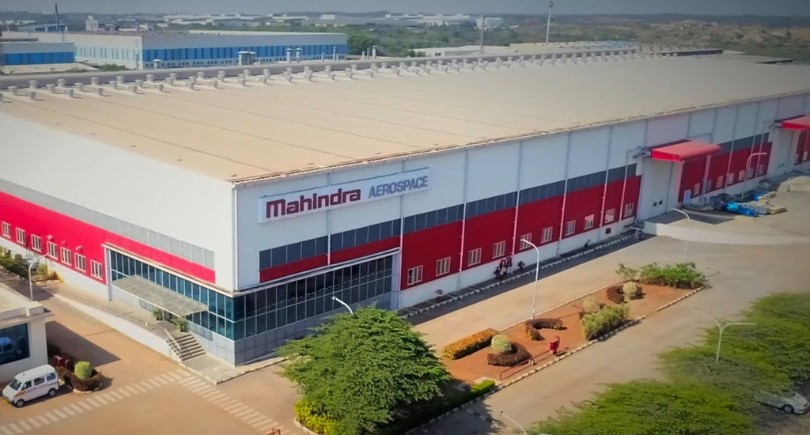
The growing attention from global aircraft manufacturers reflects the remarkable growth trajectory of Mahindra’s aerospace business. Shah disclosed that Mahindra’s aerospace division has secured nearly $1 billion in orders within just over a year, compared to approximately $150 million accumulated during the previous 12 to 15 years combined.
The figures underline how rapidly the company has expanded its presence within global aerospace manufacturing.
Today, Mahindra Aerostructures serves a diversified customer base that includes Airbus, Boeing, Dassault Aviation, GE Aerospace, Hindustan Aeronautics Limited (HAL), and Spirit AeroSystems.
The company has steadily moved up the aerospace value chain, transitioning from component manufacturing to increasingly sophisticated aerostructure assemblies. Its stated ambition is equally bold.
“Our aspiration for our aerospace business is to be among the Top 5 aerostructures companies in the world,” Shah said, adding that this goal could potentially be achieved within the next three to five years.
Airbus deepens its commitment
A major contributor to Mahindra’s growth has been its expanding relationship with Airbus.
In April 2025, Airbus Helicopters selected Mahindra Aerostructures to manufacture the main fuselage assembly for the H130 helicopter. The contract represented a significant milestone because it elevated Mahindra from supplying individual components to producing complete structural assemblies.
The relationship strengthened further in August 2025 when Airbus awarded Mahindra responsibility for manufacturing the main fuselage of the H125 helicopter, one of the manufacturer’s most successful rotorcraft platforms.
Under these agreements, Mahindra manufactures fuselage assemblies at its Bengaluru facility before shipping them directly to Airbus final assembly lines.
The contracts demonstrate increasing confidence in Indian aerospace manufacturing capabilities and reflect Airbus’ broader strategy of expanding industrial partnerships in India.
Today, Airbus sources approximately $1.4 billion worth of components and services annually from India, making the country an increasingly important part of its global supply chain.
While the story is primarily focused on aerospace manufacturing, the implications extend directly into the MRO sector. A stronger aerospace manufacturing ecosystem creates long-term benefits for maintenance, repair and overhaul providers. Greater local manufacturing capability often leads to enhanced engineering expertise, improved parts availability, stronger supplier networks, and expanded aftermarket support infrastructure.
As Indian aerospace companies take on increasingly complex manufacturing responsibilities, opportunities emerge for parallel growth in component repair, engineering services, technical training, tooling support, and lifecycle management capabilities.
The same engineering expertise required to manufacture advanced aerostructures frequently forms the foundation for future MRO and aftermarket services.
In many mature aerospace markets, manufacturing and MRO ecosystems have evolved together. India’s aerospace industry appears to be entering a similar phase of development.
India’s aerospace moment
For decades, India’s aerospace ambitions were primarily associated with domestic defence programmes and limited participation in global commercial aircraft production. That perception is changing rapidly.
The combination of engineering talent, competitive manufacturing costs, government support, and growing international confidence is positioning India as a critical participant in the future global aerospace supply chain.
What makes Mahindra’s current opportunity particularly significant is that it is not being driven by cost advantages alone. Global OEMs are increasingly seeking reliability, scalability, engineering capability, and operational excellence.
These are characteristics traditionally associated with established aerospace manufacturing centres in North America and Europe.
The fact that major aircraft manufacturers are encouraging Indian companies to acquire and strengthen parts of the global supply chain suggests that India is moving from the periphery of aerospace manufacturing to a more central strategic role.
A Defining Decade Ahead
The aerospace industry’s supply-chain challenges are unlikely to disappear quickly. Production rates continue to rise, airline demand remains robust, and manufacturers are under increasing pressure to accelerate deliveries.
For companies capable of providing scale, quality, and financial stability, the opportunities are substantial.
Mahindra’s acquisition strategy may therefore represent more than corporate expansion. It could become part of a broader restructuring of the global aerospace supply chain, one in which Indian manufacturers play a far larger role than ever before.
For the MRO sector, the implications are equally important. As manufacturing capability expands, aftermarket support infrastructure, engineering services, component repair capabilities, and technical expertise are likely to grow alongside it.
The next decade may not simply determine who builds the world’s aircraft. It may also determine where the industry’s future maintenance, repair, overhaul, and engineering capabilities are developed.
Increasingly, India appears determined to be part of that answer.