
A Strategic Step Towards Indigenous Helicopter Sustainment
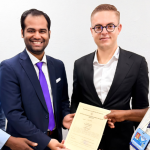
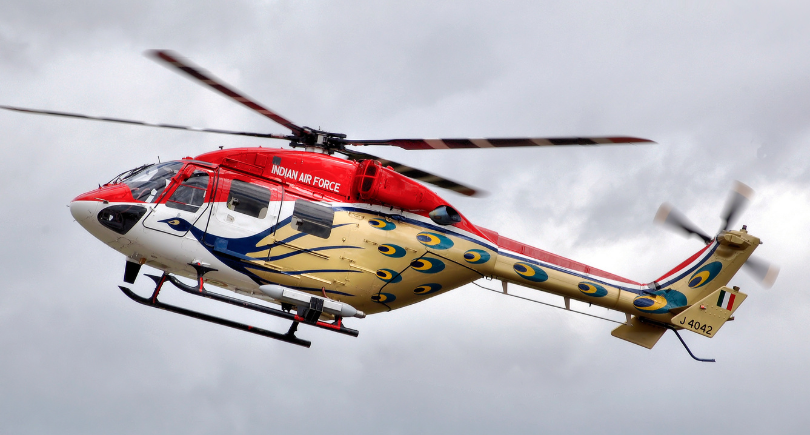
In a significant move to strengthen India’s civil helicopter ecosystem, Hindustan Aeronautics Limited (HAL) has signed a Memorandum of Understanding (MoU) with Indocopters Pvt Ltd to establish a comprehensive maintenance, repair and overhaul (MRO) framework for the Dhruv-NG helicopter. This collaboration aims to create a reliable, domestic support structure for the indigenous platform, addressing long-standing challenges around lifecycle support, aircraft availability and operator confidence in the civil helicopter segment.
As India’s helicopter market gradually expands across emergency medical services, offshore operations, utility flying, connectivity, and state and private charter missions, the need for a robust and responsive MRO network has become critical. The HAL–Indocopters partnership is designed to ensure that Dhruv-NG operators receive world-class maintenance support within India, reducing reliance on overseas MRO facilities and improving fleet readiness.
Expanding a proven civil helicopter maintenance network
Indocopters is a DGCA-approved helicopter maintenance organisation with established capabilities across multiple international platforms, including Airbus and Leonardo helicopters. The company currently operates its primary maintenance base in Greater Noida (NCR) and supports helicopter operators through a nationwide network of 17 sub-bases, giving it one of the most extensive rotary-wing maintenance footprints in the country.
Through this MoU, Indocopters will expand its technical scope to include the Dhruv-NG, enabling it to offer line maintenance, base maintenance, component support and technical assistance for civil operators of the platform. This expansion marks a strategic shift from primarily supporting foreign OEM helicopters to playing a key role in sustaining an indigenous helicopter type in the civil market.
Core Objective: Creating a skilled, certified helicopter maintenance workforce
At the heart of the MoU is a strong emphasis on training, certification and skill development, recognising that a capable and well-trained workforce is essential for any sustainable MRO ecosystem. HAL and Indocopters will jointly develop and implement structured training programmes covering:
- Aircraft systems and structures of the Dhruv-NG
- Maintenance manuals, documentation standards and regulatory compliance
- Use of specialised tools, ground support equipment and test benches
- Troubleshooting, fault diagnosis and rectification procedures
- Quality assurance, safety management systems (SMS) and human factors
Indocopters will nominate technicians who meet regulatory eligibility criteria and aptitude standards. These technicians will undergo theoretical training, hands-on practical sessions, and on-the-job training at certified facilities under HAL supervision. Upon successful completion and regulatory approval, they will be authorised to perform maintenance tasks on the Dhruv-NG.
This approach ensures that maintenance capability grows in parallel with fleet expansion, preventing the skills shortages that have historically constrained helicopter operations in India.
Scope
Once operationalised, Indocopters will be empowered to provide a full spectrum of support services for the Dhruv-NG, including:
- Line Maintenance – routine inspections, daily checks, minor rectifications and transit maintenance
- Base Maintenance – scheduled heavy maintenance, periodic inspections and major overhauls
- Component Maintenance and Repairs – support for key systems and assemblies, either in-house or through approved supply chains
- Technical Assistance and Field Support – deployment of engineers and technicians to operator locations, including remote and challenging geographies
These services will be offered either independently by Indocopters or under contractual arrangements with HAL, depending on the operational and commercial framework chosen by the customer.
One of the most critical benefits of this partnership is the potential to significantly improve fleet availability while reducing aircraft downtime and maintenance-related costs. Historically, civil helicopter operators in India have faced extended grounding periods due to limited domestic MRO options, dependence on OEM facilities abroad, and delays in parts supply and approvals.
By establishing a local, trained and certified maintenance network for the Dhruv-NG, the MoU aims to:
- Reduce turnaround times for scheduled and unscheduled maintenance
- Lower logistics and ferry costs associated with overseas MRO visits
- Improve spares availability and technical responsiveness
- Enhance operational predictability for commercial operators
For operators, this translates into improved aircraft utilisation, better revenue stability and higher confidence in fleet planning.
The collaboration also places strong emphasis on aligning maintenance practices with global civil aviation standards. HAL and Indocopters will implement international best practices in areas like safety management systems (SMS), quality and audit frameworks, regulatory compliances and documentation etc. This focus is particularly important as the Dhruv-NG expands into diverse civil roles, including offshore operations, EMS, VIP transport, utility flying and regional connectivity, where reliability, safety and regulatory compliance are non-negotiable.
From a strategic standpoint, the MoU strengthens the long-term commercial viability of the Dhruv-NG by ensuring that aftermarket support infrastructure grows alongside sales. A strong MRO backbone is often a decisive factor for operators when selecting a platform, especially in markets where operational margins are tight and mission reliability is critical.
For HAL, the partnership represents a major step in transitioning from primarily a manufacturing-focused role to a more integrated lifecycle support model, where product success is reinforced by dependable maintenance and technical support in the field.
For Indocopters, the collaboration positions the company as a key enabler of India’s indigenous helicopter ecosystem, expanding its technical portfolio while contributing to national capability development.
Addressing the workforce crunch in Helicopter MRO
The MoU also addresses a structural challenge facing India’s rotary-wing sector, the shortage of skilled helicopter maintenance personnel. As the helicopter fleet expands across civil, government and commercial segments, the demand for licensed engineers, technicians and specialists is rising sharply.
Industry estimates suggest that India will require several hundred additional helicopter maintenance professionals over the next decade to support fleet growth, replacements, and new mission profiles such as EMS, offshore energy, regional connectivity and disaster response. Without a parallel investment in training and certification, this workforce gap could become a bottleneck to sector growth.
The HAL–Indocopters training framework directly responds to this challenge by creating a structured pipeline of trained technicians, aligned with both regulatory requirements and real-world operational needs.
Aligning with National MRO and Aerospace Policy Objectives
The partnership also aligns with India’s broader policy goals to:
- Strengthen domestic MRO capability
- Reduce foreign exchange outflows associated with overseas maintenance
- Promote skill development and employment in aviation
- Support indigenous aerospace platforms under the “Make in India” initiative
By anchoring helicopter MRO capability within the country, the MoU contributes to building a resilient aviation services ecosystem that supports both civil and strategic aviation objectives.
A Foundation for a Scalable Helicopter Support Ecosystem
As India’s helicopter market continues to evolve — driven by infrastructure development, regional connectivity, emergency services and commercial demand — the need for a scalable, decentralised and reliable maintenance network will only intensify.
The HAL–Indocopters MoU lays the foundation for such a system by combining OEM expertise, civil MRO experience, and workforce development into a single, coordinated framework. If executed effectively, the collaboration could serve as a model for future partnerships aimed at strengthening the aftermarket support ecosystem for indigenous aircraft platforms.
In doing so, it not only enhances the operational readiness of the Dhruv-NG fleet but also contributes meaningfully to India’s long-term ambition of becoming a global hub for aviation maintenance, repair and overhaul.