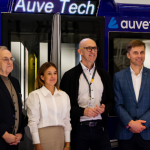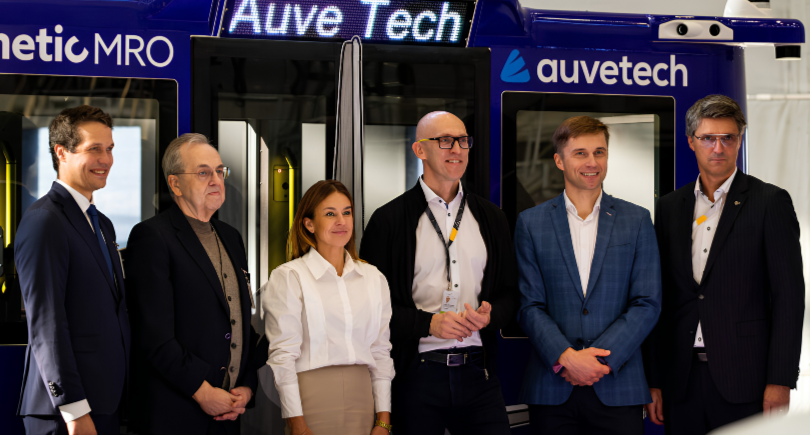

Magnetic MRO and Auve Tech have demonstrated autonomous passenger transport without an onboard safety operator at Tallinn Airport, advancing the use of automated vehicles to support airside logistics and MRO operations.
The demonstration took place on 7 October 2026, following Auve Tech’s authorisation in August to operate its MiCa autonomous shuttles at Tallinn Airport without an onboard safety operator. The vehicles use remote supervision, allowing one supervisor to oversee multiple shuttles and intervene when required.
Magnetic MRO’s collaboration with Auve Tech began in 2023 with testing within the airport area before progressing to commercial operations in 2025. The shuttles now transport employees and supplies between the MRO provider’s hangars and other areas of its airside operation.
The vehicles cover approximately 1,000 kilometres per week, with an average autonomy rate of 99.9%, according to Magnetic MRO. The company uses the service to support internal logistics, particularly the movement of people and materials between facilities.
Risto Mäeots, CEO of Magnetic Group, said the vehicles have become part of daily operations and that removing the onboard safety operator represents a step towards improving efficiency and scalability.
Also Read – Honeywell demonstrates multi-aircraft autonomy with integrated navigation and sensing systems
For MRO facilities, autonomous transport can help streamline the movement of tools, components, supplies and personnel across large airport sites. Remote supervision may also reduce the need to assign an operator to each vehicle, allowing staff to focus on other operational tasks.
The deployment illustrates how automation can support activities around aircraft maintenance without directly changing the maintenance process itself. Its wider application will depend on operational reliability, airport safety requirements, and the ability to integrate autonomous vehicles into existing airside procedures.