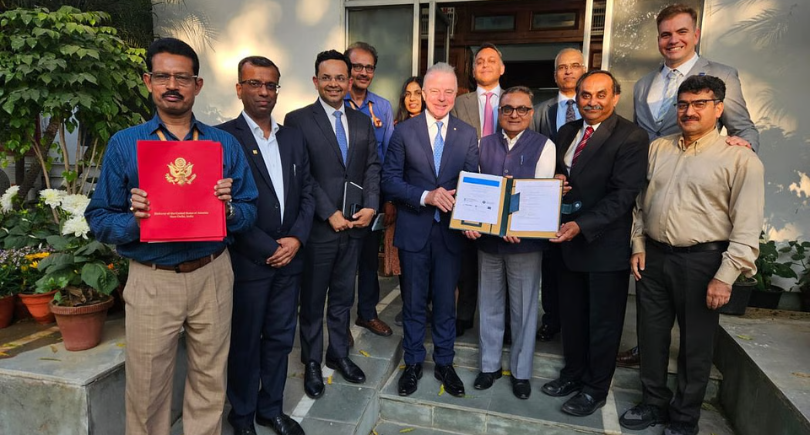

In a significant step toward deepening regulatory collaboration between India and the United States, the Directorate General of Civil Aviation (DGCA) has signed a new working arrangement with the Federal Aviation Administration (FAA) to strengthen cooperation on aviation safety and certification oversight under the framework of the Bilateral Aviation Safety Agreement (BASA).
The agreement, signed on March 5, 2026, establishes a structured mechanism for coordination on aircraft and engine certification activities and introduces greater clarity in validation procedures. The arrangement also brings major industry stakeholders including Boeing, GE Aerospace, and Pratt & Whitney into a more coordinated regulatory framework designed to streamline technical approvals and strengthen oversight as India’s aviation sector expands rapidly.
The new working arrangement supplements the existing Implementation Procedures for Airworthiness (IPA) between the DGCA and the FAA. While the IPA already governs cooperation on aircraft certification and continued operational safety, the latest framework introduces additional mechanisms aimed at making aircraft and engine validation processes more transparent, predictable, and time-bound.
Under the revised structure, both regulators will work more closely to align certification procedures, share technical data more efficiently, and accelerate validation timelines for aircraft and engine platforms entering the Indian market. The initiative is expected to improve regulatory coordination in areas such as type certification, validation of design approvals, and acceptance of airworthiness findings between the two authorities.
Also Read: Embraer seeks 200 firm orders from Indian airlines to set up aircraft assembly line
Officials familiar with the development indicated that the arrangement is intended to address operational and certification challenges that often arise as aircraft and engine manufacturers navigate multiple regulatory jurisdictions. By creating clearer processes and defined timelines for validation, the framework seeks to reduce administrative friction while preserving stringent safety standards.
The enhanced cooperation comes at a time when India’s commercial aviation sector is undergoing unprecedented expansion. Indian airlines have placed record aircraft orders in recent years, with a significant share of new deliveries coming from US manufacturers.
Aircraft platforms produced by Boeing, along with engines supplied by GE Aerospace and Pratt & Whitney, form a substantial portion of the fleet expansion plans of Indian carriers. As a result, regulatory alignment between the DGCA and the FAA is becoming increasingly critical to ensuring smooth induction, certification validation, and operational oversight of these aircraft.
Industry observers note that faster and more predictable certification pathways will be particularly important as airlines introduce new aircraft variants and next-generation engines, which often require complex validation procedures across multiple regulatory regimes.
Beyond aircraft entry into service, the strengthened DGCA–FAA coordination is expected to have broader implications for India’s MRO ecosystem.
Aircraft and engine certification processes influence maintenance documentation, repair approvals, and component eligibility standards. Improved regulatory alignment between the two authorities could therefore facilitate smoother acceptance of technical data, maintenance procedures, and engineering approvals within India’s MRO landscape.
As India continues to develop domestic MRO capabilities, clearer regulatory pathways for certification and validation could help local maintenance providers integrate more effectively into global aviation supply chains. It may also enable Indian MRO facilities to support a wider range of aircraft and engine platforms operating in the region.
The working arrangement also underscores the broader strategic partnership between India and the United States in the aviation sector. Over the past decade, bilateral cooperation has expanded across multiple areas, including aircraft manufacturing, engine technology, safety oversight, and aerospace supply chain integration.
With India projected to become one of the world’s largest aviation markets over the coming decades, regulatory collaboration between the DGCA and the FAA is increasingly viewed as a cornerstone for maintaining safety oversight while enabling rapid industry growth.
Officials said the new framework would enhance coordination between the two regulators and support the continued evolution of India’s aviation ecosystem by ensuring that certification and validation processes remain robust, efficient, and aligned with global best practices.
For the industry, the agreement signals a pragmatic move toward deeper technical cooperation, one that aligns regulatory processes with the pace of fleet expansion while safeguarding the safety standards that underpin global aviation.