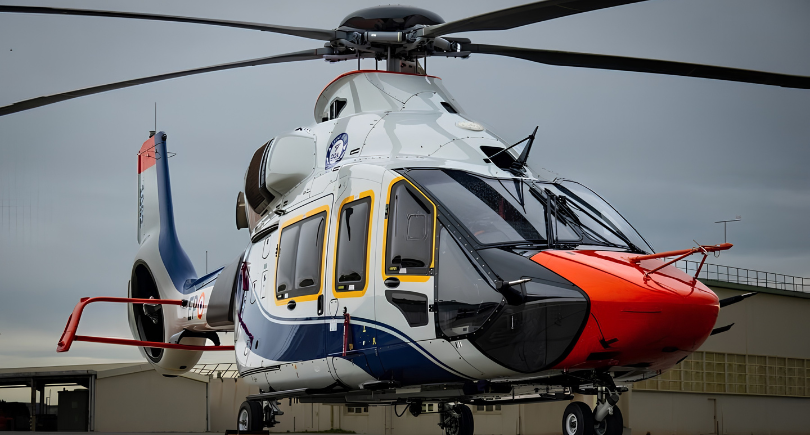

France’s Defence Procurement Agency (DGA) is using the Airbus H160 as a technology-validation platform at EPNER, combining flight-test modifications, advanced avionics and predictive maintenance capabilities to prepare future test crews and support the development of next-generation military helicopters.
EPNER, France’s flight-test school, has integrated the H160 into its training fleet as part of a broader modernisation programme. The aircraft gives trainee pilots, engineers and maintenance personnel access to a modern helicopter equipped with digital avionics, connected systems and new approaches to aircraft maintenance.
For EPNER, the H160 is more than a training aircraft. Its technology provides a platform for evaluating aircraft performance, flight characteristics and onboard systems while giving test crews experience with systems that are increasingly being introduced on modern military platforms.
Patrice, Deputy Director of EPNER, said the H160 is being progressively integrated into the training programme to expose new trainees to the latest helicopter technologies.
“The H160 is gradually integrated into the programme for new trainees. As it’s brand new, it benefits from an array of new technologies. This enables the school to remain at the forefront of training, using all of the helicopter’s new capabilities to test performance, flight qualities and onboard systems.”
Avionics and predictive maintenance support flight-test training
The H160 introduces a significant change in avionics compared with EPNER’s legacy helicopter platforms. The aircraft’s digital architecture provides additional opportunities for trainees to understand and evaluate modern flight-control, navigation and onboard systems during flight-test activities.
Thomas, Flight Test Maintenance Technician, highlighted the change in maintenance and avionics capability.
“There is a real evolution in avionics with the H160, which opens an enlarged panel of training capabilities to EPNER.”
The aircraft also provides maintenance trainees with access to predictive data analytics that can be used to support maintenance planning. Rather than relying only on fixed maintenance intervals and conventional inspection practices, technicians can use aircraft-generated data to better understand system condition and plan maintenance tasks.
This approach gives EPNER a practical environment in which maintenance personnel can develop experience with data-driven maintenance processes alongside conventional helicopter inspection and repair activities.
The H160’s maintenance architecture is also designed to provide technicians with accessible systems and technical documentation. This is particularly relevant to flight-test operations, where aircraft availability and the ability to configure and inspect the aircraft efficiently are important to maintaining the training programme.
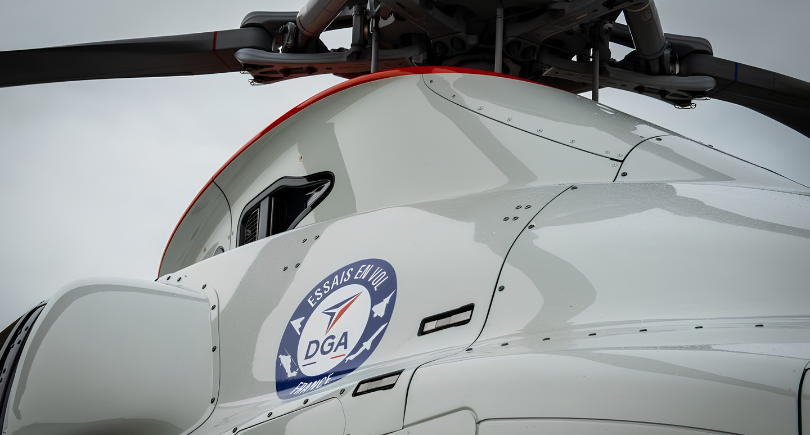
Modified H160 becomes a flight-test technology platform
The H160 used by EPNER is based on a civil-certified configuration that has been modified specifically for flight-test training. Airbus Helicopters and DGA technical teams worked together to integrate dedicated flight-test equipment into the aircraft.
The modification includes a flight-test installation positioned in the rear of the helicopter, creating a dedicated environment for collecting and evaluating test data while allowing trainees to work with equipment representative of modern flight-test activities.
Aurélien, Flight Test Installation Designer, said the installation was developed through close cooperation between the DGA and Airbus Helicopters.
“We worked in close collaboration with Airbus Helicopters to install the test equipment, from sharing technical documentation to making sure this architecture matches current mission requirements.”
The modified aircraft therefore serves as a practical technology-validation platform. Flight-test crews can evaluate aircraft performance and onboard systems while engineers and maintenance personnel gain experience with the installation, operation and support of specialised test equipment.
This type of modification also demonstrates how an existing certified aircraft can be adapted for specialist test missions without changing its underlying role as a training platform.
H160 supports future H160M technology development
The H160’s role at EPNER also provides a link to France’s future military helicopter fleet, including the H160M Guépard being developed under the country’s Joint Light Helicopter programme.
By introducing modern avionics, test equipment and data-driven maintenance practices at the flight-test school, DGA personnel can gain experience with technologies that could subsequently be evaluated for military applications.
Patrice said the modernised fleet will allow EPNER to test systems before their potential introduction on French Armed Forces platforms.
“If we take a look at new military programmes, including the HIL, with our modernised fleet we’ll be able to integrate new systems which later on could be integrated into the French armed forces’ fleet. That’s our true value-add, as we can test all these systems beforehand.”
For MRO and sustainment operations, the approach provides an opportunity to assess not only aircraft performance but also the maintainability of new systems, the use of predictive data and the technical requirements associated with modified aircraft configurations.
The H160 therefore gives EPNER a modern platform for developing flight-test expertise while allowing DGA and Airbus Helicopters to evaluate technologies, maintenance approaches and aircraft modifications ahead of their potential wider adoption on future military helicopter fleets.