Hybrid-electric aircraft combines commercial eVTOL technology with defence capabilities as companies expand beyond the urban air mobility market
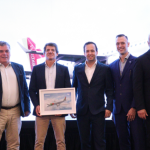
Archer Aviation and defence technology company Anduril Industries have jointly unveiled a new autonomous hybrid-electric vertical take-off and landing (VTOL) aircraft platform at the Farnborough International Airshow 2026. Developed under a partnership announced in 2024, the new platform is designed to serve both commercial and defence applications, highlighting the growing convergence between advanced air mobility and military aviation.
The defence variant, named Thunder, was officially introduced by Anduril during the airshow. Designed as a Group 5 autonomous attack rotorcraft, Thunder is intended to operate alongside current and next-generation crewed military helicopters, supporting missions such as reconnaissance, logistics, cargo transport and tactical operations in challenging environments. Archer is expected to announce the commercial version, known as Halo, and its first customers later this week.
Unlike many aircraft derived from existing platforms, Thunder and Halo have been developed as an entirely new design. The aircraft features a series hybrid-electric propulsion system combined with dual tiltrotors, enabling vertical take-off and landing while delivering the speed and efficiency of wing-borne cruise flight. The design allows operations from remote locations without the need for runways while offering improved range, lower fuel consumption and reduced acoustic signature.
According to Archer Founder and CEO Adam Goldstein, the programme was designed specifically to meet emerging commercial and defence requirements rather than adapting an existing aircraft. He noted that the platform was developed using a clean-sheet approach to deliver the performance, payload and operational flexibility demanded by future customers.
The platform also reflects an important shift within the eVTOL industry. As certification timelines and infrastructure development continue to delay large-scale urban air taxi operations, manufacturers are increasingly exploring applications in defence, logistics, emergency response and cargo transport. The hybrid-electric architecture enables significantly longer missions than battery-electric aircraft, opening new commercial opportunities beyond passenger transport.
Also Read – SkyDrive reaches 300 eVTOL test flights
The new aircraft introduces another advanced platform that will require specialised maintenance capabilities. The hybrid-electric propulsion system, autonomous flight technologies, tiltrotor mechanisms and integrated digital systems will demand new maintenance procedures, software diagnostics and technician training as these aircraft enter service. The programme also reinforces the growing role of predictive maintenance and digital health monitoring in supporting next-generation autonomous aircraft fleets.
Anduril and Archer have already completed multiple test flights using full-scale surrogate aircraft to validate key systems, with the first flight of Thunder planned for 2027. The companies believe the platform represents a new generation of vertical lift aircraft capable of supporting both commercial operators and defence customers through a common technology architecture.