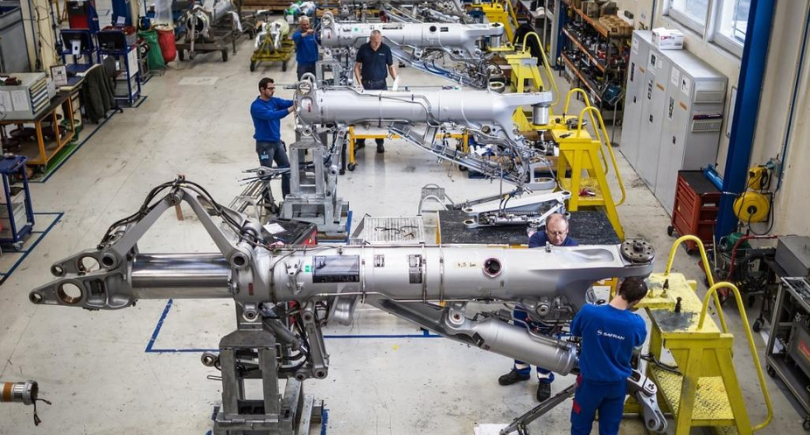

As airlines around the world continue to rebuild and expand their long-haul networks, a new challenge is rapidly emerging for the aviation maintenance industry: supporting a growing fleet of maturing widebody aircraft that are approaching major overhaul milestones.
Recognizing this shift, Safran Landing Systems (SLS) is significantly expanding its global MRO capabilities for three of the industry’s most important long-haul aircraft platforms, the Boeing 787 Dreamliner, Airbus A350 and Airbus A330 families.
The move reflects a broader trend across the global aerospace aftermarket. Thousands of next-gen widebody aircraft delivered over the past decade are now entering phases of their operational lifecycle that require extensive landing gear inspections, overhauls and life-extension work. As demand accelerates, OEM-affiliated MRO providers are positioning themselves to capture a growing share of this highly specialized and technically demanding market.
For Safran Landing Systems, the strategy revolves around expanding capacity, improving geographic proximity to customers and creating a truly global support network capable of serving airlines wherever they operate.
Building a global widebody maintenance ecosystem
At the heart of Safran’s strategy is a three-continent MRO network comprising facilities in Molsheim, France; Singapore; and Querétaro, Mexico. Each facility has been assigned specific responsibilities and program specializations, creating an integrated support structure that enables the company to serve airlines across Europe, Asia-Pacific and the Americas.
This distributed model is increasingly important as operators seek faster turnaround times, reduced logistics costs and localized technical support. Rather than relying on a single maintenance hub, airlines can access landing gear overhaul services closer to their operational bases, reducing aircraft downtime and improving fleet availability.
The approach also allows Safran to balance workloads across regions while maintaining consistent quality standards throughout its global network. As airlines continue to face operational pressures from fleet utilization demands and supply chain constraints, proximity-based maintenance support is becoming a significant competitive advantage.
Boeing 787 overhaul campaign gains momentum
One of the most significant developments within Safran’s MRO expansion strategy is the acceleration of Boeing 787 landing gear overhaul activities. The Boeing 787 fleet has now matured to a stage where increasing numbers of aircraft are approaching major maintenance events. This creates substantial demand for specialized landing gear overhaul services.
Safran’s facilities in Singapore, Molsheim and Querétaro have all achieved operational readiness for the program and have already completed their first Boeing 787 landing gear overhauls for customers including Avianca and Hainan Airlines.
While these first inductions may appear symbolic, they represent a critical milestone in establishing industrial capability for what is expected to become a rapidly expanding market over the next decade. The Boeing 787 remains one of the most successful widebody aircraft programs in service today, with operators across every major region relying on the aircraft for long-haul and medium-haul operations. As fleets age, demand for overhaul services is expected to increase substantially.
Safran’s early investment positions the company to capture a significant portion of this future maintenance workload.
A350 fleet reaches key milestone
The Airbus A350 program is entering a similarly important phase. Safran’s Molsheim facility recently completed the first sampling campaign on an Airbus A350 landing gear system. This process involves disassembling and conducting detailed inspections of landing gear components before the aircraft reaches its 12-year Time Between Overhaul (TBO) milestone.
These inspections play a crucial role in validating long-term reliability assumptions and ensuring maintenance procedures remain aligned with real-world operational data.
The results help manufacturers and operators better understand component wear patterns, structural integrity and maintenance optimization opportunities. For airlines, such data-driven maintenance planning can help reduce lifecycle costs while maintaining the highest safety standards.
The successful completion of this first campaign represents an important step toward establishing mature support infrastructure for a fleet that continues to grow globally.
A330 Program Expansion Creates New Opportunities
While considerable industry attention is focused on next-generation aircraft such as the Boeing 787 and Airbus A350, the Airbus A330 family remains a cornerstone of long-haul aviation operations worldwide.
Recognizing the continuing importance of the platform, Safran is simultaneously expanding support capabilities for both A330 Enhanced and A330neo landing gear programs.
A key component of this strategy is the development of the Querétaro facility as a major maintenance hub for long-haul aircraft.
Historically focused on single-aisle aircraft programs, the Mexican facility is now undergoing a transformation that will enable it to support a broader range of widebody maintenance activities.
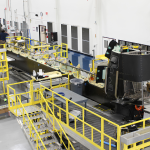
The site’s recent expansion added more than 6,000 square metres of additional workshop space, significantly increasing operational capacity and creating room for future program growth.
By 2027, all three Safran sites, Singapore, Molsheim and Querétaro, are expected to be fully operational for the Airbus A330 family, creating one of the industry’s most comprehensive landing gear support networks for the aircraft.
Querétaro emerges as Americas hub
Among Safran’s global facilities, Querétaro arguably represents the most significant growth story. Since opening in 2010 with just 80 employees, the facility has expanded dramatically and now employs nearly 375 people.
The site performs a wide range of integrated technical operations, enabling it to manage complete overhaul cycles under one roof. This vertical integration provides airlines with greater efficiency, faster turnaround times and enhanced quality control. Its geographical location also offers significant advantages.
Positioned in the heart of the Americas, Querétaro is ideally located to support operators across North America, Latin America and the Caribbean. As more Boeing 787 and Airbus A330 aircraft enter overhaul cycles, the facility is expected to become a major centre for widebody maintenance activity in the region.
For Safran, the expansion strengthens customer proximity while diversifying maintenance capacity beyond traditional European and Asian centres.
Preparing for the coming Widebody MRO wave
Safran’s latest investments highlight a larger trend shaping the global aerospace aftermarket. Over the next decade, increasing numbers of Boeing 787s, Airbus A350s and Airbus A330s will reach critical maintenance milestones, generating substantial demand for landing gear overhauls, inspections and lifecycle support services.
At the same time, airlines are seeking maintenance partners capable of providing global coverage, predictable turnaround times and deep technical expertise.
By expanding capacity across Europe, Asia and the Americas, Safran Landing Systems is positioning itself to meet this demand while strengthening its role as a long-term strategic partner for airlines worldwide. The company’s growing MRO network reflects not only the evolution of its own business but also the changing dynamics of the global aviation aftermarket, where proximity, specialization and scalability are becoming increasingly important competitive differentiators.
As the world’s long-haul fleets continue to mature, investments such as these are likely to define the next chapter of growth in the landing gear MRO sector.