
Pratt & Whitney has completed the Risk Reduction Design Review for the F135 Engine Core Upgrade, advancing the programme toward production and future retrofit of fielded F-35 engines.
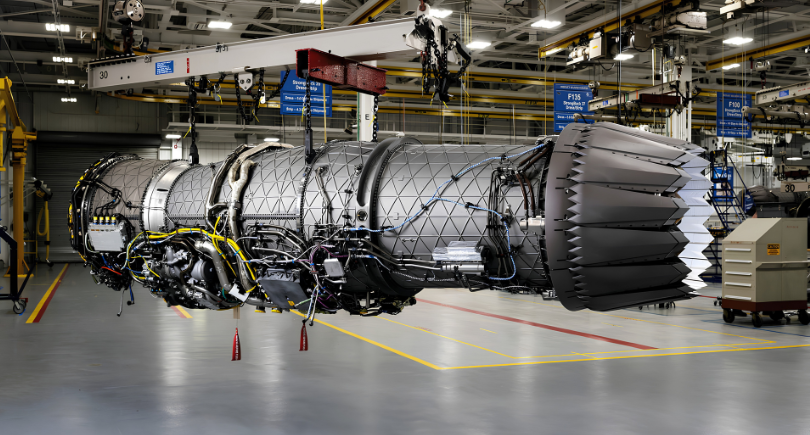
Pratt & Whitney has completed the F135 Engine Core Upgrade (ECU) Risk Reduction Design Review (RRDR), a key engineering milestone for the propulsion modernisation programme supporting the F-35 Lightning II fleet.
The review assessed the maturity of the ECU detailed design, propulsion technologies, aircraft integration requirements and risk-reduction activities. It also examined the industrial base and supply chain readiness required for future production and retrofit activity.
The ECU is being developed to provide additional power and thermal management capacity for future F-35 capabilities, while extending engine life. The upgrade is intended to support advanced sensors, weapons and other Block 4 and later capabilities across all three F-35 variants.
Design Maturity and Integration
The RRDR follows a risk-reduction contract awarded in 2024. Work under the programme includes design maturation, aircraft integration, test preparation, supply-base readiness and associated engineering activities.
The review provides a formal assessment of whether the detailed ECU design has reached the maturity required to progress toward production. Integration considerations are particularly important because the upgraded engine must support both new-production aircraft and the existing F-35 fleet.
“Completing RRDR is an important milestone that demonstrates the maturity of the F135 Engine Core Upgrade and the progress our team is making to deliver this capability to the warfighter,” said Jill Albertelli, president of Pratt & Whitney Military Engines.
“As the selected propulsion modernization solution for the F-35, ECU builds on the proven F135 architecture to enable the power and thermal management needed for future capabilities, while leveraging an established global production and sustainment enterprise. This approach strengthens fleet readiness and provides operators with a proven, cost-effective path to sustain and modernize the F-35 for decades to come.”
Implications for F135 Sustainment
A key feature of the ECU programme is its use of the existing F135 architecture and high commonality with the current engine. Pratt & Whitney describes the upgrade as a drop-in solution for both new-production and fielded aircraft.
For the MRO sector, this approach is relevant because the upgrade is planned to use the existing F135 sustainment infrastructure rather than requiring a completely separate propulsion support system.
Fielded engines are expected to be retrofitted at F135 depot facilities, while the ECU can also be incorporated into new-production engines. This creates a common pathway for introducing the upgraded configuration across the fleet.
The retrofit requirement will involve engine removal, depot-level modification, inspection and testing before upgraded engines are returned to aircraft operators. The extent of individual maintenance activity will depend on the final production and retrofit configuration.
Depot and Industrial Base Requirements
The programme is also evaluating the readiness of the industrial base to support ECU production and retrofit activity.
This includes the supply base, manufacturing capacity, engineering resources and test preparation needed to introduce the upgraded engine while continuing to support the existing F135 fleet.
Pratt & Whitney has delivered more than 1,500 F135 production engines to customers across 20 allied nations. The size of the installed fleet means that any future ECU retrofit programme would need to operate alongside ongoing F135 maintenance, repair and overhaul requirements.
The ability to retain commonality with the existing engine is therefore relevant not only to aircraft integration but also to depot operations, spare-engine management, technical training and parts support.
Supporting F-35 Fleet Modernisation
The ECU is being developed as part of the broader effort to maintain the F-35 propulsion system as aircraft capabilities evolve. Additional electrical power and thermal management capacity are becoming increasingly important as new mission systems and sensors are integrated into the aircraft.
“The Risk Reduction Design Review highlighted strong collaboration among our industry and government team, demonstrating a mature ECU design,” said US Navy Capt. Mitch Grant, F-35 Propulsion Program Manager. “The ECU program remains on track to deliver substantially improved readiness and to support F-35 modernization to outpace our adversaries.”
The completion of RRDR moves the F135 ECU from design risk reduction toward the next stages of production preparation, testing, and fleet integration.
For operators and the wider F-35 sustainment network, the planned use of existing depot infrastructure and the upgrade’s commonality with the current F135 architecture could allow the new configuration to be introduced while maintaining support for the existing fleet.