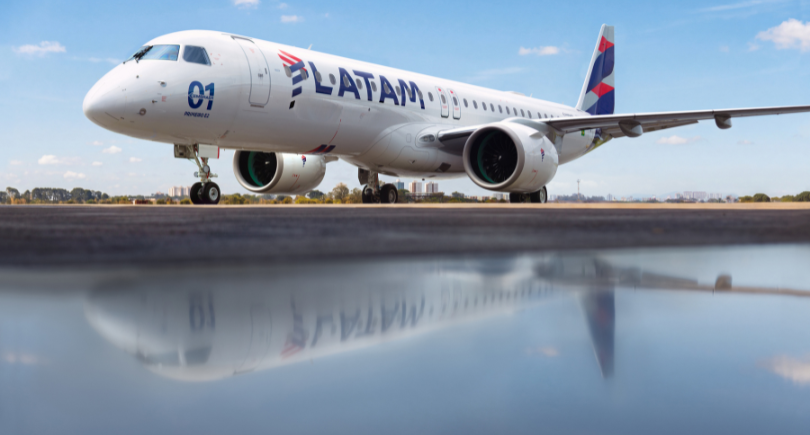

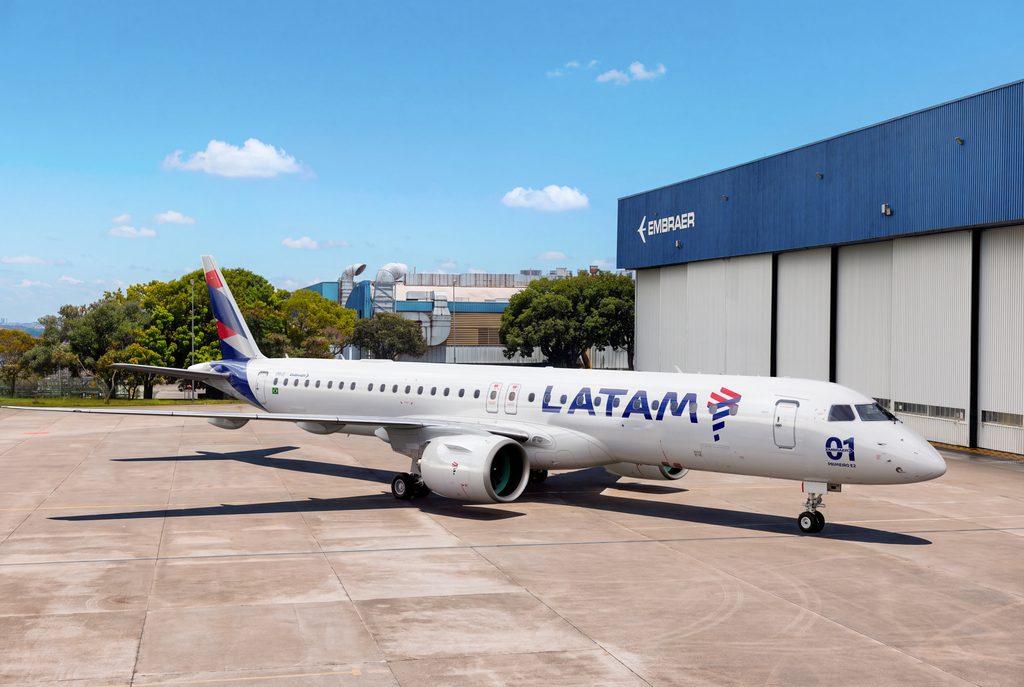
LATAM Airlines Brazil has begun the delivery process for its first Embraer E195-E2, marking a new phase in the airline’s strategy to expand domestic connectivity and serve additional markets across the country. The aircraft is expected to enter commercial service in the coming days, subject to the completion of the required regulatory and operational procedures.
The delivery marks the first of 12 E195-E2 aircraft scheduled to join LATAM’s fleet by the end of 2026. The milestone follows LATAM Airlines Group’s announcement in September 2025 that it would acquire up to 74 aircraft of the type, strengthening its ability to serve markets with varying levels of passenger demand.
LATAM Brazil has expanded its domestic network from 44 airports six years ago to 63 today. With the introduction of the E195-E2, the airline aims to extend its reach beyond major aviation hubs and connect emerging regional markets to its wider network.
Jerome Cadier, CEO of LATAM Airlines Brazil, said the aircraft would support the airline’s plans to expand sustainably and connect markets with strong demand and economic potential. The carrier aims to serve more than 70 airports in Brazil by 2027.
E195-E2 to Support New Routes and Regional Connectivity
LATAM’s first E195-E2 aircraft are scheduled to enter service between November 2026 and March 2027. During the initial deployment phase, the first 14 aircraft are expected to operate across 42 routes, including eight new routes and four destinations not previously served by the airline: Cabo Frio and Macaé in Rio de Janeiro state, Ji-Paraná in Rondônia, and Rondonópolis in Mato Grosso.
The expansion is expected to give LATAM its largest domestic network in Brazil to date. The airline is also evaluating the feasibility of adding up to 18 destinations in 2027, using the E195-E2 to extend connectivity from its main hubs.
The aircraft’s capacity and operating characteristics are expected to provide greater flexibility in matching aircraft size to market demand. This could allow LATAM to develop routes that may not require the capacity of its larger narrowbody aircraft while offering additional connections to its domestic and international networks.
A further 12 E195-E2 deliveries are planned for LATAM Brazil in 2027, supporting the next phase of its fleet and network expansion.
Francisco Gomes Neto, CEO of Embraer, said the aircraft would contribute to LATAM’s connectivity strategy by combining efficiency, operational flexibility and passenger comfort.
Accelerated Certification Through Airline-Manufacturer Collaboration
Before entering commercial service, LATAM’s first E195-E2 must complete several remaining steps, including customs procedures, cabin interior approval, and certification with Brazil’s National Civil Aviation Agency (ANAC).
The airline expects to complete the certification process approximately one year after announcing the acquisition. According to LATAM and Embraer, close coordination between their teams helped shorten the timeline.
In an approach described by the companies as unprecedented, LATAM used an Embraer demonstration aircraft, known as the “Profit Hunter,” for evacuation demonstrations, evaluation flights, and pilot and cabin crew training and qualification. The initiative reduced the time required for these activities by approximately half while maintaining applicable safety requirements.
The collaboration highlights the importance of coordination between aircraft manufacturers and operators in preparing new aircraft types for service, particularly when airlines are working to introduce additional capacity within a defined fleet expansion schedule.
Cabin Configuration and Passenger Features
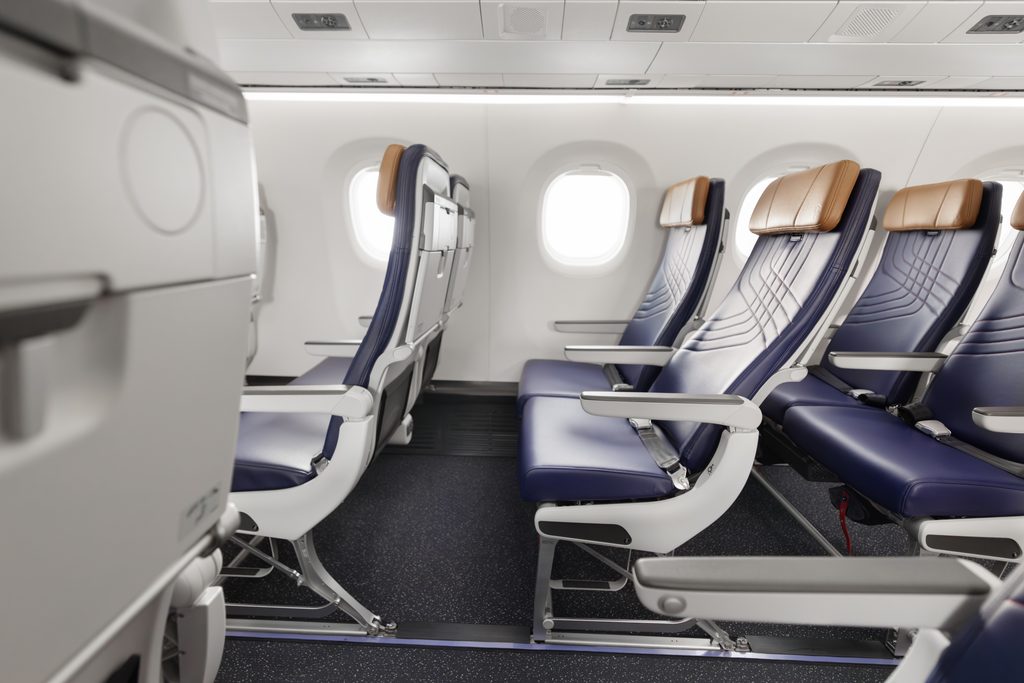
LATAM’s E195-E2 aircraft will feature 136 seats in a 2-2 layout, eliminating middle seats across the cabin. The configuration will include Premium Economy and Economy, with Premium Economy accommodating up to 20 passengers depending on the aircraft’s layout.
Premium Economy passengers will receive additional legroom, greater seat recline, and enhanced onboard service. The aircraft will also feature USB-C charging ports at every seat, free Wi-Fi for registered LATAM Pass members, and access to LATAM Play, the airline’s onboard entertainment platform.
These features are intended to maintain passenger comfort while giving LATAM greater flexibility to serve regional markets with an aircraft smaller than its mainline narrowbody fleet.
E195-E2 Efficiency and Fleet Strategy
The E195-E2 is the largest member of Embraer’s E-Jets E2 family and incorporates aerodynamic improvements, advanced systems, and fourth-generation fly-by-wire technology. Embraer cites fuel consumption reductions of up to 30% compared with first-generation E-Jets, alongside a range of approximately 3,000 nautical miles (5,556 kilometres).
The wider E2 family incorporates technological and aerodynamic developments designed to reduce carbon emissions by up to 25%, according to Embraer. These efficiency improvements could support airlines seeking to manage operating costs while expanding services to additional destinations.
The E195-E2 programme also builds on the operational experience of the E-Jets family, which, together with the E-Jets E2, has surpassed 2,000 aircraft deliveries. The aircraft families are operated by more than 80 airlines across 50 countries.
For LATAM Brazil, the introduction of the E195-E2 represents more than a fleet addition. The aircraft is central to a strategy focused on expanding domestic coverage, opening new routes and matching capacity to demand. With further deliveries planned through 2027, the programme is expected to play a significant role in the airline’s efforts to broaden its presence across Brazil while maintaining operational and economic discipline.