
Drivers help companies refine their marketing strategies to gain competitive advantage, and the aircraft interiors business is no different, though niche. Cabin maintenance, in all its aspects, plays a significant part in how aircraft interiors impact travellers, and help airline upfront their brands in a somewhat crowded marketplace. Brand equity to a large part stem from aircraft interiors, its accessories and tech integration, and how this segment is maintained.
Research firm Technavio’s market overview pegs the commercial Aircraft Cabin Interiors Market for the period 2025-2029 at $26.64 Bio at a CAGR of 16.8% between 2024 and 2029.
Advanced technology integration boosting cabin upgrades
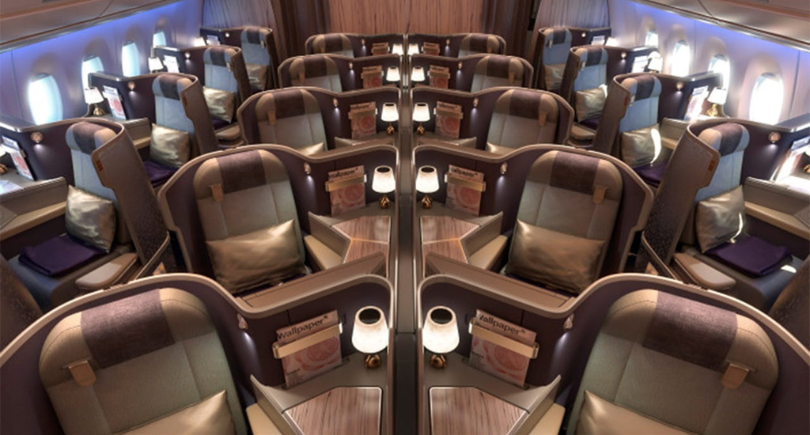
The primary drivers for the exuberance are the preference for next-gen aircraft, increasingly fuel efficient, superior cabin comfort, with quieter cabins, mood lighting, ergonomically designed seats and replete with advanced technology integrations. Especially true for the long-haul passenger and young ones who are kept suitably engaged.
Innovations come from collaborative efforts in the aerospace industry, and early adoption give carriers the marketing edge, and enabling market expansion. However, beyond the cosmetics, it is about safety with the market witnessing cabin safety features, emergency procedures, and automated systems. Digitalisation has afforded all this and a host of other benefits towards superior maintenance processes, including predictive maintenance and cabin digital twins, that keep cabins in pristine condition. Health concerns and benefits of pure air within a cabin are also addresses through humidity control, ventilation, and air filtration systems. Mood lighting and ergonomic seating comfort all contribute to a superlative cabin environment.
Entertainment on tap – a winner with flyers

High speed internet and wi-fi connectivity have become a matter of choice for air travellers, choosing to book seats on an airline that can offer customised audio and video entertainment, news, and information, on tap. 4K screens, noise cancelling headphones and overall cabin acoustics, are becoming standard offerings by global brands.
In-cabin communication from seat-to-seat, remaining connected to their businesses via internet, as also possibilities of in-flight shopping, entertainment, and dining services are being constantly enhanced through technology.
Use of lightweight cabin materials and engineering play a significant role in cabin durability and weight reduction, important in the age of sustainability, cabin monitoring systems are also gaining importance. Overall, the market is evolving to ensure greater safety and adhering to regulatory norms, and at the same time, creating inflight products and services for discerning travellers of all age groups and demographics.
Aviation MRO is an all-important industry as it plays an important part in cabin refurbishment and repairs, which is essential towards maintaining a cabin’s pristine condition, airworthiness and extend its life cycle. Maintaining regulator mandates ensure safety standards while cabins are fabricated to meet the necessary requirements for passenger comfort. Aircraft Interiors is a perfect balance of science and aesthetics. Cabin innovation and design continue to evolve, aligning more with passenger comfort, accessibility, and sustainability. Seating, Lavatory module, windows cabin panels and stowage bins, galley, and lighting systems and all other cabin inclusions that must pass stringent tests before constructing a cabin that make up most part of aircraft interiors.
Age of Customization Specialists & Cabin Integrators
Cabin integrators and customization specialists is an industry gaining importance and growth, as they endeavour to offer tailored solutions for cabin design, layout, and amenities for OEMs and MRO service providers. This seating segment is estimated to witness significant growth as newer aircraft enter the fleets worldwide and older more mature aircraft are refurbished and refitted with latest in seating designs. Therefore, cabin materials, engineering, and technology are continually evolving to improve durability, weight, and sustainability. Cabin certification and regulations ensure compliance with safety standards. Exercises in cabin training, mock- ups, and simulation are carried out for efficient installation and maintenance. Cabin solutions cater to diverse passenger needs while ensuring safety, durability, and sustainability. In-flight services, including meal and beverage offerings, use of eco-friendly flatware, are also essential components of the cabin experience. Cabin design and sustainability are key considerations in today’s world of aviation.
Cabin Maintenance

Cabin interiors are exposed to constant wear and tear — high passenger volumes, regular cleaning cycles, and long service intervals all take their toll. Left unchecked, even minor issues can quickly become safety risks or result in costly downtime.
During Line Maintenance, quick, routine, and essential tasks like housekeeping and maintenance or minor repairs may be performed between flights, whereas a Base Maintenance calls for heavy checks, deeper inspections which may lead to component removal/installation, major refurbishment done inside hangars and are labelled A, B, C, or D checks, depending on the intensity and level of MRO services required. However, availability of spare parts, and a reliable supply-chain are all crucial for ensuring optimal performance.
The aviation industry is continually evolving, and cabin trends include use of advanced materials, modular designs, and improved ergonomics. While passengers demand superior flying experiences, carriers, OEMs, MROs, and Regulators must ensure a safe and a smooth flying experience.
Safety considerations
Safety is of paramount importance in air travel and cabin interiors must have these safety features built-in and made of materials that meet stringent flame-retardant and regulatory standards. For instance, cabin design and materials is a critical consideration to maintain fire safety norms. These requirements put the air cabin manufacturing and fitting industry on a healthy growth path, as also competitive.
Features and instructions towards evacuation, and fire safety are critical in cabin design, choice of materials, maintenance of these and cabin safety certifications, to ensure that cabins meet the necessary safety requirements. Items that do not catch our attention but must pass these tests, are coatings, adhesives, tapes the like, that must withstand frequent use and harsh environments. Effective cleaning and disinfecting surfaces only go to protect passenger health while maintaining overall cabin hygiene. Quick-solutions products help reduce turnaround time, essential for operational reliability.
The delay in scheduled aircraft deliveries poses a significant challenge to the industry’s growth trajectory, as the market experiences a healthy growth trajectory, fuelled by the growing demand for passenger traffic, and hence the requirement for cabin innovation and passenger comfort. Manufacturers of cabin components and sub-assemblies are under pressure to deliver high-quality products on time and at competitive rates. This trend is driven also by the growing clamour for fuel-efficient aircraft, particularly in emerging economies.
Recent Developments

In February 2023, Boeing announced the launch of its new cabin interiors product line, the “Boeing Signature Cabin Flex,” designed to offer airlines flexibility in configuring their cabins for various seating arrangements and passenger classes (Boeing, 2023). This new offering aims to cater to the evolving demands of the airline industry, focusing on customization and flexibility.
In October 2024, Collins Aerospace, a leading supplier of cabin interiors, signed a strategic partnership with Lufthansa Technik to jointly develop and offer premium cabin solutions, integrating advanced technologies and design concepts (Collins Aerospace, 2024). This collaboration is expected to strengthen both companies’ positions in the high-end market.
In March 2025, United Technologies Corporation completed the acquisition of Spirit AeroSystems’ cabin interiors business, expanding its portfolio and capabilities in this sector (United Technologies, 2025). The acquisition adds significant manufacturing capacity and expertise, enabling United Technologies to better serve its customers and compete more effectively in the market.
In July 2025, the Federal Aviation Administration (FAA) approved the use of recycled materials in commercial aircraft cabin interiors, marking a significant shift towards more sustainable aviation practices (FAA, 2025). This regulatory approval is expected to encourage the adoption of eco-friendly cabin interiors, reducing the environmental impact of the aviation industry.
Cabin data analytics
Use of cabin data analytics is another evolving trend, where innumerable data points are being gleaned about insights into cabin performance and passenger behaviour. This has aided proactive maintenance. The aircraft cabin life cycle, from design to disposal, is a critical consideration for stakeholders where maximizing value and minimizing waste is a given.
In-flight cabin amenities, comfort, and entertainment for both premium and economy travel are key drivers of cabin innovation. Airline brands vie with each other for attracting and retaining a higher share of premium class passengers for their own profitability.
Keeping aircraft cabin interiors in top condition is about more than aesthetics — it is about safety, compliance, passenger comfort, and operational reliability.
Importantly, flight management systems gauge route optimization, monitoring fuel consumption, and managing aircraft performance.
Challenges
However, the market faces challenges, mainly due to delay in aircraft scheduled deliveries. This in turn, impacts and contracts the cabin interiors market, as potential orders from airlines reduce or get postponed. Additionally, while the adoption of artificial intelligence and machine learning technologies in avionic systems helps greatly to improve system performance and reduce maintenance costs, it is a hefty investment to integrate the technology and train personnel to be adept at this technology.
Regulatory hurdles also impact adoption, as stringent safety and environmental regulations necessitate extensive testing and certification processes. To circumvent these challenges and capitalize on opportunities, companies are having to remain agile and responsive, focusing on innovation, collaboration, and flexibility. By addressing these challenges and leveraging emerging trends, business can remain relevant and
Conclusion
The aircraft interiors and cabin maintenance market is influenced by various factors, including passenger preferences, technological advancements, and regulatory requirements. Partnerships between airlines, aircraft manufacturers, and interior design firms are becoming a tightly knit group focusing on integrating advanced technologies and materials to enhance passenger comfort and experience. For example, the use of lightweight, sustainable cabin materials is a key trend, as it reduces aircraft weight and improves fuel efficiency, while also providing aesthetically pleasing and functional cabin environments.
Sustainability is playing a significant part in choices made and manufactured as the Net Zero deadline draws near. The market is expected to continue grow, driven by increasing air travel demand and the need for cabin modernization and upgrades, with newer levels of safety requirements.