
India is making steady progress towards sustainable aviation fuel (SAF) adoption, with a new Boeing and Roundtable on Sustainable Biomaterials (RSB) assessment placing the country’s overall SAF readiness at 52%.
The assessment provides a roadmap for developing the infrastructure, supply chains and supporting capabilities needed as India moves from early-stage SAF development towards wider adoption. For the aviation industry, the transition will require more than fuel production, with airports, airlines, fuel suppliers, maintenance organisations and other service providers needing to adapt to a progressively larger SAF supply chain.
The RSB assessment evaluates India across nine areas: feedstock, production capacity, policy and regulation, supply chains and logistics, market demand, investment and financing, research and development, technology readiness, and enabling infrastructure and services.
SAF growth will require wider aviation infrastructure
India has established SAF blending targets of 1% by 2027, 2% by 2028 and 5% by 2030. The country is also committed to participating in the International Civil Aviation Organization’s Carbon Offsetting and Reduction Scheme for International Aviation (CORSIA) from 2027.
Under a 5% blending scenario in 2030, SAF demand across domestic and international aviation is projected at approximately 720 million litres, or around 0.6 million tonnes, annually. The report estimates potential production capacity at 14–33 million tonnes per year, indicating that production potential alone is unlikely to be the main constraint on adoption.
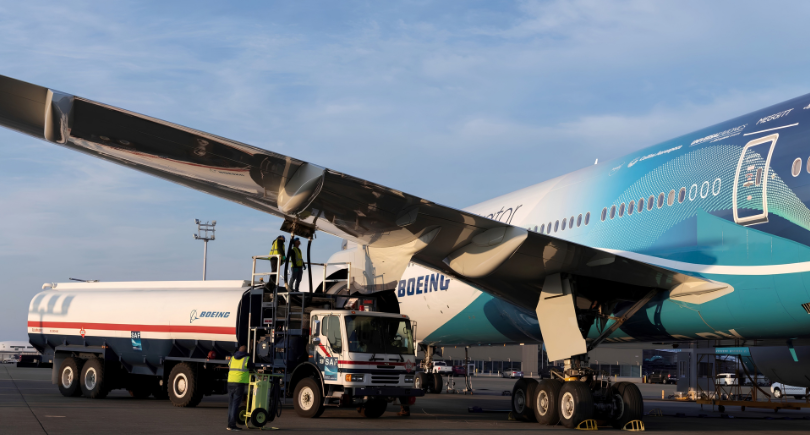
For the MRO sector, the expansion of SAF use reinforces the importance of fuel-system compatibility, aircraft technical records, fuel-quality management and operational procedures. SAF is designed as a drop-in fuel when produced to applicable standards, allowing it to be incorporated into existing aircraft and fuel infrastructure within approved blending limits. However, wider adoption will increase the need for consistent fuel handling, quality assurance and supply-chain coordination across the aviation ecosystem.
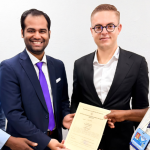
Boeing India & South Asia President Salil Gupte said the assessment identifies both the foundational capabilities already available in India and the opportunities that remain to support SAF adoption.
RSB Executive Director Bettina Paschke said the assessment provides stakeholders with a common evidence base for developing India’s SAF opportunity and strengthening collaboration across the sector.
The report highlights that India’s SAF transition will depend on coordinated action from government, airlines, fuel producers, financiers and other industry stakeholders. For aviation maintenance and support organisations, the development of this ecosystem will increasingly form part of the industry’s broader sustainability strategy, alongside improvements in energy efficiency, waste reduction, digitalisation and lower-carbon ground operations.