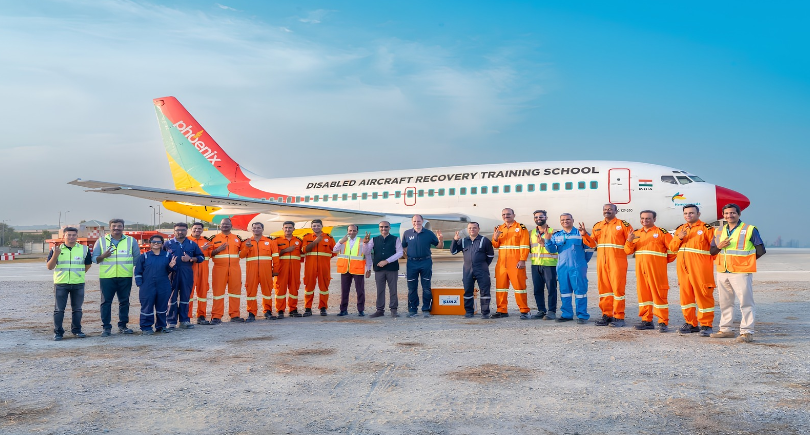

Once grounded for more than a decade, a former Air India Boeing 737-200 has returned to the aviation ecosystem in an unexpected role. Now rechristened ‘Phoenix’, the aircraft will serve as a full-scale training platform at Bengaluru airport, helping prepare aviation professionals for one of the industry’s most specialised operational challenges.
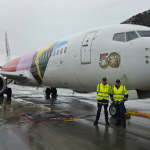
This is the story of a Boeing 737-200, once operated by Air India and popularly known as ‘Baby Boeing’. After remaining non-operational at Kolkata airport for more than a decade, the aircraft has found a remarkable second life in Bengaluru. It has been dismantled, transported, reassembled, and given a new identity: ‘Phoenix’.
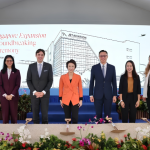
Unveiled by Bangalore International Airport Limited (BIAL) on November 18, 2026, the aircraft is now part of Kempegowda International Airport’s Aircraft Recovery Training School. And this time, it is not preparing to carry passengers. It is preparing to help train the people who will keep airports and aircraft operations moving when things do not go according to plan.
A second life
The journey of this aircraft is almost as interesting as its new purpose. Delivered to Indian Airlines in 1982, the Boeing 737-200 was leased to Alliance Air in 1998 and transferred to Air India in 2007 following the merger of Indian Airlines and Air India. It eventually remained grounded at Kolkata airport for more than ten years before being acquired by BIAL.
Bringing it to Bengaluru was no ordinary transportation exercise. The aircraft underwent a 45-day logistical operation involving detailed route assessments, dismantling and transportation on four specialised trailers before being reassembled at the airport.
What makes its new role particularly valuable is that it has retained its engines, avionics and cockpit. Rather than serving merely as a static display, Phoenix offers aviation professionals access to a full-scale aircraft for practical training exercises.
It is a fitting transformation: an aircraft that once connected destinations will now help connect learning with real-world operational experience.
The importance of recovery training
An aircraft becoming immobilised on an airport runway or taxiway is one of those situations that can quickly turn into a major operational challenge. A technical failure, landing gear collapse or nose-wheel failure can leave an aircraft unable to move under its own power.
The challenge is not simply to remove the aircraft. It must be recovered safely, without causing further structural damage, while minimising disruption to airport operations and other aircraft movements. This is where Disabled Aircraft Recovery (DAR) becomes critical.
The process requires specialised equipment, technical understanding, coordinated ground operations and trained personnel who know how to handle different aircraft configurations and recovery scenarios. From aircraft lifting and towing to preparing the ground and managing landing gear or nose-wheel collapse situations, every step demands precision.
For aviation professionals, these are not skills that can be developed through theoretical instruction alone. Practical exposure to aircraft structures, recovery equipment, and simulated operational scenarios is essential.
And this is precisely where Phoenix enters the picture.
Bengaluru’s specialised training infrastructure
BIAL initially established its Aircraft Recovery Training School to develop in-house expertise and strengthen its own operational preparedness. It is now opening the programme to aviation professionals across the global industry.
Described by BIAL as South Asia’s only dedicated Disabled Aircraft Recovery Training School, the facility operates in collaboration with Germany-based KUNZ, a provider of aircraft recovery solutions, alongside BIAL’s qualified and certified trainers.
The training curriculum includes a five-day advanced hands-on programme, a three-day basic hands-on course and a one-day open house offering familiarisation with recovery equipment. Each training batch can accommodate 16 participants, with certification provided under the KUNZ-BIAL training school framework.
The facility also has specialised recovery equipment compatible with Code F aircraft, including a low-pressure inflatable lifting-bag platform. With Phoenix now available as a full-scale training aircraft, participants can gain practical exposure to recovery procedures using an actual aircraft rather than relying exclusively on classroom instruction or simulations.
This opens up opportunities for airport operations teams, airline engineering and maintenance personnel, ground-handling professionals and other aviation specialists to develop capabilities in an important area of airport safety and operational resilience.
India’s aviation growth needs more than aircraft and airports
India’s aviation sector is expanding rapidly, with airlines adding aircraft, airports strengthening infrastructure and maintenance organisations building capabilities to support growing fleets. But the industry’s expansion is not just about aircraft deliveries, new routes or passenger numbers.
Behind every successful flight is an extensive ecosystem of trained professionals working across engineering, maintenance, airport operations, ground handling, safety, logistics and technical support.
As this ecosystem expands, the demand for skilled aviation professionals will grow alongside it. Equally important will be the infrastructure required to train them.
The industry needs more than academic programmes and theoretical qualifications. It needs specialised training facilities where aspiring professionals and experienced personnel can understand how aviation operations work in real-world conditions, learn to respond to unexpected situations, and develop the confidence to handle complex technical challenges.
Aircraft recovery is one such specialised discipline. While it may not always receive the same attention as aircraft maintenance or flight operations, its importance to airport safety and operational continuity cannot be understated.
BIAL’s initiative highlights how airports can contribute to this wider skills-development ecosystem by opening specialised operational capabilities to the industry. It also demonstrates how existing aviation assets can be repurposed to create meaningful training opportunities.
Girish Nair, Chief Operating Officer, BIAL, highlighted operational resilience as fundamental to sustaining the growth of India’s aviation sector, emphasising the importance of specialised capabilities, continuous learning and collaboration among airports, airlines, regulators and industry partners.
With Phoenix, BIAL aims to extend its training capabilities to aviation professionals across India and Southeast Asia.
A new journey
There is something particularly meaningful about the transformation of this Boeing 737-200. An aircraft that spent years without a purpose in active aviation operations has now become an asset for the next generation of aviation professionals.
Its story also offers a larger lesson for the industry. Aviation growth is not sustained by infrastructure alone. It requires people with the right skills, practical knowledge and the ability to respond when operations face unexpected challenges.
As India prepares for the next phase of aviation expansion, investments in specialised training infrastructure will be just as important as investments in aircraft, airports and maintenance facilities.
And if you are someone considering a career in aviation, perhaps this is an opportunity to look beyond the familiar paths of becoming a pilot or an aircraft maintenance engineer. The industry offers several specialised career avenues, from aircraft recovery and airport operations to safety, engineering and technical services.
So, if you are planning a career in aviation, give it a thought. The skies may be the limit, but the opportunities on the ground are just as exciting.