
Avio Aero and GE Aerospace have completed a series of technology demonstration tests in Europe focused on hydrogen combustion and hybrid-electric propulsion, marking key milestones in the development of next-generation aircraft engine technologies under the European Union-backed Clean Aviation programme.
The test campaigns, conducted across facilities in Germany, Italy, Poland and Türkiye, support technology development for the CFM International Revolutionary Innovation for Sustainable Engines (RISE) programme, which is exploring propulsion concepts aimed at reducing fuel consumption and emissions in future commercial aircraft.
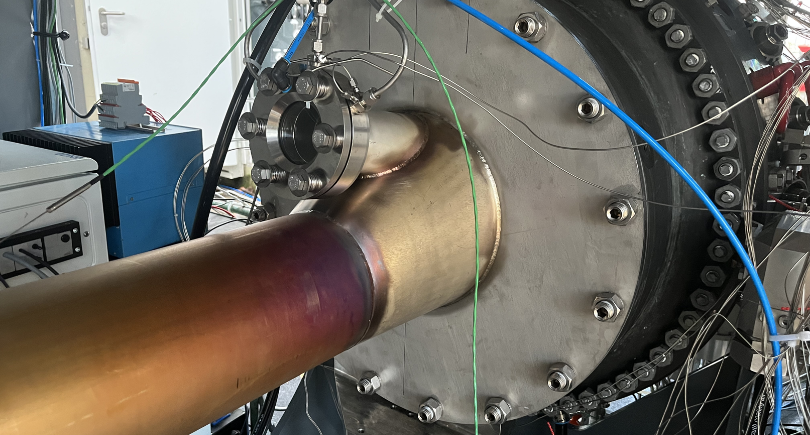
One of the major achievements involved the successful completion of GE Aerospace’s first hydrogen-fuelled engine relight test under simulated high-altitude conditions. Conducted at the German Aerospace Centre (DLR) Institute of Space Propulsion in Lampoldshausen, the campaign evaluated the ability to restart a hydrogen-powered engine in cold, low-pressure environments representative of cruise altitudes.
Engine relight capability is considered a critical requirement for future hydrogen-powered aircraft, as hydrogen combustion presents different operational challenges compared with conventional aviation fuels due to its faster burn rate and higher combustion temperatures.
“Avio Aero and GE Aerospace teams in Europe are proud to be at the forefront of new technology innovation. Together with our European partners and research institutions, we’re turning ideas into real, tested capability,” said Luca Bedon, Head of Research and Technology at Avio Aero.
The hydrogen testing programme was carried out under the HYDEA project consortium led by Avio Aero and included the use of a multi-cup hydrogen combustor test rig and a hydrogen-specific ignition system developed by Unison, a GE Aerospace company. Data generated from the campaign will be used to support the design of a full annular hydrogen combustor for future testing.
In a separate milestone under the AMBER project, engineers completed testing of a proprietary fuel-cell-based power system at DLR’s BALIS test facility in Germany. The programme is focused on advancing megawatt-class hybrid-electric propulsion systems that integrate fuel cells, power electronics and electric drives for future aircraft applications.
The testing evaluated fuel cell performance across multiple operating conditions, including rapid power transitions and simulated short- and long-range flight profiles. The results are expected to provide additional data on system durability, operational behaviour and integration requirements for hybrid-electric aircraft propulsion architectures.
“The future of flight is more electric. We’re proud to partner with DLR and others around the world to advance the building blocks to help make hybrid electric flight a reality,” said Roman Seele, Future of Flight Leader for GE Aerospace in Germany.
For the aerospace industry, the developments highlight ongoing efforts to mature alternative propulsion technologies that could shape future maintenance and support requirements. While hydrogen combustion and hybrid-electric systems remain in the demonstration phase, they are expected to introduce new challenges and opportunities for the global MRO sector, including specialised maintenance procedures, new safety protocols and workforce training requirements.
Avio Aero and GE Aerospace are currently participating in several Clean Aviation projects, including HYDEA for hydrogen combustion technology, AMBER for hybrid-electric propulsion, and TAKE OFF and OFELIA, which focus on Open Fan engine demonstrators. The technologies are being developed as part of the broader CFM RISE programme, which aims to achieve more than 20% lower fuel consumption compared with current commercial aircraft engines.