Agreement combines APU maintenance, replacement-unit leasing, engineering and predictive maintenance as Mexican cargo carrier expands its A330 operations
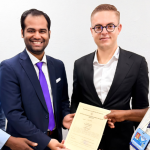
EPCOR, part of Air France Industries KLM Engineering & Maintenance (AFI KLM E&M), has signed a five-year agreement with Mexican cargo airline mas to provide long-term APU support for its Airbus A330 fleet. The agreement covers five A330 aircraft equipped with GTCP331-350 APUs and marks the first contract between mas and EPCOR.
As mas continues to develop its international cargo operations and expand its fleet, the agreement is designed to provide greater predictability and flexibility around APU maintenance while supporting the availability of its A330 fleet.
Integrated APU support package
Under the agreement, EPCOR will provide a comprehensive support package covering APU shop visits, replacement APU leasing, engineering support, and Prognos for APU, its predictive maintenance solution.
The combination is intended to give mas greater flexibility in managing its APU requirements while improving maintenance planning and predictability. The lease component will provide access to replacement APUs when required, helping the airline manage its fleet requirements while limiting potential disruption to aircraft operations.
Meanwhile, engineering support will complement the physical maintenance capability, with Prognos for APU adding a predictive element to the programme. The solution uses predictive maintenance capabilities to support earlier identification of potential APU issues and improve maintenance decision-making.
Support tailored to cargo operations
According to EPCOR, the scope of the agreement has been developed around mas’s operational preferences and requirements.
Heidi Haveman, Managing Director at EPCOR, said the company had developed an understanding of mas’s operational needs and worked with the airline to shape the workscope accordingly. The flexibility of the lease solution, she added, would allow the support package to adapt as the airline’s operational requirements evolve.
Robert van de Weg, CEO of mas, said EPCOR had demonstrated an understanding of the airline’s operational requirements and a willingness to tailor the solution around its needs. The airline also highlighted the broader MRO experience of AFI KLM E&M as an important element of the partnership.
APU capability backed by AFI KLM E&M network
The agreement combines EPCOR’s specialist APU capabilities with the wider MRO expertise of AFI KLM E&M. EPCOR provides APU maintenance for a range of commercial aircraft, including the Airbus A330 and A350, while also offering asset-management solutions such as APU leasing and exchanges.
The company’s Prognos for APU solution adds predictive maintenance capability to its portfolio, supporting operators seeking to move from reactive maintenance towards more data-driven maintenance planning.
mas eyes further fleet development
The agreement comes as mas continues to develop its international cargo operations.
The airline currently operates five Airbus A330 aircraft and is looking to expand its fleet, with additional A330 aircraft under consideration alongside potential future fleet development involving the Airbus A350 and Boeing 777F.
For a growing cargo operator, maintaining APU availability becomes particularly important as fleet utilisation and network requirements increase. The five-year agreement therefore provides mas with a dedicated APU support structure covering both maintenance and asset-management requirements, while allowing the airline to scale its support needs alongside its fleet development.
Also Read – G7 Aerospace, PTDI explore CN235 avionics upgrade partnership
Conclusion
The EPCOR-mas agreement reflects the growing role of integrated component support in fleet availability strategies. Rather than relying solely on traditional shop-visit maintenance, the package combines maintenance, replacement-unit availability, engineering and predictive analytics under a single support agreement.
For expanding cargo operators, such integrated programmes can provide greater control over component-related maintenance requirements while improving predictability and reducing the operational impact of unexpected APU events.