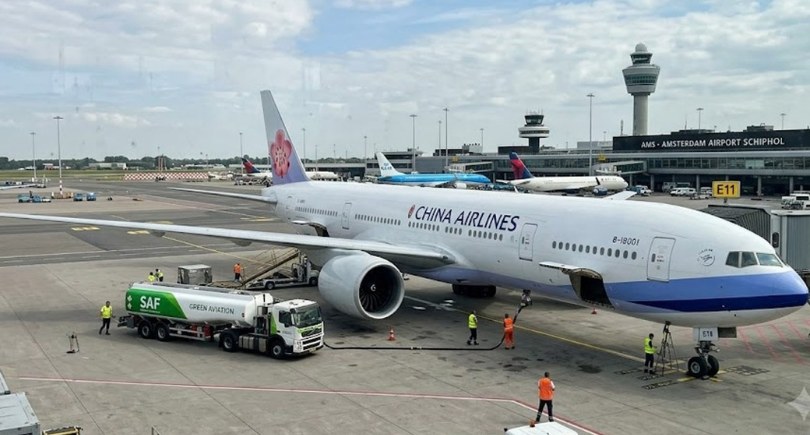

China Airlines has expanded its Sustainable Aviation Fuel (SAF) deployment to long-haul operations, allocating 36.3 tonnes of SAF to flight CI073 from Taipei to Amsterdam as part of SkyTeam’s The Aviation Challenge (TAC).
The deployment represents 40% of the flight’s total fuel consumption and is the largest SAF application in China Airlines’ history. The initiative allows the carrier to assess the operational and commercial requirements associated with scaling SAF use on a long-haul international route.
China Airlines is using the Book and Claim mechanism for the initiative, enabling the airline to account for SAF environmental attributes without requiring the fuel to be physically supplied to the specific aircraft operating the flight. The approach is increasingly being considered by airlines and other aviation stakeholders as SAF availability remains concentrated in selected locations.
The latest deployment builds on China Airlines’ previous SAF initiatives. In 2024, the airline worked with CTBC Bank on a SAF programme involving a 20% blend for regional operations. The latest long-haul application increases the scale of SAF use while providing additional experience in managing lower-carbon fuel programmes across international operations.
Also Read – Lufthansa expands its climate strategy with a greater focus on carbon removal technologies
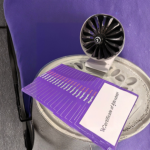
Alongside SAF, China Airlines is pursuing aircraft weight and waste-reduction measures that can contribute to lower fuel consumption. Its redesigned tableware has reduced weight by 27%, while the airline’s Dynasty Sky Reading digital service has eliminated more than 4,300 tonnes of physical material weight from its fleet.
The carrier has also introduced lightweight tableware on services to Prague, Frankfurt and destinations across Oceania. Other measures include carbonised bamboo chopsticks, FSC-certified paper, and recycled PET (rPET) materials.
China Airlines said its participation in TAC has so far included eight demonstration flights, with cumulative carbon dioxide reductions of at least 600 tonnes.
For airlines, SAF remains one component of a broader strategy combining fuel efficiency, aircraft weight reduction, digitalisation and changes to onboard materials and processes. The Taipei-Amsterdam deployment provides China Airlines with further operational experience as the industry works toward greater SAF availability and wider adoption of lower-carbon aviation practices.