
The Central Asia Aviation Cargo Summit highlighted the infrastructure, technology, workforce and operational capabilities needed to support the region’s expanding aviation and air cargo markets.
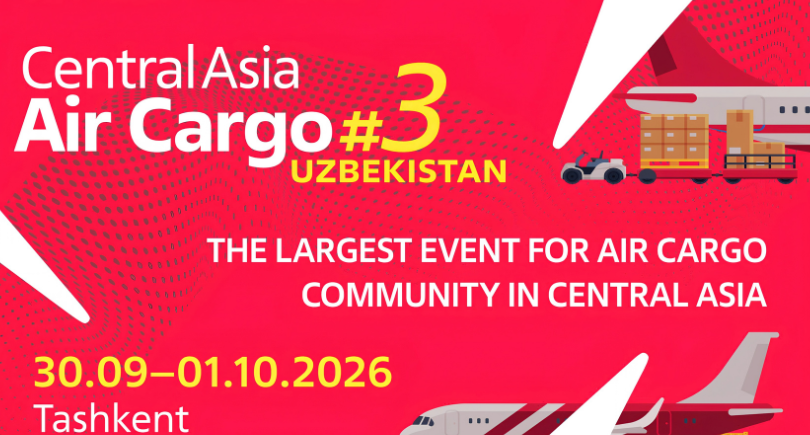
Held in Tashkent on September 30 and October 1, the 2026 summit brought together airlines, airports, logistics companies, technology providers, regulators and freight specialists to examine the development of Central Asia’s role in international cargo networks.
With airlines adding capacity and airports investing in cargo infrastructure, discussions focused on the operational systems required to support growth. Speakers addressed international cargo standards, aviation insurance, artificial intelligence, airport development, multimodal logistics and digital data exchange.
For the aviation support sector, increasing aircraft and cargo activity creates corresponding requirements for airport services, trained personnel, technical capabilities and reliable operational processes. Participants also discussed how greater standardisation across the region could help airlines and other aviation companies integrate more effectively with international networks.
Infrastructure and technology support regional growth
Multimodal logistics was a key theme, with representatives from Silk Way West Airlines, Saudia Cargo and DHL Global Forwarding examining how air transport can be integrated with road and rail networks connecting Central Asia with China, Europe and the Middle East.
The summit also addressed e-commerce, perishables and high-value cargo. Discussions involving Aélia, YDA Group, Pacific Air Holdings and EMEX / FedEx Central Asia covered airport development, cargo insurance, customs, handling requirements and last-mile logistics.
Digitalisation featured prominently during the IATA Roundtable, which brought together representatives from IATA, Lufthansa Cargo, Qatar Airways, Centrum Air / My Freighter and Uzbekistan’s Customs Committee.
The session examined international cargo standards, certification, IATA ONE Record, cargo connectivity and regulatory modernisation. Improved data exchange between airlines, airports, customs authorities and logistics providers was identified as an important part of reducing manual processes and improving shipment visibility.
Technology providers also addressed cargo terminal automation, cybersecurity and ONE Record implementation, highlighting the increasing role of digital systems in airport and cargo operations.
Airport development and aviation workforce
A panel on Eurasian cargo synergies brought together airlines, airports, logistics companies, technology providers and charter specialists to discuss infrastructure bottlenecks, cargo corridors, hub development and the competitive position of Central Asian gateways.
Tashkent Airport and Navoi International Airport presented their cargo development strategies and infrastructure plans, providing insight into Uzbekistan’s expanding role in regional logistics.
The second day also examined flexible cargo capacity, ACMI and charter operations. Chapman Freeborn discussed strategic air chartering, while Atlas Air addressed ACMI solutions for Central Asian markets. Latvijas Pasts examined the relationship between postal operators, airlines and cross-border e-commerce.
The summit concluded with a focus on workforce development. Representatives from Qanot Sharq, Centrum Air, Jupiter Jet and SCAT Airlines discussed education, skills and recruitment requirements as aviation activity expands.
For MRO and technical operations, workforce availability will remain an important consideration as airlines introduce additional aircraft, airports expand their infrastructure and aviation businesses develop new operational capabilities. Training requirements therefore need to evolve alongside fleet growth, digital systems and increasingly complex aviation processes.
The 2026 Central Asia Aviation Cargo Summit demonstrated that the region’s aviation development is extending beyond additional cargo capacity. Infrastructure, digitalisation, regulatory standards, logistics connectivity and workforce development are increasingly interconnected, creating a broader support ecosystem around the region’s growing aviation activity.