
Boeing Global Services is testing how commercial distribution networks and digital inventory systems can strengthen spare-parts availability and maintenance support, as military operators seek more resilient logistics arrangements for contested environments.
Under a contract awarded by US Indo-Pacific Command, Boeing is conducting a Contested Logistics and Distribution Demonstration to assess how commercial logistics infrastructure can support the movement of government-furnished materiel across the Indo-Pacific. The initiative will examine whether established commercial processes can improve supply-chain visibility, distribution flexibility, and responsiveness when conventional transportation routes face disruption.
For aviation maintenance, logistics resilience directly affects the ability to keep aircraft serviceable. Spare parts, tooling and maintenance supplies must reach the right locations when required, while limited visibility into inventory or shipment movements can complicate maintenance planning and delay repairs.
Digital visibility connects inventory with distribution
Boeing’s demonstration combines enterprise resource planning (ERP) systems with physical warehousing and distribution processes. The company will validate government-provided data, create item records, and integrate the information into its ERP environment to support automated cataloguing and tracking.
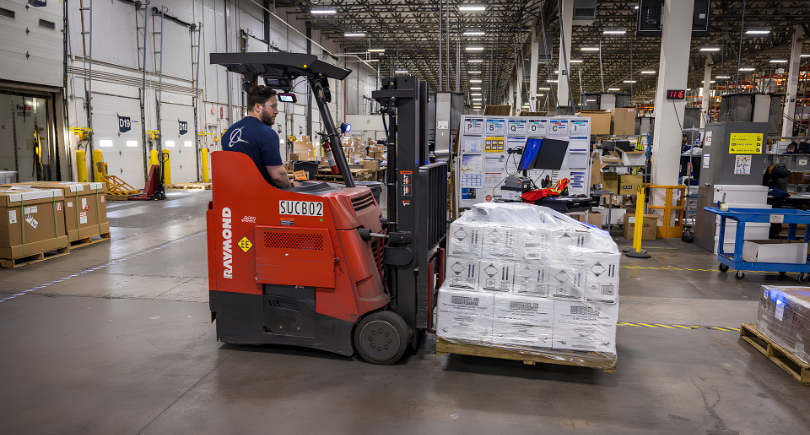
The physical distribution phase will test the receipt, inspection, storage, and dispatch of a shipment. Chain-of-custody controls and in-transit visibility will be maintained throughout the process, allowing the team to assess how digital records align with the movement of physical materiel.

The final phase will involve an operational review to identify bottlenecks, compliance considerations and opportunities to scale the approach. The results are intended to help determine how commercial logistics providers can complement government supply systems and improve distribution performance.
For MRO organisations, the underlying challenge extends beyond the availability of individual components. Maintenance planning depends on knowing what material is available, where it is located, and when it can reach the maintenance facility. Better integration of inventory records and shipment tracking can help organisations identify potential supply gaps earlier and coordinate material requirements with planned maintenance activity.
Commercial networks as part of sustainment planning
The demonstration will also assess how commercial distribution capabilities could reduce dependence on strategic airlift for selected materiel movements. This is particularly relevant in operational environments where transportation capacity is constrained, or supply routes may be disrupted.
Commercial logistics networks offer established warehousing, shipping and inventory-management processes that could complement military distribution arrangements. However, their effectiveness in contested environments will depend on factors including data quality, security requirements, handling procedures and the ability to maintain visibility across the supply chain.
Boeing’s trial will provide an opportunity to evaluate these processes under a controlled demonstration before determining where the approach could be applied more broadly.
Although the programme is focused on military logistics across the Indo-Pacific, its central issue is relevant to the wider aviation aftermarket: aircraft maintenance depends not only on technical capability, but also on reliable access to parts and effective coordination between inventory systems, warehouses and transportation networks.
The demonstration will examine how these elements can work together to support more responsive and resilient sustainment operations.