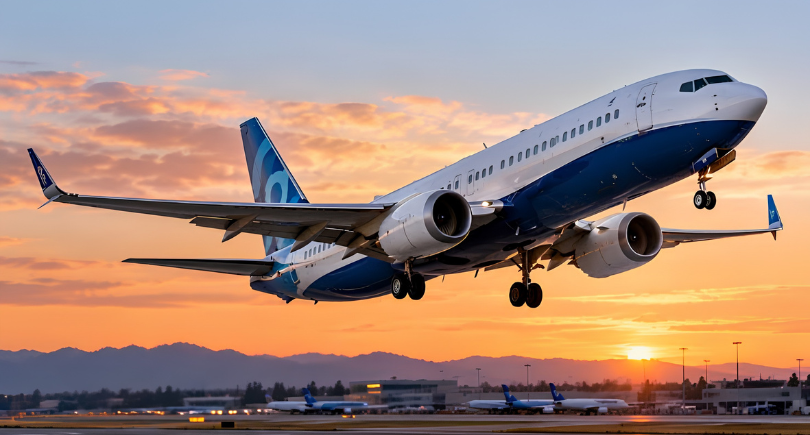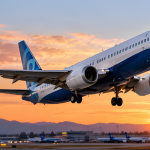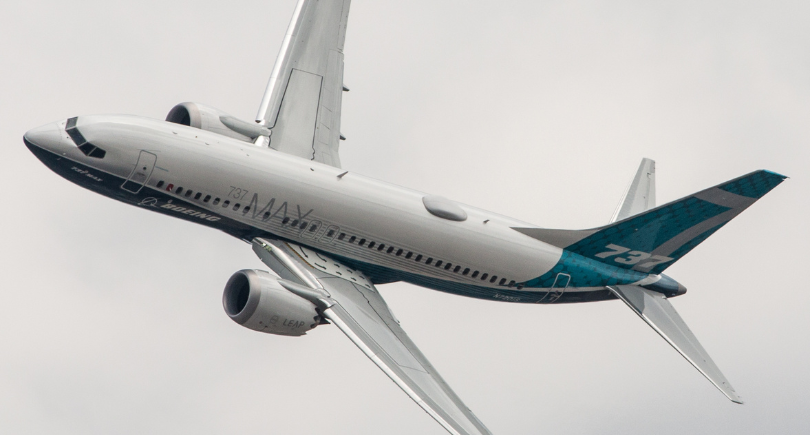

Boeing is set to open a new 737 MAX production line at its Everett, Washington facility this summer, marking a significant shift in its single-aisle manufacturing strategy. Historically associated with widebody programs, Everett will now produce 737 aircraft for the first time through the newly established “North Line.” This expansion is aimed at strengthening Boeing’s ability to meet sustained global demand for narrowbody aircraft while adding resilience and scalability to its production ecosystem.
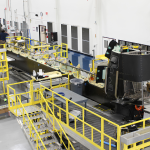
The North Line will be capable of building all variants of the 737 MAX family, with initial focus on the 737-8, 737-9 and 737-10. While the production system will largely mirror the established processes at Renton, a key operational addition will be the 737 Wing Transport Tool, designed to ferry partially completed wings to Everett for final assembly, an adjustment that reflects both logistical innovation and production decentralisation.
Workforce integration and capability building
With construction and tooling in place, Boeing’s immediate focus has shifted toward workforce readiness, underlining the company’s recognition that production ramp-ups are as much about people as infrastructure. The North Line team will comprise a blend of newly hired employees and experienced personnel drawn from Renton, Everett and Moses Lake, ensuring continuity in safety and quality standards while enabling knowledge transfer. Among them is John V., a Boeing veteran of nearly four decades who has worked across flagship widebody programs including the 747, 767 and 777, and now transitions into a role as FAA and customer coordinator for the North Line. “This will be my first time working on the 737 program,” John V. said. “But we are doing the training right. Even folks like me who have been around for a long time are in Renton now getting familiar with the program and the product before the North Line starts.” His transition reflects Boeing’s broader strategy of embedding experience into new production environments to mitigate execution risks.
Structured training
The onboarding framework for the North Line underscores Boeing’s emphasis on disciplined execution. New hires undergo 12 weeks of foundational training followed by structured on-the-job training (SOJT), which pairs them with experienced mechanics in Renton to build practical expertise. Early recruits such as Jaden M. and Alondra P., who joined in late 2025, represent the first wave of technicians preparing to staff the Everett line. “Opening a new production line is something special,” said Jaden, who installs the dorsal fin in Flow Day 1. “So, we have to do it right. Training went smooth and I’m excited and ready to get home to our shop in Everett.” Echoing this sentiment, Alondra highlighted the supportive training environment: “Training was so positive and refreshing. It was different than any training I’ve done in other jobs. My managers and the workplace coaches were always there to make sure I got my questions answered and felt confident in my work.” This structured approach reflects a deliberate effort to rebuild confidence in Boeing’s production system through consistency and oversight.
Low-rate initial production and regulatory alignment
Operationally, the North Line will begin with a low-rate initial production (LRIP) phase, during which output will be intentionally moderated to allow for additional quality checks and process adjustments. This phased ramp-up is designed to stabilise production before achieving higher throughput levels. “It’s like running,” explained Jennifer Boland-Masterson, production leader for the Everett line. “We know how to do it, and we’ve done it before, but we need to warm up our muscles. You don’t start with a marathon. You start with shorter distances and build up from there.” Aircraft produced during this phase will also be used to demonstrate conformity to the Federal Aviation Administration, a necessary step for the North Line to operate under Boeing’s production certificate, PC700. This regulatory alignment is critical, particularly in the current environment of heightened scrutiny on manufacturing quality and compliance.
Interestingly, the Everett North Line signals a calibrated shift in Boeing’s production philosophy toward distributed manufacturing and controlled ramp-ups. Once LRIP is completed and the line is fully integrated into the broader 737 MAX production system, it is expected to support output levels exceeding 47 aircraft per month. For the global MRO ecosystem, this expansion carries important downstream implications.
A larger and steadily growing installed base of 737 MAX aircraft will inevitably drive demand for maintenance planning, component support, and supply chain robustness. As operators continue to prioritise fleet utilisation amid strong passenger demand, MRO providers will need to align capabilities to support this next phase of narrowbody fleet growth, making Boeing’s production decisions increasingly relevant far beyond the factory floor.