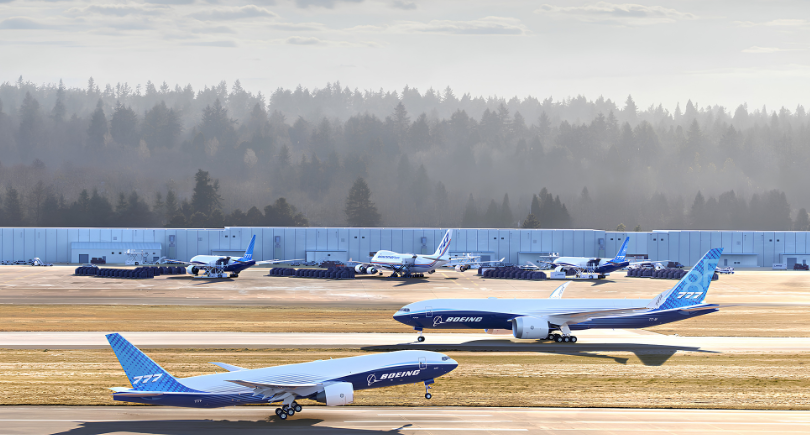

Boeing’s 777 Freighter (777F) has surpassed the in-service fleet of 747 freighters to become the world’s most widely operated dedicated freighter aircraft, marking a significant transition in global air cargo operations. With more than 330 aircraft now in service, the twin-engine widebody has established itself as a leading platform for long-haul cargo transportation, reflecting the industry’s gradual shift away from four-engine freighters.
The milestone follows continued 777F deliveries, with the aircraft now carrying more freight annually than any other freighter type. According to Boeing, the global 777F fleet accounts for approximately 40% of worldwide freighter capacity, supported by high utilisation on international cargo routes. The manufacturer estimates that the fleet transported goods valued at around $4 trillion last year.
The development marks an important change in the air cargo market, where the Boeing 747 had dominated long-haul freight operations for decades. Since the first 747-200 Freighter entered service in 1972, successive variants, including the 747-8F, have supported international trade through their payload capacity and long-range capabilities.
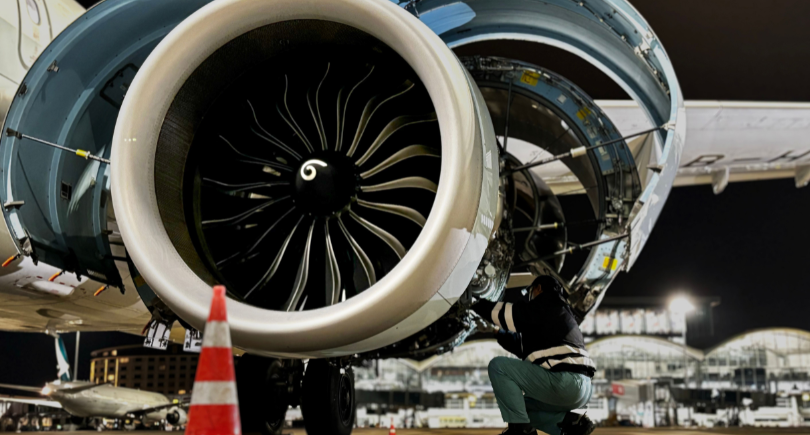
Introduced in 2009, the 777F has increasingly become a preferred platform for cargo operators seeking twin-engine efficiency, long-range performance and high aircraft utilisation. Its growing fleet presence also has implications for the aviation maintenance, repair and overhaul (MRO) sector, particularly in widebody airframe maintenance, engine support, component services and long-term fleet sustainment.
As the global 777F fleet expands and accumulates additional flight hours, maintenance providers will continue supporting operators through scheduled inspections, component repairs, engine maintenance and aircraft reliability programmes. The transition towards twin-engine freighters also reflects changing technical support requirements across the cargo aviation sector.
Meanwhile, Boeing is progressing with the development of the 777-8 Freighter, the next-generation aircraft intended to build on the operational capabilities of the existing 777F. Part of the 777X family, the aircraft will feature a carbon-fibre composite wing and new-generation engines, with a planned payload capacity of 118 tonnes.
According to Boeing, the 777-8F is designed to deliver approximately 30% lower fuel consumption compared with previous-generation aircraft while retaining operational characteristics associated with the 777F, including reliability and high utilisation.
Also Read – Rolls-Royce secures Avolon order for 70 Trent 7000 engines
The programme has secured 89 firm orders from cargo operators, including ANA, Cargolux, China Airlines, China Southern Cargo, Ethiopian Airlines, Lufthansa, MSC Air Cargo, Korean Air Cargo, Qatar Airways and Silk Way West Airlines.
As the 777F strengthens its position in global cargo aviation and the 777-8F moves through development, the shift towards twin-engine widebody freighters is expected to influence future fleet planning, maintenance demand and aftermarket support requirements across the air cargo industry.