From overhauling Douglas DC-3s in 1946 to supporting modern Boeing 787s today, American Airlines’ Tulsa maintenance base remains one of the most influential technical operations centres in global aviation.
In an era where airline competitiveness is increasingly defined by operational reliability, fleet availability, and technical resilience, maintenance has become far more than a support function. It is a strategic advantage. Few airlines embody this reality better than American Airlines.
As the carrier celebrates the 80th anniversary of its legendary Tulsa maintenance base, the milestone offers more than a moment of reflection. It highlights how a long-term commitment to maintenance infrastructure, workforce development, and technical excellence has helped shape not only American Airlines’ operational success but also the evolution of airline maintenance worldwide.
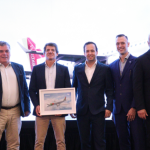
For these reasons, American Airlines is MRO Business Today’s Airline of the Month for July 2026.
The maintenance base that built an airline
Long before maintenance became a boardroom discussion, American Airlines recognised that sustainable growth required strong technical foundations. That vision took shape in 1945 when the airline acquired a surplus military aircraft manufacturing facility in Tulsa, Oklahoma. Spanning more than 260 acres and equipped with four large hangars, the site became the new home for American’s maintenance and engineering operations, relocating them from New York’s LaGuardia Airport.
The Tulsa base officially opened in June 1946, beginning with overhauls of the Douglas DC-3, one of aviation’s most iconic aircraft. At the inauguration, then-CEO and aviation pioneer Cyrus Rowlett “C.R.” Smith spoke words that would prove prophetic:
“We plan to become citizens of Tulsa and Oklahoma. We plan a great expansion and development in this city and this state. Our future is ahead of us. We are looking forward.” Eighty years later, that future has become reality.
From DC-3s to Dreamliners
The story of Tech Ops, Tulsa mirrors the evolution of commercial aviation itself. Virtually every major aircraft type operated by American Airlines has passed through its hangars.
The facility has serviced piston-powered aircraft such as the DC-3 and Convair 240, early jetliners including the Boeing 707, and later generations such as the Boeing 727, Boeing 747, McDonnell Douglas DC-10, and the legendary MD-80 fleet.
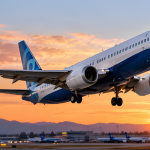
Today, the facility supports modern Boeing 737 and 787 aircraft, demonstrating its ability to continually evolve with advancing technologies.
This adaptability is one of the reasons Tulsa remains relevant eight decades after its establishment.
The world’s largest commercial aircraft maintenance base
While many airlines have outsourced significant portions of their maintenance activities, American Airlines has continued investing heavily in internal capabilities. The result is an extraordinary technical operation.
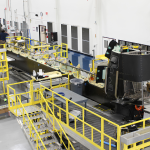
Today, Tech Ops, Tulsa encompasses approximately 3.3 million square feet of hangar and workshop space spread across 330 acres at Tulsa International Airport. Combined with nearby specialised facilities for composite repairs, wheels, and brakes, the base supports maintenance activities for more than 400 aircraft annually.
American is currently investing approximately USD 400 million in facility improvements, further reinforcing its commitment to maintaining one of the most advanced airline-owned maintenance infrastructures in the world.
For an industry grappling with capacity shortages, workforce constraints, and supply chain challenges, such investments demonstrate a long-term strategic perspective rarely seen at this scale.
People remain the greatest asset.
Infrastructure alone does not create maintenance excellence. People do. Today, nearly 5,000 employees work across Tech Ops – Tulsa, including more than 2,300 licensed aviation maintenance technicians. Their responsibilities extend far beyond routine maintenance. Teams support aircraft overhaul, engine maintenance, component repair, engineering services, supply chain management, information technology, and facility operations around the clock.
What makes Tulsa particularly unique is its culture.
For generations, families have worked at the facility, passing technical knowledge and aviation traditions from one generation to the next. This continuity has helped preserve institutional expertise while fostering a deep sense of pride and ownership.
In an age where skilled aviation technicians are becoming increasingly difficult to recruit and retain, American Airlines has managed to build a workforce culture that remains one of its greatest competitive strengths.
Investing in the next generation
Like many aviation organisations worldwide, American Airlines understands that the industry’s future depends on attracting new talent. Recognising this challenge, the airline has strengthened its partnership with Tulsa Tech, a technical education institution that has produced many of today’s maintenance professionals working at the Tulsa base.
The partnership includes interview opportunities for top-performing students, engagement programmes with airline maintenance professionals, and mentoring initiatives designed to prepare young technicians for careers in aviation maintenance. The results are already visible.
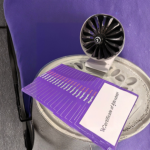
In 2026, a Tulsa Tech adult student team sponsored and mentored by American Airlines captured first place among 47 competing schools at the Aerospace Maintenance Council Competition. Such initiatives are critical as the global aviation industry faces an increasing shortage of qualified maintenance personnel.
American’s approach demonstrates that workforce development is not merely an HR function; it is a strategic investment in future operational reliability.
A model for airline-controlled MRO
The aviation industry is currently witnessing unprecedented demand for maintenance services. Growing fleets, longer aircraft utilisation cycles, supply chain disruptions, and engine maintenance backlogs are placing enormous pressure on MRO networks worldwide. Against this backdrop, American Airlines’ integrated maintenance model offers valuable lessons.
By maintaining extensive in-house technical capabilities, the airline retains greater control over aircraft availability, maintenance planning, quality assurance, and operational resilience. The Tulsa facility serves as a powerful example of how airlines can leverage maintenance as a strategic asset rather than simply a cost centre.
As airlines worldwide reassess their long-term maintenance strategies, American’s eight decades of investment in technical operations provide a compelling blueprint for success.
Looking ahead
As American Airlines enters its centennial year in 2026, the Tulsa maintenance base remains at the heart of its operations. The facility that once overhauled DC-3s now supports some of the world’s most advanced commercial aircraft. Yet its mission remains unchanged: ensuring safety, reliability, and operational excellence.
At a time when aviation is increasingly focused on digitalisation, sustainability, and next-generation technologies, the enduring success of Tech Ops – Tulsa serves as a reminder that the industry’s foundation still rests on skilled people, technical expertise, and a relentless commitment to maintenance excellence.
Eight decades after opening its doors, the world’s largest commercial aircraft maintenance base continues to set standards for the industry. And that is why American Airlines is MRO Business Today’s Airline of the Month.