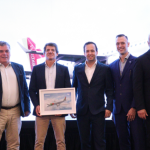
Latest induction highlights rapid fleet growth and signals rising long-term opportunities for India’s MRO ecosystem.
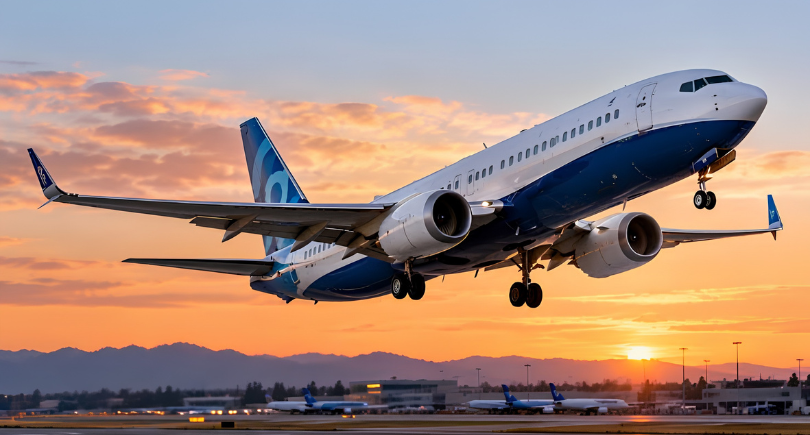
India’s Akasa Air has achieved another significant milestone in its rapid growth journey with the induction of its 40th aircraft, a Boeing 737 MAX 8-200, further strengthening its position as one of India’s fastest-growing airlines. The latest addition underscores the carrier’s aggressive expansion strategy and reflects the continued momentum of India’s commercial aviation sector, where airlines are investing heavily in fleet modernisation to meet rising passenger demand.
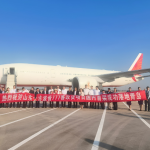
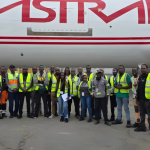
Bearing registration VT-YBQ, the aircraft arrived at Kempegowda International Airport, Bengaluru, on July 3, 2026, after completing a multi-leg delivery flight from Seattle, USA, via Reykjavik, Iceland, and Cairo, Egypt. The induction marks the airline’s ninth aircraft delivery in calendar year 2026, highlighting the pace at which Akasa Air continues to scale its operations.
Fleet expansion continues at pace
Since commencing commercial operations in August 2022, Akasa Air has pursued one of the fastest fleet expansion programmes in Indian aviation. The induction of the 40th aircraft comes as the airline continues to expand its domestic and international footprint while strengthening operational capabilities to support future growth.
Akasa Air currently has a firm order for 226 Boeing 737 MAX aircraft, with 186 additional aircraft scheduled for delivery over the next six years. The sizeable order book places the airline among Boeing’s largest customers in the region and provides a clear roadmap for sustained expansion throughout the decade.
The airline has also reiterated its ambition to become one of the world’s top 30 airlines by the end of this decade, supported by continued fleet growth and network expansion.
Enhanced passenger experience
The newly inducted Boeing 737 MAX 8-200 has been configured to Akasa Air’s specifications and features Safran Z200 next-generation passenger seats designed to improve onboard comfort. Among the key features are four-inch seat recline, ergonomically contoured backrests, enhanced seat cushioning, and USB-C and USB-A charging ports for passenger convenience.
The upgraded cabin reflects the airline’s focus on delivering a modern passenger experience while maintaining the operational efficiency associated with the Boeing 737 MAX platform.
Growing domestic and International Presence
Akasa Air now serves 28 domestic and seven international destinations, steadily expanding its network across India and key overseas markets. Its domestic network includes major cities such as Mumbai, Bengaluru, Delhi, Chennai, Hyderabad, Kolkata, Kochi, Pune, Srinagar, Ayodhya, Navi Mumbai, Noida and several Tier-II and Tier-III destinations.
Internationally, the airline now operates services to Doha, Jeddah, Riyadh, Abu Dhabi, Kuwait City, Phuket and Hanoi, strengthening its presence across the Gulf and Southeast Asia.
Beyond fleet growth, Akasa Air’s latest aircraft induction has important implications for India’s MRO sector. Every new-generation Boeing 737 MAX entering service expands the future demand for airframe maintenance, CFM LEAP engine support, component repair and overhaul, landing gear maintenance, cabin refurbishment, digital maintenance and predictive analytics, and spare parts inventory and logistics.
With 186 additional aircraft expected over the next six years, Akasa Air’s expansion alone represents a substantial pipeline of future maintenance activity. As India pursues its ambition of becoming a global aviation hub while strengthening indigenous MRO capabilities, rapidly expanding airline fleets will play a crucial role in creating sustained demand for domestic maintenance infrastructure, skilled manpower and OEM partnerships.
Conclusion
Akasa Air’s continued fleet induction reflects the broader transformation taking place across Indian aviation.
With airlines collectively adding hundreds of new-generation aircraft over the coming decade, India’s aviation ecosystem is entering a phase where fleet expansion must be matched by corresponding investments in maintenance capacity, technical training, engineering capability and supply chain resilience.
For the MRO industry, every aircraft delivered today represents decades of future maintenance demand. Akasa Air’s 40-aircraft milestone is therefore not merely a fleet achievement; it is another indicator of the long-term opportunities emerging across India’s aviation maintenance landscape as the country’s commercial fleet continues to grow.