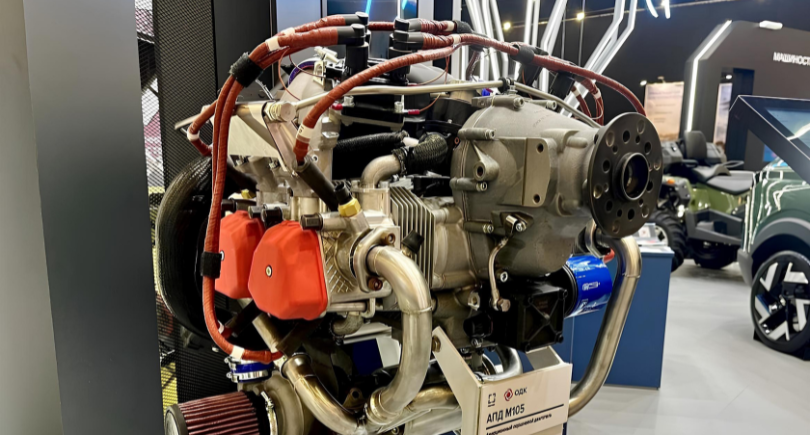

United Engine Corporation (UEC), part of Russia’s Rostec State Corporation, has received a developer’s certificate from the Federal Air Transport Agency (Rosaviatsiya) for its M105 aircraft piston engine, designed for civilian light aircraft and autogyros.
The certification milestone was presented at the Russian Industrialist International Forum and Exhibition in St. Petersburg, held from 22 to 24 October 2026. The development adds to UEC’s portfolio of aviation propulsion systems and supports Russia’s efforts to develop domestically produced alternatives to foreign engines in the light aviation segment.
M105 engine targets light aviation applications
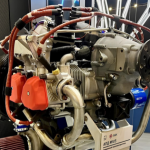
The M105 is a turbocharged, four-stroke, four-cylinder piston engine developed for installation in civilian light aircraft. It delivers 115 horsepower and is intended to provide a domestic powerplant option for aircraft manufacturers.
According to UEC, the developer’s certificate confirms the organisation’s compliance with applicable Federal Aviation Regulations. The company said the engine’s technical characteristics make it a potential alternative to foreign powerplants in its class.
UEC has also developed the M105V modification for civilian light helicopters and autogyros, extending the engine family’s potential applications across light aviation.
Also Read – AerFin expands LEAP-1B engine and 737 MAX material support
Implications for aviation maintenance and support
The development of a domestically produced engine could create opportunities for localised technical support, spare-parts supply and maintenance capabilities as the M105 family moves towards wider adoption.
For the maintenance, repair and overhaul (MRO) sector, the introduction of a new engine platform may require the development of supporting maintenance procedures, technical documentation, component supply chains and specialist training. The scale of these requirements will depend on subsequent aircraft integration, certification and operational deployment.
UEC’s announcement highlights the continued development of Russia’s light aviation propulsion sector, with the M105 and M105V intended to address demand for engines across civilian fixed-wing and rotary-wing applications.