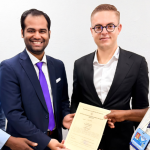

Pratt & Whitney has appointed Amy Comer as president of its Military Engines business, bringing more than two decades of engineering and programme leadership experience across military and commercial propulsion programmes.
Comer will assume the role on January 1, 2027, succeeding Jill Albertelli, who will become president of Pratt & Whitney following Shane Eddy’s retirement at the end of 2026. Pratt & Whitney is an RTX business.
Comer currently serves as vice president of Pratt & Whitney’s GTF engines. Her previous leadership experience spans engineering and programme management, including work supporting the development and sustainment of military and commercial engine product lines.
Military propulsion portfolio enters new leadership phase
As president of Military Engines, Comer will take responsibility for a portfolio covering the development, production and sustainment of Pratt & Whitney’s military propulsion programmes.
The business includes propulsion systems for current and future military aircraft, with the F135 engine forming a major part of Pratt & Whitney’s military engine portfolio. The F135 powers all three variants of the F-35 Lightning II and represents a significant long-term production and sustainment programme. RTX reported $2.4 billion in F135 sustainment contracts in 2025.
Pratt & Whitney’s military engine activities also extend across advanced propulsion programmes and support requirements for fighter, bomber, tanker and transport aircraft. The company provides maintenance, repair and overhaul and other aftermarket services across its engine businesses.
Also Read – Contrail Aviation Support appoints Stuart Weinroth as CEO
Focus on engine development and sustainment
Comer’s appointment comes as Pratt & Whitney continues to balance new propulsion development with the long-term sustainment of engines already in service.
Her more than 20 years of experience across engineering and programme management provides continuity between propulsion development, production and lifecycle support. Pratt & Whitney said her responsibilities will include ensuring the company continues to provide propulsion capabilities to US military services and allied customers.
The leadership transition will therefore span both the development of next-generation military propulsion technologies and the ongoing support of installed engine fleets, including production, maintenance and lifecycle sustainment requirements.