
July’s order and delivery figures reveal more than a sales battle. They signal where the next decade of MRO demand is taking shape.
The July 2026 commercial aircraft numbers may appear to tell a familiar story: Airbus is comfortably ahead of Boeing. The European manufacturer delivered 67 aircraft during the month, taking its year-to-date total to 418 deliveries, while Boeing handed over 53 aircraft to reach 367. On the sales front, Airbus crossed the remarkable milestone of 1,090 gross orders for the year after securing 204 new commitments in July, widening its lead over Boeing’s 483 orders.
Yet behind these impressive figures lies a far more important story—one that extends well beyond aircraft deliveries and airshow announcements. The real competition is no longer just about selling aircraft. It is about shaping the global aftermarket for decades to come.
Every aircraft delivered today becomes tomorrow’s maintenance customer. Every order placed today represents years of future demand for engine overhauls, component repairs, landing gear services, cabin modifications, digital maintenance solutions and skilled technicians. For the MRO industry, July’s numbers offer an early glimpse of where long-term maintenance opportunities are beginning to concentrate.
Airbus builds more than aircraft
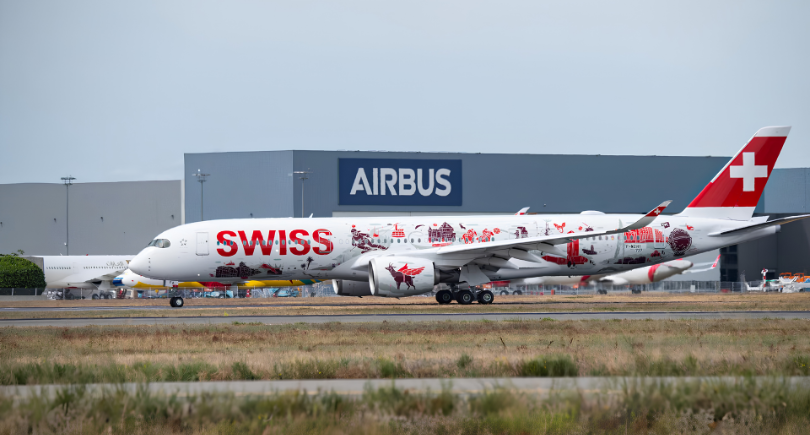
Airbus’ July performance reinforced its increasingly consistent growth trajectory. Although monthly deliveries slowed from June’s unusually strong 89 aircraft, the company still maintained a healthy lead over Boeing. More importantly, its order momentum accelerated sharply following the Farnborough International Airshow, where airlines and leasing companies continued to demonstrate confidence in the manufacturer’s single-aisle and widebody portfolio.
The A320neo family remains the centrepiece of that success. Of Airbus’ 204 July orders, 168 were for the A320neo family, with the larger A321neo accounting for the majority. The aircraft’s popularity reflects broader industry trends toward higher-capacity narrowbodies that combine lower operating costs with greater passenger capacity.
For the aftermarket, this is significant. The growing global population of A320neo-family aircraft means sustained demand for CFM LEAP-1A and Pratt & Whitney GTF engine support, landing gear maintenance, avionics upgrades and cabin refurbishment programmes over the next two decades. Even Airbus’ smaller A220 fleet continues adding future maintenance opportunities as operators expand regional networks.
Boeing’s recovery is more predictable
Boeing’s July numbers present a more nuanced picture. The company delivered 39 Boeing 737 MAX aircraft, demonstrating increasing stability after years of production disruptions. While output has not yet consistently reached the long-discussed 42-aircraft-per-month threshold, consecutive months near that level suggest the programme is gradually returning to operational rhythm. That matters because production stability directly affects the aftermarket ecosystem.
A predictable production line allows suppliers, maintenance providers and engine shops to plan capacity more effectively. It also gives airlines greater confidence when expanding fleets that rely on long-term maintenance planning. The 787 Dreamliner programme continues offering another encouraging signal.
With ten Dreamliner deliveries in July, Boeing appears increasingly aligned with its targeted production rate of eight aircraft per month after earlier challenges. For MRO providers investing in composite airframe repair, cabin upgrades and Trent 1000 and GEnx engine capabilities, that consistency is becoming increasingly valuable.
Narrowbodies are quietly becoming big MRO story
Perhaps the most striking trend hidden within July’s numbers is the overwhelming dominance of single-aisle aircraft. Across both manufacturers, narrowbodies accounted for the vast majority of deliveries and orders. This reflects changing airline economics.
Carriers increasingly rely on fuel-efficient narrowbodies to serve both domestic and medium-haul international routes. Aircraft such as the A321neo and 737 MAX 8 are replacing older fleets while expanding network flexibility. For maintenance providers, this creates enormous volume opportunities.
Unlike widebody fleets, which undergo fewer but more complex maintenance events, narrowbody fleets generate continuous demand for line maintenance, component repair, cabin refurbishment, wheel and brake overhauls, and engine shop visits across thousands of aircraft operating multiple flights every day.
Volume, not individual aircraft complexity, is becoming one of the aftermarket’s strongest growth engines.
Farnborough’s real legacy
Some observers described the Farnborough International Airshow 2026 as quieter than expected. The blockbuster announcements seen in previous years were fewer. However, judging the event solely by headline order totals misses a broader shift.
Airbus left Farnborough having strengthened long-term production visibility across both its narrowbody and widebody programmes. Lessors continued demonstrating confidence in fleet renewal, while airlines prioritised efficiency over sheer fleet expansion.
That matters because modern aircraft purchasing decisions increasingly consider lifetime operating costs rather than acquisition prices alone. Maintenance costs, fuel efficiency, parts availability and digital support ecosystems now influence fleet decisions almost as much as aircraft performance. In many ways, Farnborough highlighted that today’s aircraft sales are increasingly aftermarket decisions in disguise.
Backlogs become decades of maintenance
One of the most important figures from July is neither deliveries nor orders. It is backlog. Airbus now holds 9,352 commercial aircraft in its order book. Boeing retains 6,784 aircraft.
Together, these backlogs represent nearly 16,000 aircraft waiting to be built. Measured against current production rates, Airbus enjoys roughly 10.7 years of manufacturing coverage, while Boeing holds approximately 10.1 years. For MRO businesses, these are extraordinary numbers.
Every aircraft currently sitting in those order books will eventually require inspections, modifications, engine overhauls, structural repairs, cabin refreshes and component support throughout service lives that often exceed twenty-five years. The aftermarket pipeline has rarely looked deeper.
The supply chain issue
Neither manufacturer can celebrate without acknowledging one shared challenge. Supply chains continue dictating production performance. Airbus still struggles to accelerate A330 output. Boeing continues managing production stabilisation across multiple programmes.
Engine availability remains one of the industry’s biggest bottlenecks, while shortages of castings, forgings, fasteners and specialised components continue affecting delivery schedules. For MRO providers, these constraints create both pressure and opportunity.
Component repair increasingly becomes more valuable when replacement parts remain scarce. Used Serviceable Material (USM) markets continue strengthening. Repair schemes gain importance over outright replacement. The aftermarket’s role is expanding from maintaining aircraft to helping airlines navigate supply chain uncertainty.
July’s scoreboard clearly favours Airbus with a 51-aircraft delivery lead, more than double Boeing’s order intake with a backlog extending beyond ten years.
Yet the bigger story is not who sold more aircraft last month. It is who is creating the largest installed fleet for tomorrow’s aftermarket. Every A321neo entering service creates decades of maintenance demand. Every 737 MAX delivered strengthens future LEAP engine shop visits. Every A350 and 787 added to airline fleets expands opportunities for composite repair, cabin refurbishment, and digital maintenance services.
The aviation industry’s most valuable competition is no longer fought only on production lines. It is increasingly fought across hangars, engine shops, component repair facilities and digital maintenance platforms around the world.