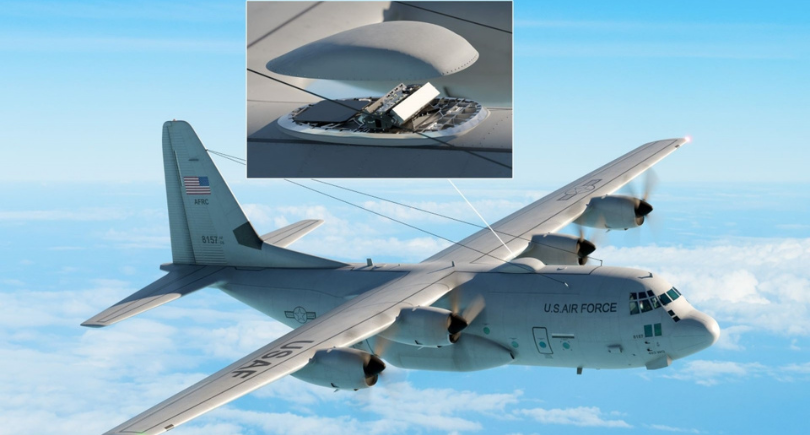

Viasat has been selected by Lockheed Martin to provide high-bandwidth satellite communications technology for the National Oceanic and Atmospheric Administration’s (NOAA) next-generation C-130J Hercules “Hurricane Hunter” aircraft program.
Under a subcontract supporting Lockheed Martin’s delivery of two specially modified C-130J Super Hercules aircraft, Viasat will supply engineering support, terminal hardware, and structural integration data to enable advanced satellite connectivity. The contract also includes options for additional aircraft.
The new C-130J fleet is being developed as airborne research platforms capable of collecting critical atmospheric and environmental data to improve hurricane forecasting and severe weather prediction. The aircraft are expected to enter service by 2030, replacing NOAA’s legacy hurricane reconnaissance fleet.
Viasat’s satellite communications solution will support the real-time transmission of scientific and operational data gathered during hurricane and tropical cyclone missions, helping forecasters improve storm tracking and intensity predictions. According to NOAA, aircraft-collected data plays a vital role in enhancing forecast accuracy and supporting emergency preparedness and evacuation planning.
The program also marks the first factory-installed integration of Viasat’s Hybrid SATCOM Approach (HSA) technology on the C-130J platform. The line-fit installation is designed to reduce the time, cost, and complexity associated with post-delivery aircraft modifications while providing a scalable communications architecture for future upgrades.
NOAA’s aircraft will incorporate an ARINC-compliant antenna baseplate and Viasat’s Ku/Ka-band broadband antenna system, creating an open and modular connectivity platform. The architecture is designed to support future enhancements, including additional satellite networks, frequency bands, and multi-orbit communications capabilities without requiring major structural modifications.
The initiative reflects growing demand for resilient, high-capacity airborne communications to support weather monitoring, scientific research, disaster response, and other mission-critical government operations.