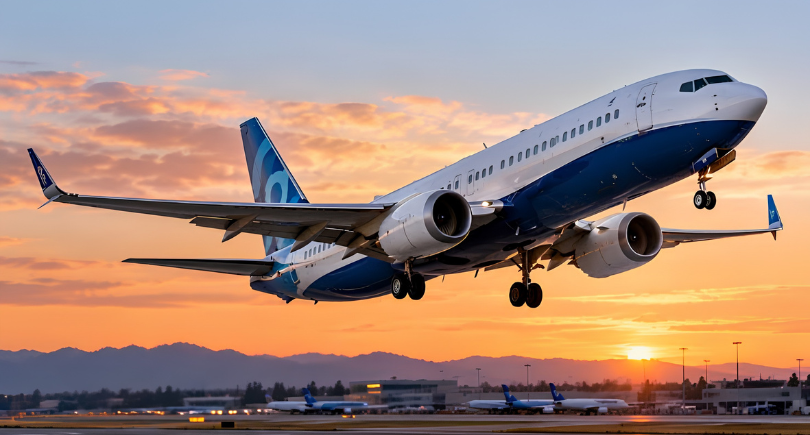

After years of delays, Boeing’s largest 737 MAX variant may be approaching a crucial turning point, with the US Federal Aviation Administration (FAA) expected to make a certification decision as early as next week. For Boeing, its airline customers and the wider aviation aftermarket, the next few days could mark an important milestone, but final approval is still awaited.
Boeing’s long-delayed 737 MAX 10 programme may finally be moving closer to the finish line. According to a Reuters report published on October 16, the FAA completed a key safety review by its Type Certification Board on Friday, bringing the aircraft closer to a decision on certification.
The Type Certification Board comprises FAA management team members, and its review is a final step before the agency decides whether to certify the aircraft. Three people familiar with the matter told Reuters that approval could come as soon as the following week. The FAA, however, has not confirmed a final approval date, reiterating that safety will determine the certification timeline.
For Boeing, the MAX 10 is far more than another aircraft variant awaiting regulatory clearance. It represents a significant part of the company’s future delivery pipeline and financial recovery strategy after years of programme delays, production challenges and heightened regulatory scrutiny.
Nearly 1,500 orders make the MAX 10 critical to Boeing
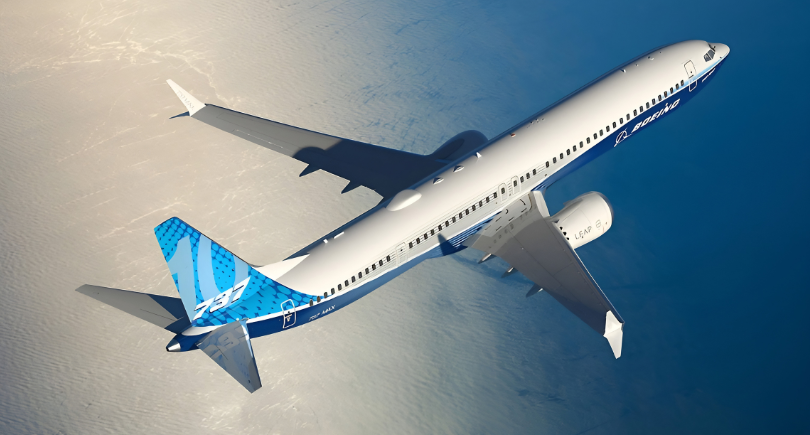
The 737 MAX 10 is the largest member of Boeing’s 737 MAX family, designed to carry more passengers than the smaller variants. Its additional capacity makes it an important aircraft for airlines seeking to expand operations and increase capacity on high-demand routes while remaining within the single-aisle segment.
According to Reuters, airlines have placed orders for nearly 1,500 MAX 10 aircraft. The model accounts for approximately 30% of Boeing’s outstanding 737 backlog, underlining its importance to the manufacturer’s future production and delivery plans.
Major customers include United Airlines, Alaska Airlines, Ryanair, Delta Air Lines and American Airlines. For these carriers, certification is an important prerequisite to receiving the aircraft and incorporating it into their fleet strategies.
Boeing had originally planned to begin MAX 10 deliveries in 2020. The prolonged delay has forced the programme to remain on hold far beyond its initial schedule. The manufacturer has already built a number of MAX 10 aircraft that are awaiting delivery.
Certification would allow Boeing to move closer to delivering these aircraft, subject to the remaining regulatory and operational requirements. It would also provide greater clarity for airline customers planning future capacity, fleet deployment and associated investments.
Safety scrutiny has shaped the certification process
The MAX 10 programme has faced a more demanding regulatory environment following two fatal Boeing 737 MAX 8 crashes in 2018 and 2019. The accidents led to a global grounding of the MAX fleet and intensified scrutiny of the aircraft’s design, certification and safety systems.
Boeing faced further scrutiny after a door-plug panel separated from a nearly new 737 MAX 9 operated by Alaska Airlines during a flight in January 2024. The incident raised fresh questions about the company’s manufacturing processes, quality controls and production oversight.
These events have contributed to a more cautious certification environment, with the FAA placing safety considerations at the centre of its decisions.
Another technical issue emerged in 2023 involving the engine anti-ice system on the 737 MAX. The problem contributed to delays in certifying both the MAX 7 and MAX 10.
More recently, a glitch involving an updated navigation software system threatened to create another obstacle. Boeing disclosed the issue in late September, raising concerns that certification could be delayed further.
However, the FAA determined on October 2 that the software issue did not pose a safety concern and did not require Boeing to fix it as a condition of certifying the aircraft. This removed one potential obstacle, although it did not itself constitute certification approval.
In August, the FAA granted long-awaited approval to the smaller 737 MAX 7 after reviewing the aircraft for more than eight years. The MAX 10 is now approaching its own critical regulatory milestone.
Delays have created an opportunity for Airbus
Boeing’s certification challenges have also had commercial consequences. Its European rival Airbus has gained a greater share of the large single-aisle aircraft market through the A321neo, which competes in the segment targeted by the MAX 10.
For airlines, aircraft selection involves more than passenger capacity. Delivery schedules, operating economics, fleet commonality, maintenance requirements, and manufacturer support all influence purchasing decisions.
Prolonged delays can complicate fleet planning, particularly for airlines that have already committed to aircraft intended to support future growth. They can also create uncertainty around replacement schedules and the timing of capacity additions.
For Boeing, securing certification is therefore important not only for fulfilling existing orders but also for strengthening its position in a competitive market. The MAX 10 is expected to be a significant contributor to cash flow as the company works towards financial recovery.
However, certification alone will not resolve every challenge facing the programme. Boeing will still need to demonstrate that it can sustain production quality, meet delivery commitments and support operators as the aircraft enters service.
For the MRO industry, the MAX 10’s eventual entry into service will be an important development to watch. The aircraft will join an established 737 MAX family, but its introduction will still require operators and service providers to prepare for the specific requirements of the variant.
Airlines will need to incorporate the aircraft into their maintenance planning, technical operations, spare-parts strategies and training programmes. MRO providers and aftermarket suppliers will also need to align their capabilities with operators’ requirements as delivery schedules become clearer.
The timing and scale of these preparations will depend on final certification, aircraft deliveries and individual airline fleet plans. The Reuters report does not provide a confirmed entry-into-service date or a detailed timeline for aftermarket readiness.
For the wider supply chain, the programme highlights the close relationship between aircraft certification, production ramp-up and aftermarket planning. Delays to new aircraft can affect fleet renewal decisions and the period for which airlines must continue operating existing aircraft. Once deliveries begin, operators must also ensure that maintenance capacity, technical support and material availability are aligned with their fleet plans.
The MAX 10’s large order backlog means its eventual entry into service could have implications across aircraft operations and support. However, the pace at which those implications emerge will depend on Boeing’s delivery performance and the requirements of its airline customers.
Boeing’s wider certification challenge continues
The 737 MAX 10 is not Boeing’s only major aircraft programme awaiting regulatory progress. The manufacturer is also working towards certification of the 777-9, its largest jetliner currently in production.
The 777-9 programme is already six years behind schedule, with Boeing expecting certification to be completed and deliveries to begin in 2027.
Progress on the MAX 10 would therefore represent an important milestone for Boeing, even as the company continues to work through challenges affecting other programmes.
The FAA’s completion of the latest Type Certification Board review brings the MAX 10 closer to a decision, but the distinction between a completed review and final certification remains important. The regulator has not confirmed that approval has been granted.
For now, the industry is watching for the FAA’s final decision. After years of delays, certification would clear a major hurdle for Boeing and bring its airline customers closer to receiving an aircraft that has become a significant part of their future fleet plans. The next test will be whether Boeing can translate regulatory approval into reliable deliveries, sustained production quality, and the operational support needed to serve the aircraft throughout its lifecycle.