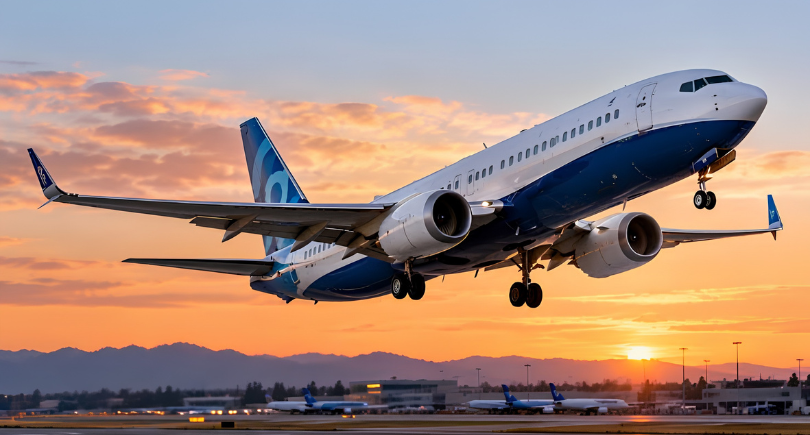

As 737 MAX fleets continue to grow, airlines are looking for aftermarket solutions that can reduce maintenance downtime, improve planning, and limit supply chain exposure. Boeing Global Services is expanding its Landing Gear Exchange Program to the 737 MAX, following the completion of its first exchange with American Airlines. In this exclusive Q&A with MRO Business Today, William Ampofo, Senior Vice President, Parts & Distribution and Supply Chain, Boeing Global Services, discusses the programme’s growth, the role of certified MRO partners, exchange inventory expansion, and how AI and advanced analytics could make landing gear maintenance increasingly predictive.
Q – Boeing recently completed its first 737 MAX landing gear exchange with American Airlines. What does this milestone signify for Boeing Global Services and for the evolution of the Landing Gear Exchange Program?
A: This milestone is an important step for Boeing Global Services and our aftermarket business. It shows Boeing is delivering a customer-focused, scalable aftermarket solution that helps airlines reduce downtime, lower AOG exposure, and manage maintenance more predictably. It also shows how Boeing is applying deep OEM knowledge and global support capabilities to help customers operate more efficiently.
We’ve seen strong results from the Landing Gear Exchange Program on the 787— completing about 150 exchanges to date. Extending that model to the 737 MAX demonstrates that Boeing can scale a differentiated aftermarket solution across platforms and apply our OEM expertise to support customers more broadly.
Strong and growing customer demand is driving the expansion of Boeing’s 737 MAX landing gear exchange program, a solution increasingly selected by airlines operating in today’s complex supply chain environment. Customers are securing exchange slots two to three years ahead of planned heavy maintenance events to align gear availability with their maintenance schedules.
Q – How does the forward-exchange model specifically benefit 737 MAX operators in terms of reducing aircraft downtime, improving maintenance predictability and minimising AOG exposure?
A: The Landing Gear Exchange program gives operators predictable access to certified, overhauled replacement gear and required documentation before the existing gear is removed. It helps airlines avoid the cost and complexity of buying and storing expensive spare landing gear, mitigates supply chain risk, and minimizes aircraft downtime by improving maintenance predictability.
Q – As the global 737 MAX fleet continues to grow, how is Boeing planning to scale its exchange inventory and overall landing gear exchange capacity to meet increasing operator demand?
A: We are expanding the infrastructure that supports the program, including increasing overhaul capacity, investing in 737 MAX-capable exchange inventory, and growing the MRO network to show up where customers need us.
Q – What role will Boeing’s network of certified MRO partners play in supporting the programme, particularly in expanding geographic coverage and shortening turnaround and lead times for airlines?
A: We have a network or regional MROs that are an important part of our global support network. They help us expand geographic availability, increase capacity, and shorten lead times so we can support operators closer to where they fly. The combination of Boeing OEM expertise and our MRO network is key as we continue to grow the program to support customers across all regions.
Q – From an airline fleet-planning perspective, how should operators evaluate the choice between landing gear overhaul, exchange, and maintaining their own spare landing gear inventory?
A: The exchange model gives operators more flexibility and reduces the need to tie up capital in spare inventory. Through Boeing’s forward exchange model, certified, overhauled landing gear and the required documentation are made available in line with an agreed exchange schedule, before the existing gear is removed from the aircraft. Supported by the industry’s largest pool of exchange gear, Boeing manages supply chain coordination, inventory, and scheduling, with engineering oversight of the overhaul, certification, and documentation processes.
Q – Are there particular regions or markets where Boeing sees growing demand for landing gear exchange services as 737 MAX fleets expand, and how is the company preparing its support network accordingly?
A: Interest in the program is global, reflecting the continued growth of the 737 MAX fleet. Rather than focusing on one region, we are building the capacity, inventory,ry and partner support needed to serve customers across markets and improve access wherever operators need the service.
Q – Beyond the 737 MAX, how does Boeing view the longer-term role of exchange programmes within its broader aftermarket strategy, particularly as airlines increasingly look for predictable maintenance costs and improved aircraft availability?
A: Exchange programs are an important part of Boeing’s broader aftermarket strategy because they help customers manage maintenance with greater predictability, improve aircraft availability, and reduce supply chain risk. They are a practical example of how Boeing can deliver customer value through scalable, differentiated services.
More broadly, this reflects Boeing’s ability to leverage its OEM knowledge and global support network to deliver scalable services that help strengthen supply chain resilience and meet customer needs around the world. As fleets grow and maintenance demands evolve, solutions like this help airlines operate more efficiently and with greater confidence.
Q – Looking ahead, what are the next milestones for Boeing’s 737 MAX Landing Gear Exchange Program, and what would success look like as the programme matures?
A: Success will mean broader availability, shorter lead times, and consistent value for operators across the global fleet. As the program matures, we want customers to see it as a reliable, efficient, and predictable option that supports their maintenance planning and operational goals.
A key part of that future is how Boeing is applying AI and advanced analytics to make the program more intelligent and proactive. Through tools like 787 Landing Gear Analytics, we’re combining aircraft health data with overhaul history to better predict wear, forecast parts demand, and prioritize maintenance before issues affect operations. The system uses operational inputs such as ground turns, hard landings, and temperature trends to help identify what is likely to need attention and when.
This enables us to offer more than just a service model, but rather a data-driven capability that can improve decision-making across the fleet and across MRO facilities. Leveraging AI, we can help customers move from reactive maintenance to more predictive planning — improving consistency, reducing downtime, and supporting better fleet readiness over time.