
Honeywell Aerospace has integrated the individual subsystems of Project NEWBORN into a functional hydrogen power source capable of generating and supplying electrical energy for an aircraft.
The project, launched in 2023, involves a consortium of 18 companies from 10 European countries developing an aerospace-qualified, megawatt-class hydrogen fuel-cell propulsion system. The next stage will integrate the hydrogen power source with batteries and an electric motor driving an aircraft propeller.
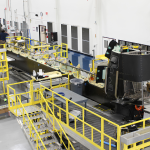
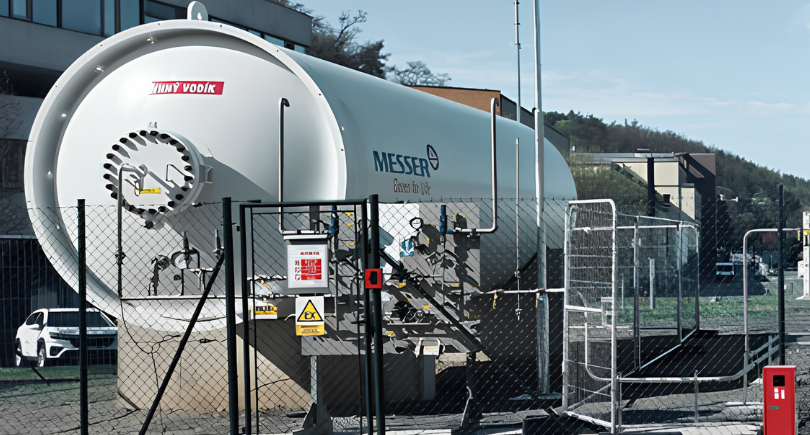
Honeywell’s Brno engineering team developed a dedicated test platform for the hydrogen fuel-cell power source. The platform, installed at the research and engineering facility operated by ÚJV Řež near Prague, simulates several aircraft functions and includes power, fluid distribution, electrical and thermal management systems, as well as control and safety equipment.
The engineering team has integrated the fuel cells with the other subsystems and verified the operation of the complete electrical power source. Testing has covered leak tightness, working-fluid parameters, subsystem interaction, control algorithms and protection mechanisms.
Further testing will focus on expanding the power range and improving the stability and resilience of the hydrogen power source.
Project NEWBORN involves parallel development of hardware, software, modelling and simulation activities. Companies including PowerCell, Fraunhofer and Test-Fuchs have contributed to individual components and technologies, while Siemens Industry Software, KU Leuven, Friedrich-Alexander-Universität Erlangen-Nürnberg and CIRA have worked on modelling, simulation and integration studies.
Miroslav Matoušek, NEWBORN project coordinator at Honeywell Aerospace, said, “Project NEWBORN is not only demonstrating new technology, it is demonstrating the ability of European industry, universities and research organizations to work together on ambitious technological visions and turn them into functioning systems.”
Ondřej Kotaba, technology fellow and NEWBORN technical lead at Honeywell Aerospace, said, “A range of interconnected technologies have been developed in parallel within Project NEWBORN – from air supply and conditioning systems, hydrogen management and thermal management to electrical distribution, power electronics, control, communications and safety monitoring. Bringing all these subsystems together into a single functional unit will represent the culmination of the project.”
Also Read – PTC Industries’ Aerolloy secures Airbus titanium casting contract
The hydrogen power source will now be transferred to Gorizia, Italy, for further testing. The next phase will connect it with battery systems from Pipistrel and a megawatt-class electric propulsion system jointly developed by the University of Nottingham, Honeywell Aerospace and Pipistrel.
The integration work provides a test environment for evaluating hydrogen fuel-cell power generation, thermal management, electrical distribution, control, and safety systems as part of an aircraft propulsion architecture.