


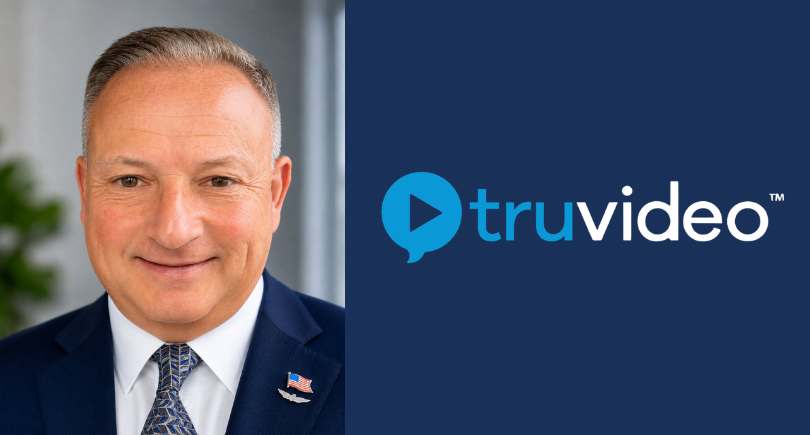

As the aviation MRO industry accelerates its digital transformation, real-time visual intelligence is emerging as the next frontier in maintenance operations. While airlines and MRO providers have invested heavily in data analytics and predictive technologies, the ability to capture, share and analyse visual evidence remains an untapped opportunity. In this exclusive interview with MRO Business Today, Tom Torosian, Director of Aviation Business Development at TruVideo, discusses how structured video is helping maintenance teams resolve Aircraft-on-Ground (AOG) events faster, enhance collaboration across the maintenance ecosystem, strengthen regulatory compliance, and lay the foundation for AI-powered maintenance decision-making.
Q – TruVideo has built a strong reputation in the automotive service industry. What prompted the company’s expansion into aviation, and what specific challenges within aircraft maintenance did you identify that made this the right time to enter the sector?
A. TruVideo earned its reputation in automotive service by solving a problem: customers and technicians both needed a trusted record of what happened to a vehicle. Aviation maintenance has that same need, only with far higher stakes and significantly larger financial implications.
While the industry has aggressively digitized over the past decade, real-time visual context never made the leap. Work orders, findings and signoffs are still documented in text, even when the actual evidence is visible but unused. Coming from an Army aviation background, I saw this gap firsthand long before TruVideo entered the sector.
Maintenance decisions are made faster when people can see the aircraft, not just read about it. That disconnect, between a fully digitized back office and a maintenance floor still relying on words, is what made aviation an obvious next step for us. The market was ready, the technology was ready and the timing couldn’t have been better.
Q. Aircraft-on-Ground (AOG) events are among the most critical operational challenges for airlines and MRO providers. How does TruVideo AOG help maintenance teams accelerate diagnostics, improve collaboration and ultimately reduce aircraft downtime?
A. Every minute of AOG time burns money, and miscommunication during troubleshooting only throws fuel on that fire. TruVideo can close that gap by connecting the technician at the aircraft directly with the engineer or decision-maker assessing the issue remotely.
Instead of relying on a phone call or a vague written description, the technician captures structured video and streams it directly into the workflow, allowing stakeholders to see the actual fault rather than a secondhand interpretation of it. That eliminates the endless back-and-forth that typically stalls AOG diagnosis. Engineering teams can confirm findings, rule out causes and approve next steps in a single pass instead of rounds of email tag.
That closes the diagnostic cycle and gets aircraft back in service faster. It also leaves behind a documented record of the fault and fix as it happens, speeding up parts sourcing, sign-off and compliance review without adding a single extra step for the technician.
Q. Aviation maintenance often involves multiple stakeholders, including airline engineering teams, MRO providers, OEMs, lessors and component suppliers. How does your platform facilitate faster communication and better decision-making across such a complex ecosystem?
A. We built TruVideo to embed into existing workflows rather than compete with them. We’re not asking anyone to adopt yet another system; we’re layering visual truth onto the systems they already trust.
By attaching structured video to a work order, all stakeholders – including OEM reps, lessors’ technical teams and MRO engineers – can review the same evidence at the same time instead of relying on interpretations passed through endless email chains. That shared visibility accelerates decision-making. When parties are scattered across time zones, it enables fast, coordinated alignment on time-sensitive decisions, whether it be an AOG sign-off, a damage assessment or another operational priority. Because the video is structured and tied to a specific aircraft or work order, it becomes a searchable, reusable record for future findings, warranty claims or audits. The payoff is fewer miscommunications, faster approvals and a documentation trail every stakeholder can trust without needing to stand at the aircraft.
Q. Digital transformation has become a major priority across the global MRO industry. Where do you see video intelligence fitting into the broader evolution of predictive maintenance, remote technical support and data-driven maintenance operations?
A. Most of the MRO industry’s digital transformation has centered on data systems, sensors and analytics. That is real progress, but it leaves a glaring visual blind spot. Predictive maintenance can tell you something is likely to fail, but it doesn’t show you what that failure looks like or enable a remote expert to confirm a finding in real time.
By structuring video as data – tagged, searchable, tied to a specific aircraft and work order – we can integrate it into the same data-driven model the industry is already racing toward. This doesn’t compete with predictive maintenance or remote support tools; it makes them more effective. Visual evidence confirms or refines what the data is telling you. As that video library grows, it becomes fuel for training the next generation of analytics models.
Our focus is simple: give the digital backbone the visual context it’s been missing, so airlines and MROs can make faster, sharper maintenance calls.
Q. Trust and transparency are increasingly important in maintenance operations, particularly when documenting defects, repairs and inspections. How does TruVideo help create greater confidence through visual documentation while supporting quality assurance and regulatory compliance?
A. Trust in maintenance documentation has always leaned on a technician’s written description and a supervisor’s signature. Video changes that by providing direct visual evidence of the condition, the work performed or the defect found, which is timestamped and permanently linked to the maintenance record.
This becomes especially valuable in disputed situations such as damage claims, defect findings, or repair verification, where written accounts alone leave too much room for interpretation. A timestamped, geotagged video with a clear chain-of-custody erases the ambiguity and gives every party, MRO, operator, and regulator, the same audit-ready evidence trail. It also lightens the load on technicians. A 30-second video often captures more accurate context than a paragraph of notes and does it faster. For quality teams, visual records tied directly to work orders make audits dramatically faster and far more defensible.
As regulatory expectations around documentation continue to tighten, building structured visual evidence into the maintenance workflow from the outset puts operators and MROs ahead of the curve.
Q. Artificial Intelligence is rapidly reshaping aviation maintenance. How is TruVideo incorporating AI into its platform, and what role do you see AI-powered video analytics playing in improving troubleshooting, maintenance planning and operational efficiency over the next few years?
A. We structure video as data, not just a file to archive, and that’s exactly what unlocks AI analysis. As the visual library grows, AI can flag anomalies, automatically tag findings and surface relevant historical footage if a similar fault shows up on another aircraft.
Multiple partners are already progressing toward technical validation with us, and we’re seeing strong momentum around API-based integrations that would feed visual data directly into the systems MROs and airlines already use. Over the next few years, I expect AI-powered video analytics to evolve from helpful documentation into an active force in troubleshooting and maintenance planning, giving engineering teams a pattern-recognition layer across thousands of hours of field footage that no single technician could ever hold in their head. That’s the exciting part: video becomes more than a passive record. When combined with existing tools today, it becomes a proactive tool, predicting likely causes, recommending next steps and shrinking the diagnostic process before the technician even finishes capturing the clip.
Q. Introducing new digital technologies into maintenance environments often requires changes in established workflows. Based on your experience, what advice would you offer airlines and MRO organisations looking to successfully adopt video intelligence solutions while ensuring strong engagement from technicians and engineering teams?
A. Start with the technician’s day-to-day challenges, not the executive dashboard. Adoption takes off when a tool makes a technician’s job easier in the moment – reducing follow-up calls, eliminating the need to re-explain a finding and enabling faster sign-off – instead of feeling like it’s another box to check for management’s benefit.
TruVideo embeds into the workflows technicians already use, so there’s nothing new to learn from scratch. It’s not a rip-and-replace of existing systems. When it comes to adoption, pulling in a few respected technicians early as champions does more than any policy memo or top-down mandate ever could. It also helps to engage engineering and quality teams early to get their buy-in on how video evidence will be used downstream to support compliance, audits, warranty claims and other processes. Doing so helps remove friction technicians would otherwise have to navigate alone on the hangar floor.
Q. Looking ahead, what is your long-term vision for TruVideo within the aviation industry, and how do you see video intelligence evolving as airlines and MRO providers continue their journey toward more connected, data-driven and digitally-enabled maintenance operations?
A. Our vision is for TruVideo to serve as the visual intelligence layer across the entire maintenance value chain; the standard way visual evidence is shared between technicians, engineers, OEMs and operators.
Conversations across the industry have made one thing unmistakably clear: the appetite is here, right now. There is real momentum and a strong interest in API-based integrations with the systems MROs already run, and a clear runway toward pilot programs in AOG response, troubleshooting and inspections.
As visual data accumulates and leverages AI, video intelligence is poised to become as foundational to maintenance operations as digital record systems are today — not a supplement to data-driven MRO, but a cornerstone of it. I want intelligent video to become as standard a part of an aircraft’s maintenance record as a logbook entry, providing every stakeholder, from technician to lessor to regulator, with the same trusted, visual source of truth throughout the aircraft’s lifecycle.


