



UK helicopter operators supporting HEMS, police, search and rescue (SAR), and other emergency services are beginning to plan aircraft modifications to transition to the Emergency Services Network (ESN).
The Home Office programme is targeting “Full Voice Service Ready” status by March 2028. ESN will replace Airwave with a 4G/5G-based system supporting secure voice, data and multimedia communications for emergency services.
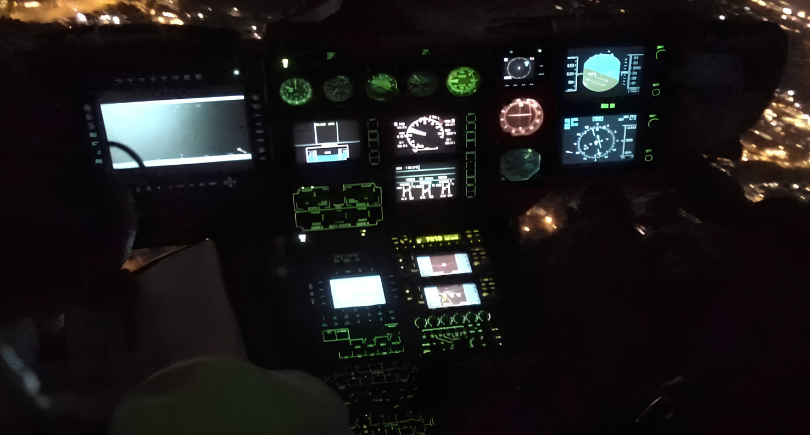
For helicopter operators, the transition involves more than replacing communications equipment. Aircraft will need to be assessed for antenna locations, wiring, power requirements, control units, audio systems, mission-system interfaces and available equipment space. The work will also have to be incorporated into the aircraft’s approved configuration.
The requirements will vary between aircraft such as the Leonardo AW169 and Airbus Helicopters H135/EC135 and H145, depending on their existing avionics, communications equipment and previous modifications.

Certification and aircraft downtime
ESN modifications will require appropriate design approval and certification before installation. Depending on the scope of the change, this may involve a Supplemental Type Certificate (STC), engineering assessments, installation instructions, testing and updated Instructions for Continued Airworthiness.
Equipment approval alone does not authorise its installation on an aircraft. Operators therefore need to establish the certification route and engineering requirements before procurement and embodiment.
Aircraft availability is another consideration. HEMS, police and SAR helicopters often operate with high utilisation and limited fleet redundancy. Late planning could result in longer maintenance inputs if design issues, parts availability or certification work have not been resolved before the aircraft enters the hangar.
Aligning ESN modifications with scheduled maintenance, engine work, interior refurbishment or other major aircraft inputs could reduce additional downtime.
Also Read – Safran’s Arriel 2K engine certified by EASA advancing Leonardo AW09 towards service entry

Impact on fleet planning
The transition also needs to be considered alongside aircraft replacement and residual-value decisions. ESN equipment installed for UK operations may have limited relevance to aircraft subsequently sold into overseas markets, potentially creating additional costs if equipment has to be removed or the aircraft returned to a different configuration.
Operators should therefore assess the cost of the modification, expected downtime, certification requirements and potential de-modification costs alongside the remaining service life of each aircraft.
A fleet-by-fleet assessment of the existing aircraft configuration can identify antenna and equipment locations, wiring requirements, electrical loads, certification requirements and the likely maintenance input needed for ESN installation.
For operators with mixed AW169, H135/EC135, or H145 fleets, the modification plan will need to account for the different aircraft configurations rather than treating ESN as a standard equipment replacement.
Early engineering and certification planning would allow operators to coordinate ESN work with scheduled maintenance and reduce the risk of aircraft being unavailable when the network transition takes place.


