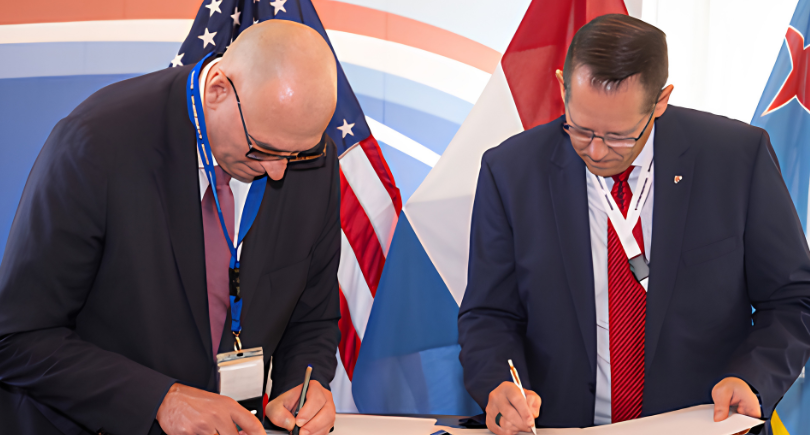

Lockheed Martin Skunk Works and the Royal Netherlands Aerospace Centre (NLR) are expanding their strategic partnership to advance aerospace technologies, strengthen Dutch industrial participation and address operational requirements for the Royal Netherlands Air Force.
Announced at NL-US Defense Industry Days, the expanded collaboration builds on a memorandum of understanding established two years ago. The partnership has progressed from exploratory research towards technology development intended to address military aerospace requirements.
The next phase will focus on four areas: integration with the Dutch defence industrial base, military operational analysis, alignment of technology roadmaps and unmanned aerial systems (UAS). These workstreams are intended to connect operational requirements with technology development while creating opportunities for Dutch companies to participate in international aerospace and defence supply chains.
For military fleet sustainment, closer integration between technology developers and industrial suppliers can support the development of manufacturing processes, component availability and long-term technical support. However, the partners have not announced specific maintenance contracts or new in-service support capabilities under the expanded agreement.
Thermoplastics among priority technologies
Thermoplastic materials are among the technologies identified for continued collaboration. Their potential aerospace applications include lightweight structural components and manufacturing processes designed to improve production efficiency and component performance.
In defence aviation, advanced materials and manufacturing methods can have implications beyond initial aircraft production. Depending on the component and its certification requirements, they may influence repair methods, inspection procedures, component replacement and lifecycle support.
The collaboration provides a framework for further technology development, although the partners have not specified particular thermoplastic components or maintenance applications to be introduced into operational fleets.
Ron Fehlen, vice president and general manager of Lockheed Martin Skunk Works, said, “Lockheed Martin is excited about continued partnership with NLR through expansion of this MOU. We have matured specific projects with cutting-edge technologies, such as Thermoplastics, and through our continued collaboration, we will develop new solutions to address pressing aerospace and defense challenges.”
Connecting operational needs with industrial capability
The partnership will also coordinate military operational analysis and technology roadmaps, helping align emerging aerospace capabilities with the requirements of the Royal Netherlands Air Force.
Tineke van der Veen, CEO of NLR, added, “We believe that modern aerospace development relies on global integration rather than isolation, making cross-border partnerships essential to deliver systems that no single nation can build alone. Referring to the Dutch Defence White Paper 2026, NATO is the cornerstone of our defense, with the United States as our most important ally. Together with Skunk Works, we’re committed to cooperate to solve the highest priorities of the air force for the challenges ahead of us.”
Also Read – GA-ASI demonstrates CCA and F-5 mission-system integration
The expanded partnership also includes collaboration on unmanned aerial systems and efforts to connect Dutch suppliers with international defence programmes.
For the defence maintenance and sustainment sector, the longer-term significance will depend on how these activities translate into qualified manufacturing processes, supportable components and practical solutions for operational fleets. The agreement establishes a basis for further cooperation, with specific maintenance outcomes yet to be detailed.