
The sustainable aviation fuel story is slowly moving beyond pilots, trials and ambitious targets and into the everyday rhythm of commercial aviation.
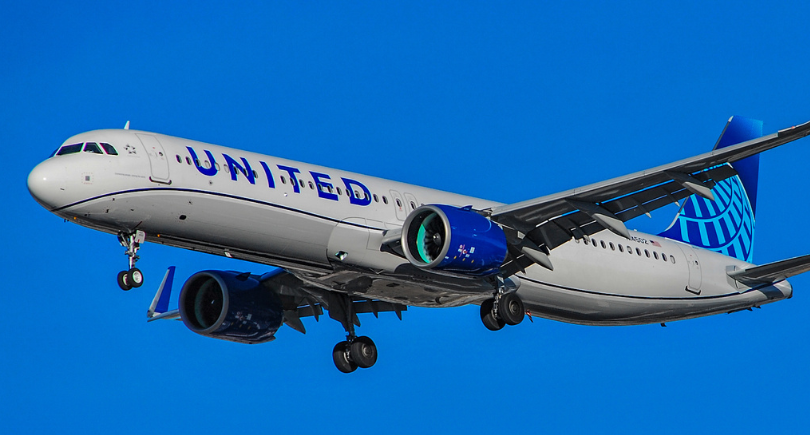
A renewed agreement between Neste and United Airlines is the latest example. The two companies have extended their existing SAF supply arrangement for flights departing from Chicago O’Hare International Airport in the US and Amsterdam Airport Schiphol in the Netherlands, strengthening a partnership that has been steadily building around the use of lower-life-cycle-emission fuels in regular airline operations.
For an industry searching for practical pathways to reduce aviation’s greenhouse gas emissions, the significance lies not only in the volume of fuel being supplied, but in where and how it is being used: at major international hubs, on scheduled flights and through existing aircraft and fuelling infrastructure.
From first flight to everyday operations
United has been at the forefront of SAF adoption for several years. The airline was the first globally to operate scheduled flights using blended SAF and has since sought to demonstrate that the fuel can become part of routine commercial flying. That journey has now brought SAF to some of United’s most important hubs.
Under the extended agreement, Neste’s SAF deliveries to Amsterdam began in June 2026 and continued through August, while deliveries to Chicago O’Hare began in July 2026 and are planned to continue through June 2027.
“United was the first airline in the world to fly on blended SAF in regular operations, and we’ve spent the years since proving it can work at scale in day-to-day flying,” said Lauren Riley, Chief Sustainability Officer at United Airlines.
The Chicago connection is particularly significant. United began purchasing and using blended SAF at O’Hare in August 2024, becoming the first airline to do so at the airport. O’Hare is United’s largest hub by daily departures and a major global gateway, giving SAF use there a visibility that extends well beyond a single airport.
Two hubs, one SAF strategy
The agreement also highlights the importance of airport infrastructure in making SAF more accessible to airlines. In Amsterdam, United has been using Neste MY Sustainable Aviation Fuel at Schiphol since 2022. The continuation of supplies at Schiphol, alongside the renewed Chicago arrangement, gives the airline access to SAF across two strategically important aviation markets.
It is a useful illustration of how SAF adoption can evolve, from demonstrating that the fuel works, to establishing supply chains and integrating it into regular operations at major hubs.
For airlines, that transition is crucial. SAF does not require a new generation of aircraft to enter service. Neste’s fuel can be blended with conventional jet fuel and used with existing aircraft engines and fuelling infrastructure, with current certification allowing blends of up to 50%.
That compatibility removes one of the major barriers associated with many emerging aviation technologies: the need to wait for entirely new aircraft or infrastructure before deployment can begin.
United’s SAF footprint expands
United’s broader SAF activity also shows how quickly airline demand has been developing. The airline used more than 83,000 metric tonnes of SAF in 2025, equivalent to approximately 27.7 million gallons. According to the company, that represented a 104% increase from the previous year.
During 2025, United also expanded SAF use to three additional hub airports: Newark, Washington, D.C., and Houston, bringing SAF availability to six of its seven domestic hubs.
The scale-up illustrates an important shift in the industry’s SAF conversation. The question is increasingly not whether SAF can be used in commercial aviation, but how quickly production, supply and economics can expand sufficiently to support much larger volumes.
The supply challenge
That is where Neste’s production plans become particularly relevant. Neste currently has global SAF production capability of approximately 1.5 million metric tonnes, or around 515 million gallons, annually. The company expects this capacity to rise to approximately 2.2 million metric tonnes, or around 750 million gallons, in 2027 following the completion of the expansion of its Rotterdam refinery.
For an aviation industry with global ambitions to reduce its climate impact, additional production capacity will be critical. SAF remains a relatively small component of the overall aviation fuel pool, and its wider adoption depends on a combination of production capacity, availability of sustainable feedstocks, infrastructure, policy support and economics.
The Neste–United agreement therefore represents more than a fuel supply contract. It is another example of the supply side and airline demand side developing together.
From sustainability commitment to supply chain
SAF is often discussed in terms of emissions reduction targets, but its real-world impact depends on whether airlines can obtain the fuel consistently and integrate it into normal operations.
Neste MY Sustainable Aviation Fuel is produced from renewable raw materials including used cooking oil and animal fat waste. According to Neste, the life-cycle climate impact of its neat SAF is lower than that of fossil jet fuel when the relevant sustainability criteria are met.
Importantly, SAF does not eliminate the CO₂ released during flight. Its potential climate benefit comes primarily from its lower life-cycle emissions compared with conventional fossil-based jet fuel, depending on the feedstock, production pathway and other factors.
That distinction matters as the aviation industry works to scale SAF without losing sight of the complexity of its environmental footprint.
A longer runway for SAF
United’s continued partnership with Neste points towards a future in which SAF is increasingly embedded in airline fuel strategies rather than treated as an occasional demonstration.
Chicago and Amsterdam are particularly useful examples because they represent major aviation hubs on two continents. The continued availability of SAF at such airports provides airlines with an opportunity to incorporate the fuel into normal network operations while the wider supply ecosystem develops.
The industry still faces significant challenges before SAF can become available at the scale required for global aviation. But every long-term supply agreement, every additional airport and every increase in production capacity adds another piece to that larger puzzle.
The Neste–United agreement is therefore a reminder that aviation’s transition will not happen through a single technology or a single breakthrough. It will be built gradually, flight by flight, airport by airport and, increasingly, through supply chains capable of making lower-carbon fuel part of everyday flying.