
As the aviation industry continues to navigate supply chain disruptions, engine shortages and evolving passenger demand, airlines are redefining their growth strategies while placing greater emphasis on operational resilience and maintenance reliability. For Cyprus Airways, these challenges have become opportunities to strengthen partnerships, expand its network and invest in the technologies and capabilities that will shape its future.
Positioned at the crossroads of Europe, the Middle East and Asia, the airline is leveraging its strategic location to enhance regional connectivity while pursuing an ambitious expansion plan that includes fleet growth, new international routes and deeper collaboration with global airline partners. At the same time, Cyprus Airways is taking significant steps to strengthen its technical capabilities through long-term MRO partnerships, the implementation of advanced maintenance management systems and plans to bring Continuing Airworthiness Management Organisation (CAMO) functions in-house.
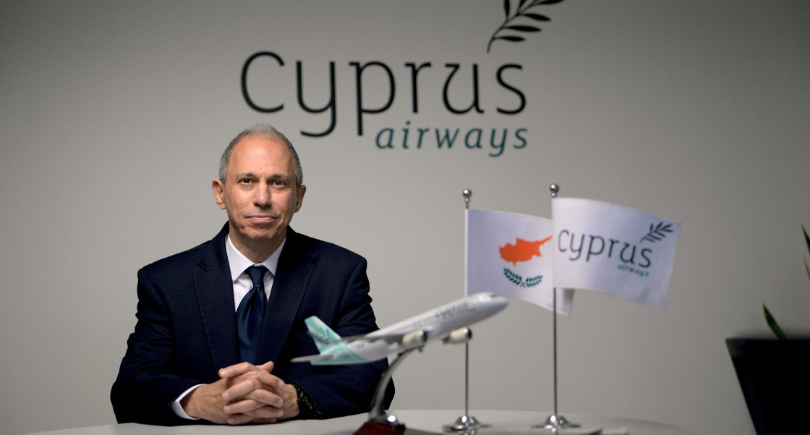
In this exclusive interview Thanos Pascalis, Chief Executive Officer of Cyprus Airways, shares his insights with our Editor, Swati. K the airline’s partnership with flyDubai, the realities of today’s constrained supply chain, the evolving relationship between airlines and MRO providers, fleet planning in an uncertain market, digital transformation, sustainability initiatives and the strategic roadmap that will guide Cyprus Airways’ growth over the coming years.
1. Cyprus Airways has recently entered into a strategic partnership with flyDubai. What were the key drivers behind this collaboration, and how do you see it contributing to the airline’s network expansion and long-term growth strategy?
Ans – Our Fly Dubai partnership is important for our UAE strategy with Cyprus Airways connecting to the vast network of the airline via a seamless process, while offering a similar product for customers connecting in Larnaca with our European network. Dubai is a hub and our flights to the city are due to double next year. Our expansion is partly fueled internally and partly with such strategic alliances. Dubai and Fly Dubai is in the core of our business.
2. The Eastern Mediterranean region sits at the crossroads of Europe, the Middle East, and Asia. How do you see Cyprus Airways positioning itself to capitalise on growing regional connectivity and evolving passenger travel patterns?
Ans – Cyprus is indeed rightly positioned between Europe, Middle East and Asia, is multicultural and can offer a great product for connecting or even a connection with a stop-over. This requires hard work from many stakeholders including government, airports, and ATC. Larnaca airport is now emerging as a connection point with suitable facilities and transit avenues that are comparatively easy to use. But we still need more to be done in all fronts in order not to lose momentum and assure the experience is continuously improved. We are working with Hermes (airport operator) and the government (including visa considerations) to achieve transit and stop-over goals.
3. As airlines globally navigate geopolitical uncertainty and periodic airspace disruptions, what strategies has Cyprus Airways adopted to maintain operational resilience while continuing to pursue growth opportunities?
Ans – With the recent Middle East crisis and Golf war our operational resilience was both tested and proven. Cyprus Airways was last-out and first back in (in all three of our ME destinations, Dubai, Tel Aviv and Beirut). In order to achieve that, a number of actions had to be aligned. We must stress that while we had stopped our scheduled flights for near two months, we performed seven repatriation flights at the beginning of the crisis for two governments (the Cypriot and Belgian governments). Our proximity to the region was a helpful attribute as was our extensive daily risk assessments. Their quality was recognised by insurers as well.
Considerations were, crews, fuel, route structure and maintenance in case our aircraft experienced a technical issue in route or at destination. With most airlines not serving these locations the ability to fly a spare part in, would be limited.
Our growth was and is closely aligned with the additional aircraft due to join the fleet early 2027. We have planned two new routes for Europe and one in the middle east as a minimum, with another two routes being assessed as we speak. In parallel we aim to strengthen our current network with additional frequencies on 40% of our network, including Dubai, Paris and Athens.

4. Fleet planning remains one of the most important strategic decisions for airlines today. Could you share Cyprus Airways’ outlook on fleet expansion, fleet modernisation, and how you are balancing growth ambitions with market realities?
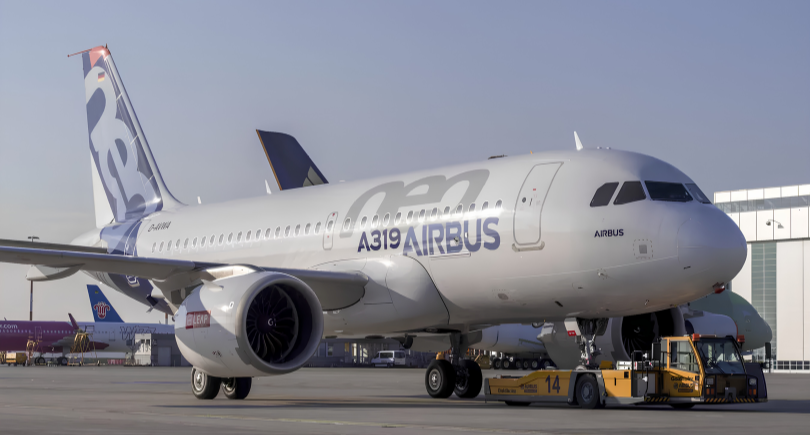
Ans – Indeed, fleet planning was and is both strategic and crucial to the success of a small carrier. Nowadays things have become more critical as the engine factor has added a layer of complexity. You must have a airframe/engine combination that works and this is not given today. In fact, the industry has moved several steps backward with the outlook to emerge in a better state by the turn of the decade. Unfortunately, Cyprus Airways has a mixed fleet, a status not easily corrected. We fly the A320 ceo and the A220. When considering our expansion, no fleet decision was absolutely correct for the airline. The A220 with the lack of extensive support/ high cost and the engine issues, the A320 ceo with the higher fuel burn and long lease term and the A320 neo with the known engine issues completed a picture of “what is the best compromise at this respective point?” We took the decision to expand with two A320 neos delivering from January 2027. In all the above, the supply is also constrained on all types which means that for every option you would have to compete.
5. The aviation industry continues to face supply chain challenges, particularly around engines, components, and aircraft availability. How have these issues impacted Cyprus Airways, and what measures are you taking to mitigate their effects on operations and maintenance planning?
The supply chain is broken and we are working with unreasonable planning windows. How can someone plan on aircraft availability, when deliveries are delayed, maintenance is delayed, spare parts are delayed and an excuse for such has become the norm! We cannot do the same with our passengers! We have to fly on time and offer a good service. But this stops with the airline. As you go further back, MRO suppliers and OEM support has become both unrealistic and unreliable. A seat order (of an existing model) will take nearly two years to deliver, an engine will take anything from 3 to 16 months to repair, an airframe to be overhauled will take three times the time it used to before covid. Why is this OK and why are the airlines accepting (without a fight sometimes).
We have thus adjusted all our schedules to allow for extra time, which means less utilisation and more cost. Maintenance costs have escalated between 25% and 50% since 2021(post covid) depending on the service.
6. From an airline CEO’s perspective, how has the relationship between airlines and MRO providers evolved in recent years? What are the key capabilities you now expect from maintenance partners beyond traditional maintenance support?
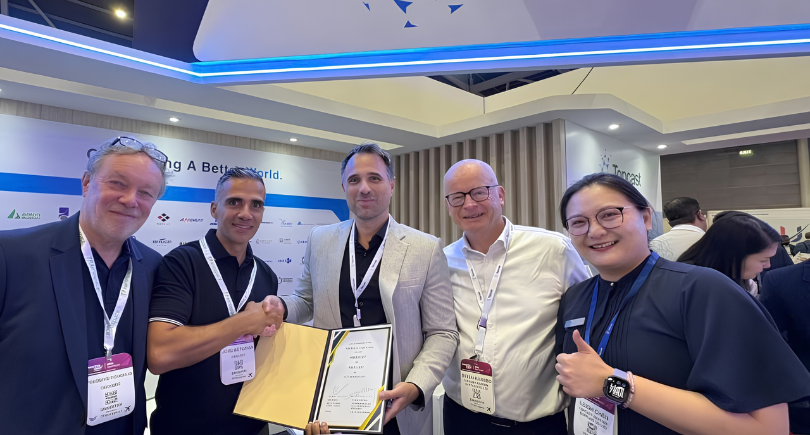
Ans – We are now clearly looking for reliability in what we agree and reliability of the workitself. In the past you could survive without a strong relationship with a particular MRO, now things have shifted. Cyprus Airways has just signed a long-term agreement for base maintenance with Bird Aviation in Cyprus. With this we aim to assure local work remains local (Cyprus for Cyprus) and create the platform for reliability in contracting and aircraft delivery. This agreement is for the A320, expandable to the A220 when Bird Aviation obtains the approvals.
7. Digital technologies, predictive maintenance, and aircraft health monitoring are increasingly transforming airline operations. How is Cyprus Airways leveraging technology to improve fleet reliability, maintenance efficiency, and operational performance?
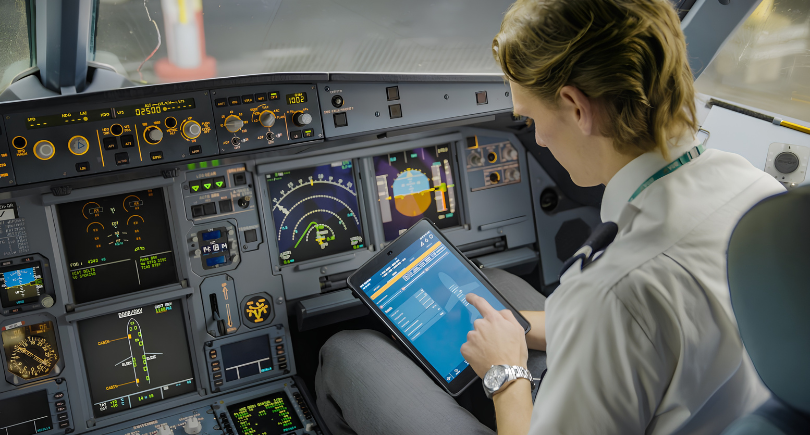
Ans – The digital aircraft commands our transformation in the way we maintain the fleet. Coupled with that, are a new breed of engineers that have studied with the aid of technology (some on-line some with digital tools) and are both familiar and demand the use of technology. Cyprus Airways is in the process of taking the CAMO functions in-house with the adoption of AMOS (one of the best maintenance software/tools available) and with the development of in-house skills within engineering. Our on-time performance in 2025 was 92% (excluding Air Traffic Control delays) which indicates our emphasis in the use of technology for swift troubleshooting and next step assessment.
8. Sustainability is becoming a major priority across aviation. How is Cyprus Airways approaching environmental responsibility, and what role do maintenance practices, fleet efficiency, and operational optimisation play in achieving your sustainability objectives?
Ans – We believe that the clear goal of reducing our footprint must be achieved with any expansion scope and either way! Our A220s and A320 neos both burn less fuel and emit less CO2. This is the starting point. But we couple with a very dynamic flight planning, a weight control program and flight optimisation for direct routes where possible. Separately we have an active recycle program both on the aircraft and at the office.
9. Looking ahead, where do you see the biggest opportunities for Cyprus Airways over the next three to five years, and how important will partnerships, fleet strategy, and operational excellence be in supporting that growth?
Ans – Cyprus Airways position creates a number of opportunities which we intend to capitalize on. Our goal is to extend the season from the current 6 months to an achievable 9. Stakeholders include the hotel community as well as the tourism ministry. Our fleet will grow by two aircraft in 2027 and another two by 2028. While developing internally on all fronts (fleet, routes) we with also develop our technical skills and capabilities with our own CAMO and possibly our own Part 145. But our expansion will also embrace new partnerships (interline and codeshare) with a number of other airlines offering our customers wider options and desired connectivity. 2025 closed with Cyprus Airways achieving 100% completion of all flights (zero cancellations), a very high on-time performance and high technical dispatch reliability. Our aim is to mirror and/or better the metrics for 2026. Our A320 ceo fleet will be refurbished next winter to also provide in seat power and we will be announcing a modified logo soon to further embrace the Cyprus Airways heritage.