


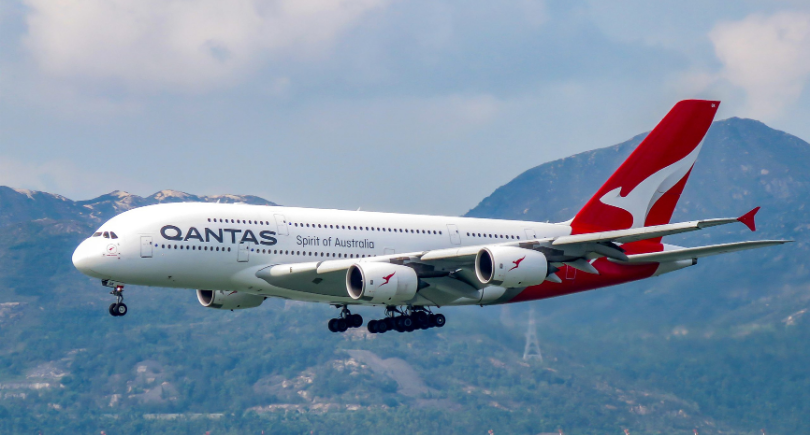

Qantas Airways will begin retiring its fleet of 10 Airbus A380 superjumbos from mid-2028, bringing forward the planned phase-out by four years as rising maintenance costs, supply-chain constraints and the availability of newer aircraft reshape the economics of the fleet.
Qantas International and Freight CEO Cam Wallace told analysts that keeping the A380s in service is becoming increasingly expensive and complex, particularly as the aircraft has been out of production since 2021 and the availability of parts and other supply-chain resources becomes more challenging.
For the Australian carrier, the retirement programme is expected to generate approximately A$300 million ($215 million) in net cash flow benefits between fiscal 2028 and fiscal 2031, primarily through avoided maintenance expenditure.
The decision highlights the growing maintenance and support challenges facing operators of ageing A380 fleets, even as demand for the aircraft remains strong on selected high-capacity international routes.
Rising maintenance costs challenge A380 economics
The Airbus A380 was developed as a high-capacity solution for long-haul markets, with its four-engine configuration and double-deck design enabling airlines to carry hundreds of passengers on high-demand routes.
However, the aircraft’s size, four-engine configuration and complex systems make maintenance significantly more demanding than newer-generation twin-engine widebodies.
With production ending in 2021 after 251 aircraft were delivered, operators are increasingly having to manage an ageing fleet alongside a shrinking production base and a more constrained aftermarket supply chain.
The availability of replacement components, repair capacity and specialised maintenance expertise has become increasingly important for airlines seeking to keep A380s operational.
Qantas’ decision reflects the growing importance of these factors in fleet planning, particularly as airlines compare the cost of maintaining older aircraft with the operating economics and maintenance requirements of newer-generation aircraft.
New-Gen aircraft accelerate fleet transition
The A380’s position in the commercial aviation market has also been affected by the emergence of more fuel-efficient twin-engine widebody aircraft, including the Airbus A350 and Boeing 787.
These aircraft offer airlines greater flexibility in deploying capacity across a wider range of routes while generally providing lower fuel and maintenance costs than large four-engine aircraft.
The challenge for the A380 has been further compounded by the difficulty of consistently filling its large passenger capacity outside the busiest long-haul markets.
The COVID-19 pandemic accelerated this trend, with much of the global A380 fleet grounded as international travel collapsed. Qantas’ aircraft spent more than 500 days grounded during the pandemic, with aircraft placed in long-term storage in California and Abu Dhabi.
Although the A380 has since returned to service with several major airlines, its long-term future remains increasingly concentrated among carriers that can consistently support high-capacity operations.
A shrinking A380 aftermarket
The end of A380 production has created a distinct aftermarket environment.
While Airbus no longer manufactures the aircraft, a significant number of A380s remain active. According to Airbus data, 196 of the 251 A380s delivered remain in service.
This creates continued demand for maintenance, repair, overhaul, component support and parts, but the shrinking global fleet also makes the economics of sustaining dedicated A380 capabilities more challenging.
Airlines and MRO providers must balance the need to maintain specialised A380 expertise against declining fleet numbers.
For suppliers, this could increasingly lead to greater reliance on component repair, used serviceable material, part harvesting and other aftermarket solutions to support operators as the availability of new production parts becomes more constrained.
A380 Fleet continues to contract
Qantas joins a growing list of airlines that have retired or reduced their A380 fleets.
Air France retired its 10 A380s in 2020, bringing forward a phase-out that had originally been planned for 2022. China Southern retired its five aircraft in 2022, while Malaysia Airlines retired its six A380s in 2023.
Other operators, including Thai Airways, Lufthansa, Korean Air, Singapore Airlines and Qatar Airways, have also reduced their A380 fleets in recent years. Qantas’ retirement programme will further reduce the number of aircraft available to the global A380 fleet and is likely to increase the importance of aftermarket support strategies for the remaining operators.
Emirates remains the A380 exception
Despite the broader decline of the A380, Emirates remains the aircraft’s largest operator, with 116 aircraft, representing nearly half of all A380s ever delivered.
Singapore Airlines and British Airways each operate 12 aircraft, while Lufthansa, Qatar Airways and Etihad Airways each operate eight.
Korean Air, Asiana Airlines and All Nippon Airways also continue to operate the aircraft.
Emirates has indicated that it plans to keep its A380 fleet in service into the 2040s, making the airline an important long-term customer for the A380 aftermarket.
For MRO providers and component suppliers, Emirates’ extended A380 operating strategy could help sustain demand for specialised maintenance and component support even as other operators progressively retire their fleets.
Maintenance strategy important
Qantas’ decision underlines how maintenance economics can influence aircraft retirement decisions well before the end of an aircraft’s technical life. For A380 operators, increasingly expensive heavy maintenance events, component availability, specialised tooling and labour requirements can all influence the cost of keeping aircraft in service.
The retirement of Qantas’ A380s could therefore also release serviceable components and parts into the secondary market, potentially providing additional sources of material for other operators.
As the global fleet continues to contract, the A380 aftermarket is likely to become more concentrated around a smaller group of operators and specialist MRO providers.
The aircraft may be moving towards the later stage of its commercial lifecycle, but its aftermarket story is far from over.
With nearly 200 aircraft still in service and major operators such as Emirates planning to fly the type for many more years, the A380 will continue to require specialised maintenance, component repair and parts support.
For Qantas, however, the economics increasingly point in another direction. Beginning in 2028, retiring the superjumbo fleet is expected to reduce maintenance expenditure while allowing the airline to transition towards newer and more efficient aircraft.


