


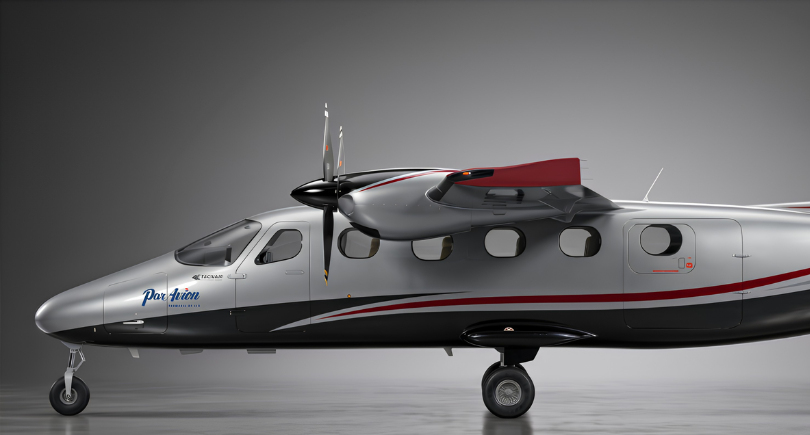

Australia’s Microflite Group has selected two Tecnam P2012 STOL aircraft for its Par Avion tourism operations in Tasmania, with delivery expected shortly.
Announced by Italian aircraft manufacturer Tecnam on 15 October 2026, the order will add short take-off and landing (STOL) capability to Microflite’s operations in the Australian state. The acquisition was facilitated by Hallmarc Aviation, Tecnam’s representative in Australia.
The P2012 STOL is an 11-seat, high-wing, twin-engine aircraft certified in 2024. It holds European Union Aviation Safety Agency (EASA) CS-23 and US Federal Aviation Administration (FAA) certifications for instrument flight rules (IFR) operations.
Its short-field performance is intended to support operations in demanding environments, including remote communities, wilderness areas, and national parks. The aircraft combines this capability with a cabin designed to provide passenger comfort on regional and tourism flights.
The flight deck features Garmin’s G1000 NXi avionics suite and GFC 700 autopilot. The configuration is designed to reduce pilot workload and support single-pilot operations.
For Microflite, the acquisition expands its aircraft options for tourism services and provides a platform suited to destinations requiring short-runway access. The aircraft’s twin-engine configuration and instrument-flight capabilities also support operations in a range of conditions, subject to applicable operating limitations.
Also Read – Vietnam Airlines plans five more A350s under post-2030 widebody expansion
The selection adds another application for the P2012 STOL in regional and specialist air transport. Once delivered, the two aircraft will join Microflite’s operations through its Par Avion business, supporting tourism connectivity across Tasmania.
The two aircraft will support Par Avion’s tourism services, which operate in Tasmania’s remote and scenic locations. The P2012 STOL is designed to access shorter runways, making it suitable for routes serving destinations where airport infrastructure may limit the use of larger aircraft.


