Lockheed Martin has successfully demonstrated an advanced artificial intelligence-enabled anti-submarine warfare (ASW) capability with the US Navy during the Rim of the Pacific (RIMPAC) 2026 exercise, highlighting the growing role of AI in enhancing maritime surveillance and underwater threat detection.
The demonstration centred on SensorMAX™, the company’s AI and machine learning (AI/ML)-powered acoustic analysis system, which is designed to assist naval aircrews by continuously analysing underwater sonar data and identifying potential submarine threats in real time. The technology also incorporates secure over-the-air (OTA) update functionality, enabling operators to retrain and deploy new AI models while missions are underway.
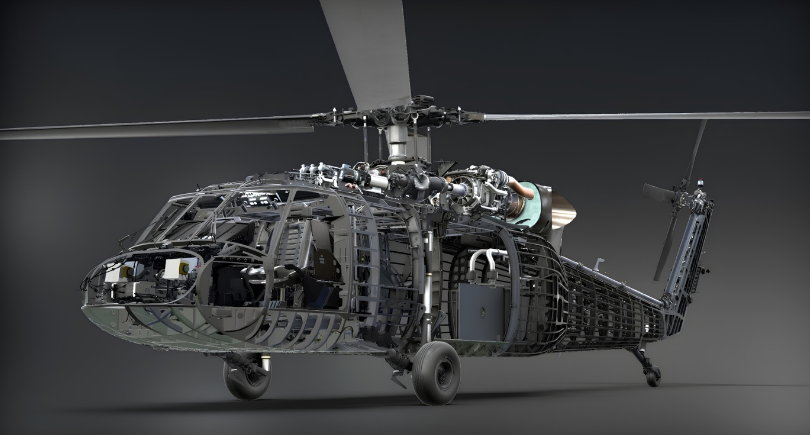
As part of the exercise, two MH-60R Seahawk helicopters carried out ASW missions using sonobuoys to capture underwater acoustic signatures. SensorMAX processed the incoming data stream from the deployed sonobuoys, providing crews with continuous situational awareness while simultaneously transmitting information to a ground station for further analysis.
When new acoustic signatures were detected, ground-based operators labelled the data, retrained the AI model in under five minutes and securely transmitted the updated classifier back to the helicopters through encrypted OTA communications. This rapid feedback loop allows the AI system to evolve throughout the mission without interrupting operations.
According to Lockheed Martin, the system can manage up to eight simultaneous sonobuoy feeds, significantly increasing monitoring capacity compared with conventional sonar processing methods while reducing operator workload and improving target identification.
The successful trial demonstrated how AI-assisted acoustic analysis can accelerate the detection, classification and tracking of underwater threats, supporting the US Navy’s ongoing efforts to integrate advanced digital technologies into future maritime operations and strengthen crewed-uncrewed mission capabilities.
“Today’s battlespace requires the defence industry to accelerate capability delivery and seamlessly integrate commercial technology; at RIMPAC 2026 our mission-focused engineers demonstrated exactly how we are meeting that challenge,” said Devon Rodgers, vice president and general manager, Undersea Mission Systems.
She highlighted, “Lockheed Martin is investing its own resources to mature AI capabilities, blending commercial innovation with our engineering expertise so the Navy has the technology it needs for tomorrow’s battles.”
Designed as a platform-independent solution, SensorMAX can process acoustic information from multiple sensor types, allowing it to be deployed across airborne, maritime and ground-based platforms. The flexibility enables defence operators to leverage a common AI engine regardless of the operating environment.
Also Read – Embraer, OGMA Finish First Hungarian C-390 Service
The system’s ability to receive classifier updates during flight provides aircrews with the latest threat intelligence almost immediately, reducing the time required to respond to emerging submarine threats. The OTA software delivery capability, developed in collaboration with FUSE Inc., also enables rapid deployment of updated AI models and mission software without disrupting operational availability.
Lockheed Martin said the RIMPAC demonstration confirms the potential of AI-driven acoustic intelligence to improve anti-submarine warfare by expanding sensor integration, accelerating decision-making and enhancing the protection of critical naval assets. The company expects the technology to play an increasingly important role as modern navies continue adopting AI-enabled capabilities to improve mission effectiveness and operational readiness.