OEM deliveries prioritised over higher-margin MRO business
Honeywell Aerospace has lowered its 2026 organic sales growth forecast after persistent global supply chain challenges continued to limit production, forcing the company to prioritise deliveries to aircraft manufacturers over its higher-margin aftermarket business.
The aerospace and defence company now expects organic sales growth of 4% to 5% in 2026, down from its earlier guidance of 7% to 9%. It also issued a weaker-than-expected earnings outlook, citing ongoing production constraints, an unfavourable sales mix and higher operational costs.
The revised forecast reflects the continued impact of supply chain bottlenecks that have affected the global aerospace industry over the past several years, despite strong demand from both commercial aviation and defence customers.
Aftermarket demand remains strong
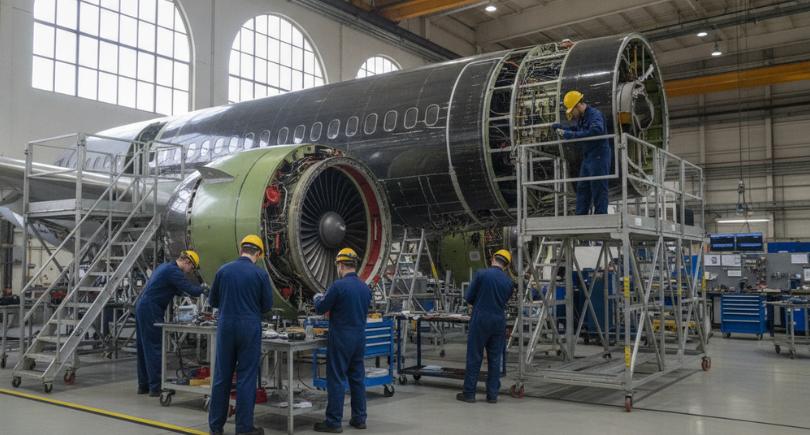
Honeywell Aerospace said demand across its aerospace portfolio remains robust, particularly in the aftermarket, where airlines and MRO providers continue to invest in maintaining ageing fleets amid aircraft delivery delays.
However, the company said limited component availability has forced it to prioritise production for original equipment manufacturers (OEMs), particularly Boeing and Airbus, as both aircraft manufacturers accelerate production to reduce their order backlogs.
Speaking to Reuters, Honeywell Aerospace Chief Financial Officer Josh Jepsen said the issue is not a lack of customer demand but rather the industry’s inability to produce enough components. “Demand continues to be really robust. It’s really a supply challenge,” Jepsen said.
The shift in production priorities means fewer components are available for Honeywell’s aftermarket business, which traditionally generates higher revenue and stronger profit margins than OEM deliveries.
Also Read – TrueNoord marks a decade of growth as it strengthens fleet strategy with E195-E2
Defence priorities affect revenue mix
In addition to supporting commercial aircraft production, Honeywell is also allocating more resources towards domestic defence and space programmes. The company said this strategy has reduced sales from higher-margin international defence contracts, resulting in a less favourable business mix for the second half of the year.
While the move supports key national programmes, it is expected to weigh on profitability in the near term.
CEO admits supply chain recovery is slower than expected
Honeywell Aerospace Chief Executive Officer James Currier acknowledged that the company’s efforts to improve production output have not delivered the expected results.
During the company’s earnings call, Currier said Honeywell had anticipated that supply chain improvements would significantly increase production during 2026. However, that recovery has progressed more slowly than planned. “Our actions thus far just have not been good enough. They have not led to the output inflection that I expected only a few months ago,“ Currier said.
To address these challenges, Honeywell is significantly increasing investment in supply chain resilience through expanded multi-sourcing and in-sourcing initiatives. The company said spending on these programmes will increase fourfold this year as it works to reduce dependence on single suppliers and improve production stability.
Quarterly results miss expectations
Honeywell Aerospace also reported second-quarter financial results that fell short of market expectations. Adjusted earnings per share declined 32% year-on-year to $1.87, while revenue increased 5% to $4.52 billion. Both figures came in below analysts’ estimates.
Although higher sales volumes and pricing supported revenue growth, profitability was affected by increased operating costs, supply chain inefficiencies and an unfavourable business mix.
Among its business segments, Electronic Solutions reported a 3% decline in quarterly profit, while Engines and Power Systems posted a sharp 32% drop. Control Systems was the only major segment to record growth, with profits increasing 8% during the quarter.
Corporate restructuring adds costs
The results also reflect costs associated with Honeywell Aerospace’s recent separation from Honeywell Inc. The company, which began trading independently on the Nasdaq in June following Honeywell’s three-way corporate split, incurred approximately $100 million in one-time separation-related expenses and inventory obsolescence charges during the quarter.
These costs further weighed on overall profitability.
Supply chain pressure
For the global MRO industry, Honeywell’s revised outlook reinforces a challenge that continues to affect airlines, maintenance providers and suppliers alike.
While aftermarket demand remains exceptionally strong, limited availability of engines, components and replacement parts continues to constrain maintenance activity across the industry.
With OEM production remaining a strategic priority for suppliers, MRO providers may continue to face longer lead times for critical components, delaying maintenance events and increasing pressure on fleet availability.
Honeywell’s decision to invest more aggressively in strengthening its supply chain suggests that aerospace suppliers increasingly recognise that improving production resilience will be critical to supporting both aircraft manufacturers and the growing global aftermarket in the years ahead.