
GE Aerospace has agreed to acquire Consolidated Precision Products (CPP) for $11.75 billion, strengthening its access to highly engineered casting capacity as demand rises across commercial engines, aftermarket services and defence.
GE Aerospace has signed an agreement to acquire Consolidated Precision Products (CPP), a major manufacturer of highly engineered castings, from private investment firms Warburg Pincus and Berkshire Partners. The $11.75 billion transaction represents a significant investment in one of the most critical areas of aerospace engine manufacturing and comes as the industry faces strong and simultaneous demand across commercial engine production, aftermarket requirements and defence programmes.
For GE Aerospace, the acquisition is intended to expand manufacturing capacity, improve production performance and support the faster introduction of new engine technologies. The company also expects the transaction to create near- and long-term value for customers and shareholders, with the acquisition expected to be accretive to adjusted earnings per share and free cash flow in its first year.
Investing in critical casting capacity
The acquisition reflects GE Aerospace’s focus on securing capacity in a part of the aerospace manufacturing supply chain that is essential to engine production. Highly engineered castings are used in some of the most demanding areas of aircraft engines, where materials must withstand high temperatures, pressure and mechanical loads.
With commercial engine demand remaining strong while the aftermarket and defence businesses also require additional capacity, GE Aerospace sees casting capability as an important constraint and strategic opportunity.
“Investing in mission-critical casting capacity is needed to support the strong simultaneous demand across commercial engines, aftermarket and defense,” said H. Lawrence Culp, Jr., Chairman and CEO, GE Aerospace.
“By combining GE Aerospace’s technology capabilities and FLIGHT DECK with CPP’s manufacturing experience, we expect to expand capacity, improve performance and accelerate new engine technologies for the current fleet and next-generation platforms,” Culp added.
The move gives GE Aerospace greater control over an important part of its manufacturing ecosystem while adding CPP’s specialised production expertise to the company’s existing technology and manufacturing capabilities.
CPP brings global precision casting expertise
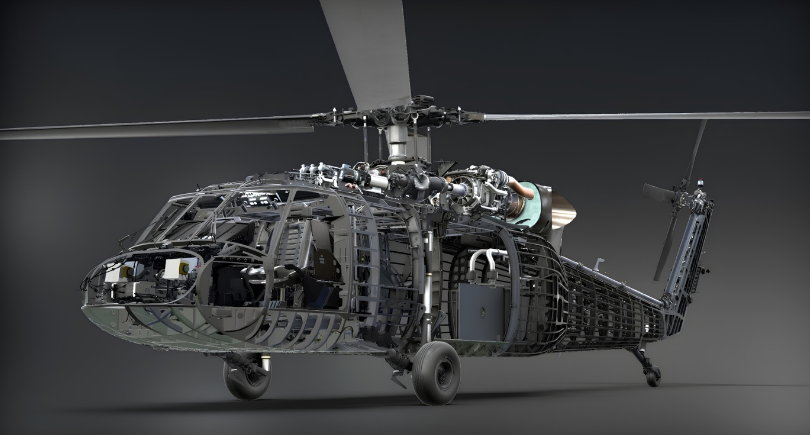
Headquartered in Cleveland, Ohio, CPP manufactures highly engineered castings and sub-assemblies primarily for the commercial aerospace and defence markets. Founded in 1991, the company has developed into one of the world’s largest producers of investment and precision sand castings. Its capabilities span a broad range of materials, including superalloys, titanium, aluminium, magnesium and steel, allowing it to manufacture complex components for commercial and military aircraft, weapon systems, business and regional jets, helicopters and industrial gas turbines.
CPP has approximately 6,600 employees across more than 20 facilities globally, giving GE Aerospace access to a substantial manufacturing footprint and an established workforce with expertise in precision casting.
The relationship between the two companies is also well established. GE Aerospace has been a CPP customer for more than 15 years, meaning the acquisition builds on an existing industrial relationship rather than creating a new connection between the two organisations.
Accelerating engine technology
Beyond adding capacity, GE Aerospace expects the acquisition to create opportunities to integrate design, manufacturing and process improvement more closely. A key component of that strategy will be the application of FLIGHT DECK, GE Aerospace’s digital manufacturing and operations platform, across CPP’s operations. The company expects the platform to help improve manufacturing processes, quality, and production output.
Culp said GE Aerospace will leverage FLIGHT DECK to drive process and quality improvements while integrating design and manufacturing to accelerate the introduction of engine technologies.
“These improvements also will ensure manufacturing readiness to deploy enhanced airfoil technology for a more reliable ramp,” Culp said.
The reference to enhanced airfoil technology is particularly significant from an engine manufacturing perspective. Advanced airfoil components operate in some of the most demanding environments within an engine, making precision casting, material performance and manufacturing consistency critical to engine reliability and durability.
For GE Aerospace, increasing casting capacity while simultaneously improving manufacturing processes could help address both current production requirements and the industrialisation needs of next-generation engine technologies.
Supporting commercial engine demand
The acquisition comes against a backdrop of sustained demand for new commercial aircraft and engines, while airlines and lessors continue to require maintenance and aftermarket support for the existing fleet.
This creates a dual requirement for engine manufacturers: increasing production capacity for new engines while ensuring adequate support for the installed fleet.
Casting capacity plays a role in both areas. New engines require a steady flow of highly engineered cast components, while the aftermarket requires replacement components and parts to support engines throughout their operational lives.
By bringing CPP into GE Aerospace, the company expects to strengthen its ability to respond to this combined demand.
For the MRO sector, the development is particularly relevant because engine aftermarket activity is increasingly being influenced by the size and age of the global installed fleet. As more engines enter service, the requirement for replacement parts, repairs and shop visits grows, placing additional pressure on the aerospace supply chain.
A stronger defence manufacturing position
CPP’s extensive presence in the defence market is another important element of the transaction. The company supplies precision castings for military aircraft and weapon systems, in addition to commercial aerospace applications.
This gives GE Aerospace an opportunity to expand its manufacturing exposure across multiple aerospace segments while leveraging CPP’s existing capabilities and customer relationships.
The combination could also provide manufacturing efficiencies by applying common process improvements, quality systems and digital tools across programmes with different production requirements.
Financially significant transaction
GE Aerospace will pay $11.75 billion to acquire CPP. The transaction will be financed with $7 billion in cash, with the remainder funded through new debt. The purchase price values CPP at approximately 18 times 2027 EBITDA, including expected net synergies. Without those expected synergies, the valuation is approximately 26 times EBITDA.
Despite the scale of the transaction, GE Aerospace expects the acquisition to be accretive to both adjusted EPS and free cash flow in the first year following completion.
The company has also stated that the transaction will not result in any change to its existing capital allocation plans.
The expected financial benefits are based partly on the anticipated operational improvements and synergies that GE Aerospace expects to achieve following the integration of CPP.
CPP sees opportunity for further growth
CPP’s leadership views the acquisition as an opportunity to continue expanding the company’s position in the precision casting market while strengthening its long-standing relationship with GE Aerospace. “GE Aerospace has been a great partner to CPP for many years, and we are excited to further strengthen this long-standing relationship,” said James Stewart, CEO, CPP.
“As we advance our position as an industry leader in castings, GE Aerospace has expressed strong enthusiasm for supporting our continued growth and expanded vision. Together, we look forward to delivering meaningful value and advancing the success of both organizations,” Stewart added.
The acquisition also represents the next stage in a transformation of CPP under its current ownership.
Dan Zamlong, Managing Director, Warburg Pincus, said the company had been transformed through investments in operations, technology, quality systems and talent, while expanding its capabilities across commercial aerospace, defence and power generation.
Blake Gottesman, Managing Director, Berkshire Partners, similarly highlighted the strengthening of CPP’s position in the castings industry during the investment firm’s ownership period.
The transaction is expected to close in the second half of 2027, subject to regulatory approvals and other customary closing conditions.
GE Aerospace and CPP have said they are committed to a disciplined and well-planned integration. The period between announcement and closing will therefore provide time for both organisations to prepare for the operational integration of CPP into GE Aerospace.
For the aerospace manufacturing sector, the integration will be closely watched. The value of the acquisition will ultimately depend not only on the additional casting capacity but also on how effectively GE Aerospace can combine CPP’s manufacturing expertise with its own technology, engineering and digital capabilities.
The planned use of FLIGHT DECK across CPP could become a particularly important part of that process, potentially providing greater visibility into production performance, quality and manufacturing processes.
Implications for the aerospace aftermarket
The acquisition also carries broader implications for the aerospace aftermarket. Supply-chain constraints and limited production capacity have become increasingly important issues for aircraft and engine manufacturers, airlines and MRO providers.
For engine operators, availability of critical components can directly influence maintenance turnaround times and aircraft availability. Any investment that increases production capacity for specialised components could therefore have an impact beyond the new-engine manufacturing environment.
GE Aerospace’s stated objective of supporting both the current fleet and next-generation platforms indicates that the company views CPP’s capabilities as relevant across the entire engine lifecycle.
As the installed commercial fleet continues to grow and engines remain in service for longer periods, maintaining access to critical cast components will remain an important element of aftermarket resilience.
Building capacity for the next gen
The CPP acquisition ultimately represents more than a conventional expansion of GE Aerospace’s manufacturing footprint. It is a strategic investment in a critical component of the aerospace supply chain at a time when manufacturers are being asked to simultaneously increase production, support a growing installed fleet, and develop next-generation technologies.
By combining CPP’s precision casting capabilities with GE Aerospace’s engineering, technology and digital manufacturing expertise, the company aims to increase capacity while improving quality and production efficiency.
The transaction therefore sits at the intersection of engine manufacturing, aftermarket support, defence demand and next-generation propulsion technology.
If completed as planned in the second half of 2027, the $11.75 billion acquisition will significantly expand GE Aerospace’s presence in precision castings and give the company greater influence over a strategically important part of its supply chain.
For an aerospace industry still working to strengthen production and aftermarket resilience, the message behind the deal is clear: capacity is becoming a strategic asset, and GE Aerospace is willing to make a major investment to secure it.