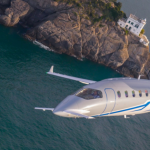
General Atomics Aeronautical Systems (GA-ASI) and Tactical Air Support have demonstrated coordination between an unmanned Collaborative Combat Aircraft (CCA) test aircraft and a manned F-5 Advanced Tiger during a large-force exercise.
The July 21 flight test focused on Infrared Search and Track (IRST) Multi-Ship Ranging (MSR), using passive sensors and autonomous mission systems to enable the two aircraft to share and process target information.
Both aircraft were equipped with GA-ASI’s TacACE (Tactical Autonomy Ecosystem) software, based on the Agile Mission Suite Government Reference Architecture (AMS-GRA). Each aircraft also carried an infrared search-and-track sensor.
The test used a Beyond Line of Sight (BLOS) data link to exchange information between the F-5 and CCA. Target data generated by the F-5 was transmitted to the CCA’s TacACE system, allowing the aircraft to coordinate sensor information and mission actions.
The demonstration also tested interoperability between platforms using AMS-GRA-compatible systems. GA-ASI said the government reference architecture is intended to allow different platforms and systems to operate within a common software and sensor framework.
“With this flight, we moved beyond simply flying an autonomous jet and showed how a manned fighter and an autonomous CCA can work together to find, track, and engage a target using passive sensors and shared autonomy,” said Michael Roberts, Advanced Programs Emerging Technology Director at GA-ASI.
The flight formed part of GA-ASI’s ongoing series of CCA flight tests involving live aircraft, sensors and mission autonomy. The company is using the campaign to evaluate increasingly complex missions and human-machine teaming concepts.
For aircraft maintenance and mission-system support, the integration of autonomous software, infrared sensors, data links and mission computers adds additional requirements for system testing, software updates and interoperability validation.
Also Read – UAC delivers Su-35S fighters to Russian Aerospace Forces
The use of common government reference architectures could also allow mission-system components from different suppliers to be integrated and maintained across multiple aircraft configurations.
The latest test therefore provides further flight-test data on the integration of manned and autonomous aircraft, including sensor fusion, BLOS communications, and mission-system interoperability.