Ten Years On, COMAC’s First Regional Jet Has Become More Than Just an Aircraft Programme
When COMAC’s regional jet entered commercial service with Chengdu Airlines on 28 June 2016, few expected it would eventually become the backbone of China’s regional aviation network. Originally launched as the ARJ21, the aircraft was often viewed as an ambitious programme hindered by years of development delays and certification challenges.
A decade later, the aircraft, now rebranded as the C909, has quietly rewritten that narrative. Today, it represents nearly 70% of China’s regional jet market, operates more than 500 flights every day, serves over 180 cities, and has transported more than 37 million passengers. More importantly, it has laid the operational foundation upon which China is building an entirely indigenous commercial aircraft ecosystem.
For the global MRO industry, however, the story extends far beyond passenger numbers. The C909’s success marks the beginning of an entirely new aftermarket landscape.
From a difficult beginning to a mature regional fleet
The ARJ21 programme was never an easy journey. Originally expected to enter service years earlier, the aircraft experienced multiple certification delays, redesigns and programme revisions before finally joining the fleet of Chengdu Airlines in 2016.
During its early years, many industry observers questioned whether the programme could ever achieve meaningful commercial success. Ten years later, those doubts have largely disappeared. COMAC has now delivered 186 aircraft to more than ten operators, transforming the C909 into China’s dominant regional aircraft and proving that domestic manufacturing can successfully support the country’s rapidly expanding regional aviation market.
The aircraft has evolved from being an experimental national programme into an operational workhorse serving some of China’s busiest regional routes.
Regional aviation
Unlike narrowbody aircraft that primarily connect major metropolitan hubs, the C909 was designed to serve an entirely different mission. With seating for approximately 90 passengers, the aircraft connects secondary cities, remote provinces and underserved regional markets where larger aircraft are often uneconomical.
Its presence has become particularly significant across Xinjiang, Inner Mongolia and Heilongjiang, where around 70 aircraft now operate.
According to COMAC, these aircraft alone have completed more than 200,000 flights, carrying over 10 million passengers across regions where improved air connectivity plays an important role in economic development.
The programme demonstrates how regional aviation continues to expand beyond traditional hub-and-spoke operations, creating sustained demand for smaller, efficient aircraft.
A growing challenge and opportunity for the MRO sector
As aircraft fleets mature, maintenance inevitably becomes the next major phase of the programme. With 186 aircraft already in operation and daily utilisation continuing to rise, the C909 fleet is steadily moving into a period where operators will require increasingly sophisticated maintenance support.
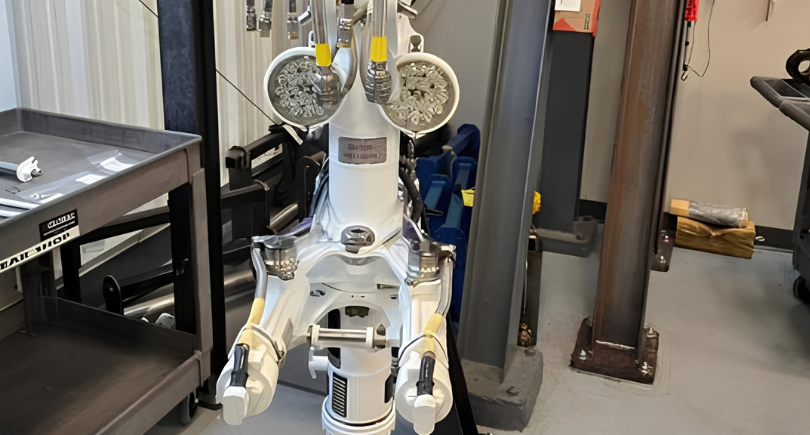
Routine inspections, structural maintenance, landing gear overhauls, avionics upgrades, component repair, engine support and digital maintenance planning will all become more important as fleet age increases. Unlike new aircraft deliveries, which generate one-time manufacturing revenues, aftermarket services continue throughout an aircraft’s operational life.
This is where the C909 programme could become even more significant. A growing fleet naturally creates demand for maintenance infrastructure, spare parts logistics, repair stations, engineering services, technical publications, simulator training and certified maintenance personnel. For China’s aviation industry, developing these capabilities domestically is just as important as manufacturing the aircraft itself.
Building an Indigenous aftermarket ecosystem
One of COMAC’s long-term strategic objectives extends beyond aircraft production. The company is gradually creating an integrated commercial aviation ecosystem that includes manufacturing, training, maintenance, engineering support and lifecycle services.
This mirrors the approach taken by established global manufacturers, where aftermarket services generate substantial long-term revenue while ensuring continued customer support. As additional C909s enter service alongside the expanding C919 fleet and eventually the C929, China will need a comprehensive network of maintenance facilities capable of supporting indigenous aircraft both domestically and internationally.
The development of this ecosystem will require significant investment in MRO infrastructure, workforce development, digital maintenance systems and supply-chain resilience.
Expanding beyond passenger operations
Another important aspect of the programme is its diversification. COMAC has already introduced specialised variants of the C909 for cargo operations, business aviation, medical transport and emergency command missions.
Each variant brings its own maintenance requirements. Cargo aircraft, for example, experience different utilisation patterns and structural loading compared with passenger aircraft, while medical and government aircraft often require specialised equipment maintenance and certification. This diversification expands the aircraft’s long-term aftermarket potential well beyond commercial passenger services.
International expansion brings new maintenance requirements.s
Although China remains the aircraft’s largest market, the C909 is gradually establishing an international presence. The aircraft now operates with airlines in Indonesia, Laos and Vietnam, serving 25 international routes connecting 28 cities. As overseas operators increase, COMAC will face new challenges.
International customers expect comprehensive maintenance support, reliable spare parts availability, technical training, engineering assistance and rapid component repair. Meeting these expectations will require COMAC to expand its global MRO footprint, establish regional support centres and strengthen partnerships with maintenance providers outside China.
For any aircraft manufacturer seeking long-term global success, a strong aftermarket network is as important as the aircraft itself.
The bigger picture
The C909’s tenth anniversary represents far more than an operational milestone. It demonstrates that China has successfully transitioned from developing its first indigenous regional jet to operating a mature commercial fleet that is increasingly supported by a growing domestic aerospace ecosystem.
For the MRO industry, this evolution signals the emergence of a new aftermarket segment that will continue expanding as COMAC delivers more aircraft, enters new international markets, and broadens its product portfolio.
While much of the global aviation industry has focused on the rise of the C919, the C909 may ultimately prove just as significant—not because of its size, but because it has become the proving ground for China’s long-term aircraft support, maintenance, and lifecycle management capabilities.
As the fleet enters its second decade of service, the real story may no longer be about how many aircraft COMAC builds, but about how effectively it supports them throughout their operational lives. For MRO providers, suppliers and operators alike, that journey is only just beginning.