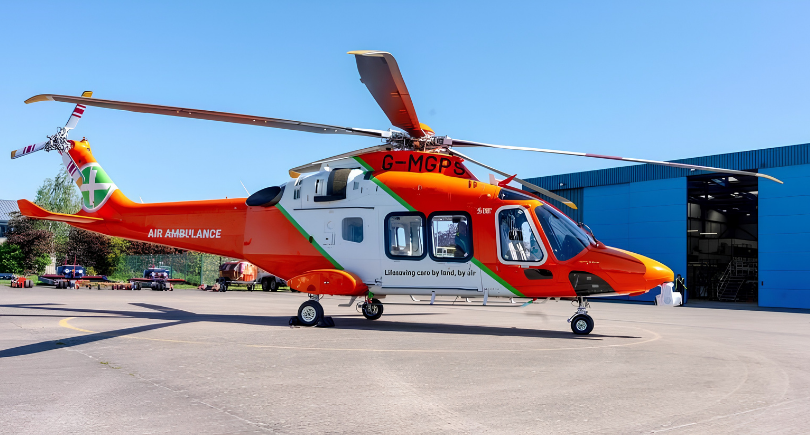

EuroNav 5 is scheduled to become obsolete in 2027, requiring operators of helicopters used for HEMS, police aviation, search and rescue (SAR) and other special missions to consider replacement options.
The transition involves more than replacing an ageing navigation display. Operators must assess avionics integration, sensor interfaces, certification requirements, wiring modifications, aircraft downtime and compatibility with existing mission equipment.
EuroNav 5 Supportability
EuroNav 5 systems remain installed on a range of helicopter configurations. However, as the equipment approaches obsolescence, operators may face increasing difficulties with replacement hardware, component availability, software support and integration with newer systems.
Other considerations include support for modern data formats, processing requirements and compatibility with newer sensors and avionics.
Obsolescence does not by itself mean that an existing installation is unsafe or non-compliant. Operators must instead consider continued support, spare-parts availability and the time required to develop, certify and install a replacement system.
Scheduling the work alongside planned maintenance can help reduce additional aircraft downtime and provide time to assess each aircraft’s existing configuration.
EuroNav 7 Replacement
EuroNav 7 is one potential replacement for EuroNav 5. The system combines moving-map, geographic information system (GIS), and mission-management functions.
Its capabilities include 2D and 3D mapping, terrain and obstacle information, airspace warnings, traffic and radar overlays, and multiple operational data sources. Raster, vector, terrain, and satellite imagery can also be combined with mission-specific information.
The system can interface with aircraft avionics, sensors and communications equipment, subject to the approved aircraft configuration.
For HEMS operations, these functions can be used to display incident coordinates, landing sites, hospitals, helipads and other mission information. Police and SAR operators can use the system for mission targets, search patterns and sensor data.
Potential interfaces include traffic systems, weather radar, electro-optical sensors, flight management systems and communications equipment.
Integration and Certification
The requirements for replacing EuroNav 5 will depend on the aircraft’s existing avionics and mission-system configuration. Helicopters such as the Leonardo AW109 and AW169, and Airbus Helicopters EC135 and EC145, can have different cockpit layouts, displays, sensors, mission consoles and wiring arrangements.
As a result, the replacement may require aircraft-specific engineering and certification work. Operators need to determine which existing interfaces can be retained, which require modification, and how the new system will interact with other onboard equipment.
EuroNav 7 is certified to ETSO-C165a and ETSO-C194. Its software and hardware development are based on RTCA/DO-178B Level C and RTCA/DO-254 Level C, respectively, while environmental qualification is based on RTCA/DO-160F.
Where the mission system interfaces with other avionics or special-mission equipment, these certification and integration requirements form an important part of the modification programme.
Also Read – Transport Canada certifies Airbus helicopters H175 for Canadian operations
Managing Aircraft Downtime
Mission helicopters used for emergency response, police aviation and SAR can have high utilisation rates, making aircraft availability an important consideration during avionics modifications.
Planning the EuroNav 5 replacement before the system reaches full obsolescence gives operators more time to assess aircraft configurations, complete engineering work, obtain the required approvals and coordinate installation with scheduled maintenance.
For fleets with different aircraft configurations, operators may also need to develop separate installation and certification requirements for individual aircraft or groups of aircraft.
Maintaining Mission-System Support
The EuroNav 5 transition reflects a wider issue for operators of ageing helicopter avionics. As aircraft remain in service for longer periods, older displays, processors, databases and system interfaces can become increasingly difficult to maintain and support.
Replacing an obsolete mission system therefore requires consideration of both current operational requirements and the aircraft’s remaining service life. Operators must assess whether the replacement can continue to support existing sensors and communications equipment while allowing for future avionics changes.
For UK special-mission helicopter operators, the EuroNav 5 obsolescence deadline provides a defined point for reviewing existing mission-system installations and planning the required engineering, certification and maintenance work.