
For an aircraft manufacturer, safety does not begin when an aircraft takes off. It begins much earlier on the production line, during inspection, in the maintenance and quality records, and in every decision made before an aircraft is handed over to an airline.
That is what makes Boeing’s latest regulatory case worth looking beyond the headline number.
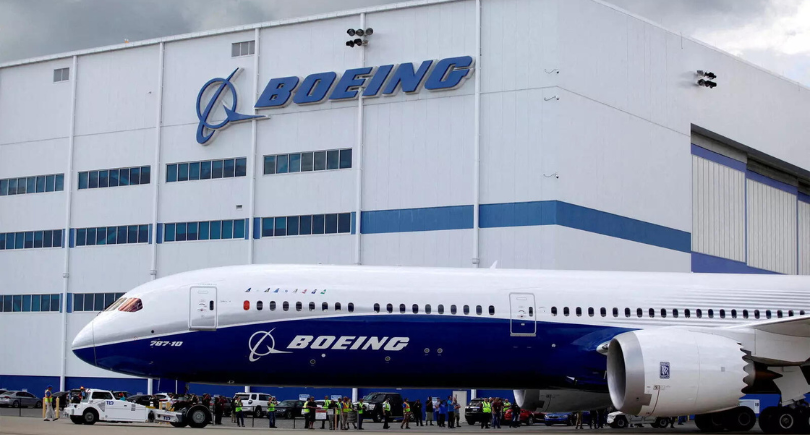
Boeing paid a $3,139,319 civil penalty to the US Federal Aviation Administration (FAA) in January 2026 after the regulator identified hundreds of safety and quality-system violations. The FAA confirmed the payment only on September 2, after Reuters asked about the settlement. Boeing separately confirmed that it had paid the fine.
The violations are particularly significant because they were not limited to paperwork or isolated production errors. The FAA found quality-system violations at Boeing’s 737 final assembly facility in Renton, Washington, and at Spirit AeroSystems’ 737 fuselage facility in Wichita, Kansas.
More seriously, the regulator said Boeing presented two aircraft that were not airworthy for FAA certification and found that a Boeing employee pressured an FAA-authorised employee to approve a 737 MAX even after that inspector had determined that the aircraft did not meet applicable standards.
For the MRO and wider aviation industry, this raises a fundamental question:
What happens when production pressure begins to compete with the independent safety checks designed to stop an aircraft from moving forward?
The fine is only part of the story
At first glance, $3.1 million may appear to be a substantial penalty. But the bigger issue is what the FAA’s investigation found and what those findings say about aircraft quality assurance.
The violations occurred between September 2023 and February 2024, a period that included the January 5, 2024, Alaska Airlines 737 MAX 9 incident in which a door plug separated from the aircraft during flight. The FAA’s investigation identified hundreds of quality-system violations across Boeing and its 737-fuselage supplier. The findings covered manufacturing processes and controls that are fundamental to ensuring that an aircraft is correctly built, inspected, and released.
In aviation, these systems exist for a reason. An aircraft can have an advanced engine, modern avionics and sophisticated flight-control systems, but if a basic manufacturing or inspection process fails, the consequences can be serious.
The Boeing case demonstrates how a seemingly small production issue can eventually become an airworthiness concern.
The Alaska Airlines incident changed the conversation
The January 2024 Alaska Airlines 737 MAX 9 incident brought Boeing‘s production-quality systems under intense scrutiny. The aircraft lost a mid-cabin door plug shortly after takeoff. The incident did not result in fatalities, but it exposed weaknesses in the processes used to ensure that critical components were correctly installed and documented.
The FAA subsequently grounded 171 Boeing 737-9 MAX aircraft and increased its oversight of Boeing’s production operations. The agency also halted Boeing’s ability to expand 737 MAX production while it examined the company’s quality-control systems.
For MRO professionals, documentation, inspection, and configuration control are not administrative exercises. They are part of the aircraft’s safety system. If a component is removed during rework, there must be a clear record of what was removed, why it was removed, what work was performed, and what was subsequently inspected and restored.
The aircraft’s physical condition and its technical records must tell the same story.
When the inspector says no
Perhaps the most concerning element of the FAA findings is not a manufacturing defect but the issue surrounding inspection independence. The FAA said a Boeing employee who was not part of the company’s FAA-authorised inspection organisation pressured an FAA-authorised employee to approve a 737 MAX for delivery, even though that inspector had determined that the aircraft did not comply with applicable standards.
This is important because the FAA’s Organization Designation Authorization (ODA) system allows qualified company employees to perform specific certification functions on behalf of the regulator.
The system works only when those individuals can make independent safety decisions.
If an inspector can identify a problem and stop an aircraft from being released, that decision must be respected regardless of production schedules, delivery targets, or commercial pressure. In other words, an aircraft should never become airworthy simply because the delivery deadline is approaching. That principle extends well beyond Boeing.
It is relevant to every airline, MRO organisation, OEM, supplier and regulatory authority operating within the global aviation system.
Quality control is an MRO issue
It would be easy to see the Boeing case purely as an aircraft manufacturing story. But quality does not stop when an aircraft leaves the factory. The same principles continue throughout its operational life.
MRO organisations depend heavily on accurate aircraft records, component traceability, maintenance documentation, inspection findings and configuration control. A technician must be able to trust the information available about an aircraft before carrying out maintenance. If documentation is incomplete, incorrect, or overridden, the risk can travel through the maintenance chain. This is why the Boeing case is relevant to the MRO community.
Aviation maintenance is built around a simple principle: do the work correctly, record it correctly and independently verify it where required. The system becomes vulnerable when any one of those three steps is weakened.
Production pressure vs safety pressure
Aircraft manufacturers operate under enormous pressure. Airlines are waiting for deliveries. Customers are planning fleet expansion. Production lines have ambitious monthly targets. Suppliers are expected to deliver components on time. Delays can have financial and operational consequences across the aviation ecosystem.
But aircraft production cannot be treated like an ordinary manufacturing process. A delayed aircraft can eventually be delivered. An aircraft released without completing the required safety checks can create a much more serious problem.
The FAA’s finding that an employee pressured an authorised inspector to approve an aircraft to meet a delivery schedule therefore deserves particular attention. It shows why aviation companies need strong internal systems that allow employees to stop work when something is wrong without fearing commercial or managerial consequences.
The Alaska Airlines incident exposed the cost of weak documentation
The 737 MAX 9 door-plug incident also highlighted another important lesson: a missing record can become a safety problem. The National Transportation Safety Board found that four bolts designed to prevent the door plug from moving vertically were missing when the aircraft was delivered. The bolts had been removed during rework to address damaged rivets, but Boeing’s quality system did not contain documentation confirming that they had been reinstalled.
The NTSB later described the accident as resulting from multiple system failures, including inadequate training, oversight and documentation.
For MRO professionals, this is perhaps one of the clearest takeaways from the entire episode. Maintenance and production records are not simply there to satisfy an auditor.
They provide the history of an aircraft. They tell the next engineer, technician, inspector or regulator what has happened to a component and what work has been completed. When that history is incomplete, the safety chain becomes weaker.
FAA oversight has changed
The FAA responded to the MAX 9 incident with a much more intensive oversight approach.
The agency increased the presence of its inspectors at Boeing and Spirit AeroSystems facilities and required Boeing to develop a comprehensive action plan addressing systemic quality-control issues.
The regulator also restricted Boeing’s ability to expand production while corrective actions were being assessed. The message was clear; production rates would not be allowed to move ahead of demonstrated quality performance.
Boeing has since made progress in its recovery efforts, and the FAA has gradually restored certain certification authorities after reviewing improvements in Boeing’s production quality. But the latest fine shows that the consequences of the earlier failures are still being worked through.
Is the fine enough?
This is where the story becomes more complicated. The FAA proposed the $3.1 million penalty in September 2025 and Boeing ultimately paid the full amount in January 2026. The FAA’s original enforcement announcement described the penalty as covering hundreds of quality-system violations, the presentation of two unairworthy aircraft for certification and interference with an FAA-authorised employee. The financial penalty is therefore only one part of the regulatory response.
The more important question is whether the corrective actions that follow can create lasting changes in manufacturing culture. A fine can punish a company after a violation. A strong quality system is supposed to prevent the violation from happening in the first place. For aviation, the second objective is far more important.
The Eight-Month Disclosure Gap
Another aspect of the case deserves attention: the timing of the public disclosure. Boeing paid the fine in January 2026, but neither Boeing nor the FAA publicly announced the payment at the time. The settlement became public only after Reuters asked the FAA about it in September. From an industry perspective, transparency matters because aviation safety depends heavily on public confidence.
Regulatory enforcement is not only about imposing penalties. It is also about demonstrating that safety findings have been addressed and that accountability continues after an investigation is completed.
The fact that the payment remained undisclosed for months therefore adds another layer to an already closely watched case.
Build quality into every step
The Boeing case ultimately brings the conversation back to something the MRO industry has understood for decades: airworthiness is built through thousands of individual decisions. It is built when a technician follows a procedure, when an inspector refuses to sign off an aircraft that does not meet the required standard, when a removed component is properly documented, when a quality manager has the authority to stop a process, and when production targets never become more important than safety requirements.
The aviation industry is becoming increasingly digital, automated and data-driven. Aircraft manufacturing and maintenance are also becoming more integrated, with digital records, predictive analytics, connected systems and increasingly sophisticated quality tools.
But technology cannot replace the fundamental principles of aviation safety. A digital record is useful only if the work behind it is correct. An inspection system is useful only if inspectors can remain independent. A quality procedure is useful only if employees are empowered to follow it.
For OEMs, suppliers and MRO providers, Boeing’s experience offers a wider warning.
Quality cannot be treated as a department. It has to be part of the entire organisation. Production teams, engineering, maintenance, quality, supply chain and management must operate around the same safety objectives. There also needs to be a culture in which employees can raise concerns without being pushed to compromise a technical decision.
The modern aviation industry is under pressure to produce aircraft faster, return aircraft to service sooner and keep fleets available. But speed and safety cannot be competing objectives. The real measure of an efficient aviation operation is not simply how quickly an aircraft moves through a production or maintenance facility.
It is how efficiently the organisation can deliver a safe, compliant and properly documented aircraft.
Conclusion
The $3.1 million Boeing fine may eventually disappear from the headlines, but the lessons from the FAA findings should not. For the MRO industry, the most important message is simple: quality systems are part of the aircraft, even when they cannot be seen.
A missing bolt, an incomplete record, an unchecked rework item or an inspection decision influenced by production pressure can all become part of an aircraft’s safety story.
As global aviation moves towards higher production rates and greater fleet utilisation, the pressure on manufacturers, suppliers and MRO organisations will only increase.
That makes independent inspection, robust documentation, traceability and a strong safety culture more important, not less. Because when it comes to aviation, the most important sign-off is not the one that gets an aircraft out of the factory fastest. It is the one that says the aircraft is ready to fly safely.