Asia-Pacific expected to account for 45% of global aircraft deliveries over the next two decades as India’s domestic aviation market growth forecast rises to 9.3%
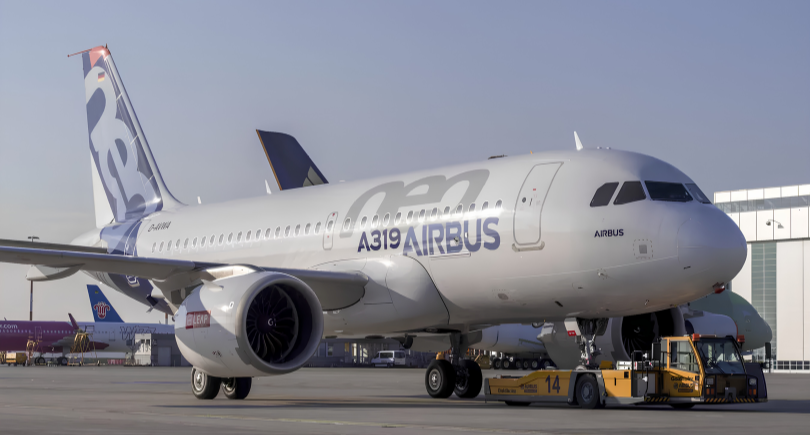
Airbus continues to see strong demand for new aircraft and no significant softening in customer readiness to take deliveries despite ongoing geopolitical and supply-chain challenges, according to Anand Stanley, President, Airbus Asia-Pacific.
Speaking at a briefing in Hong Kong on Airbus’ 2026-2045 Global Market Forecast, Stanley said airlines across the region remain ready to accept new aircraft, with deliveries continuing to increase across Asia-Pacific and other markets including the Middle East.
Airbus deliveries have increased by 9% so far in 2026 compared with the same period in 2025, Stanley said, underscoring the continued momentum in the commercial aviation market despite constraints affecting the wider aerospace supply chain.
Asia-Pacific set for nearly half of global demand
Airbus forecasts that approximately 42,000 new aircraft will be required globally over the next 20 years, with around 45% of those aircraft expected to be delivered to the Asia-Pacific region.
The forecast reinforces the region’s position as the largest long-term growth market for commercial aviation, driven by expanding passenger traffic, fleet renewal and the emergence of new city pairs.
Within the region, however, growth is expected to vary considerably between individual markets.
Airbus expects overall Asia-Pacific traffic to grow at an average annual rate of 5.1% over the next two decades.
India strengthens its growth position
India continues to stand out as one of the fastest-growing aviation markets globally. Airbus has increased its forecast for India’s domestic traffic growth to 9.3% annually, up from its previous estimate of 8.9%.
The country is expected to require approximately 3,480 new passenger aircraft over the next 20 years, reflecting the rapid expansion of domestic air travel, fleet growth and the development of new routes.
For airlines and the wider aviation ecosystem, such fleet expansion will translate into significant requirements for MRO capacity, engine and component support, spare parts, technical manpower and aircraft lifecycle services.
India’s projected fleet growth also comes as the country develops new airports and expands its aviation infrastructure, creating additional opportunities across the commercial aviation value chain.
China faces significant fleet renewal requirement
China remains the single largest commercial aircraft market in Airbus’ forecast, with the country expected to require approximately 8,830 new passenger aircraft over the next 20 years. However, the recovery of Chinese fleet deliveries has been slower than pre-pandemic levels.
According to Francois Cabaret, Airbus Head of Global Market Forecast, Chinese airlines were receiving around 400 aircraft a year before the COVID-19 pandemic. Combined deliveries from Airbus, Boeing and China’s COMAC have since fallen to less than half that level.
Cabaret said the revision to China’s traffic growth outlook reflects macroeconomic conditions rather than structural overcapacity in the market.
Airbus has lowered its forecast for Chinese traffic growth to 4.7% annually, from the previous estimate of 5.4%.
The remaining Asia-Pacific markets are expected to require another 6,880-passenger aircraft over the next 20 years.
Smaller cities to drive new aviation demand
Airbus also highlighted a broader structural change in global aviation demand, with urbanisation increasingly spreading towards smaller and secondary cities.
The company expects around 600 new small and medium-sized cities to emerge globally over the next 20 years.
The development of these cities could generate demand for new airport infrastructure, additional routes and aircraft capable of economically connecting smaller markets.
For airlines, this could create opportunities to develop networks beyond traditional major-city hubs. For MRO providers, meanwhile, greater fleet distribution could increase demand for maintenance and technical support closer to secondary operating bases.
A220 and A321XLR open new route opportunities
Aircraft technology is also expected to influence how the Asia-Pacific market develops. According to Stanley, Airbus’ A220 has already enabled more than 400 new routes globally and could potentially unlock another 800 city pairs across Asia-Pacific.
The aircraft’s economics and capacity make it suitable for connecting markets that may not generate sufficient demand for larger narrow-body or wide-body aircraft.
The A321XLR, meanwhile, could potentially open more than 2,200 new routes in Asia-Pacific, according to Airbus.
With long-range capability approaching that traditionally associated with larger aircraft, the A321XLR gives airlines the ability to operate longer routes with a single-aisle platform.
This could have implications for fleet planning and, consequently, the MRO sector as airlines deploys new aircraft types across an increasingly diverse network.
Growing fleets point to expanding aftermarket demand
The scale of Airbus’ forecast has implications well beyond aircraft manufacturing. An additional 42,000 aircraft globally over two decades represents a substantial future requirement for maintenance, repair and overhaul services throughout the aircraft lifecycle.
For Asia-Pacific, where almost half of global new aircraft demand is expected to be concentrated, MRO providers will need to expand alongside fleet growth.
This includes additional airframe maintenance capacity, engine MRO, component repair, parts distribution, predictive maintenance, technical training and digital fleet-support capabilities.
The growth of smaller city networks could also change where maintenance infrastructure is required, while the expansion of aircraft such as the A220 and A321XLR will create new fleet-support requirements as operators introduce these aircraft into markets where they were previously less common.
Conclusion
Airbus‘ latest forecast suggests that the commercial aviation industry’s long-term growth trajectory remains intact despite near-term geopolitical and supply-chain pressures. Asia-Pacific will remain at the centre of that growth, with India emerging as one of the region’s most dynamic markets.
For the MRO industry, the significance is clear: every new aircraft eventually becomes an aftermarket asset. The projected expansion of fleets across India, China and the wider Asia-Pacific region will therefore drive sustained demand for maintenance capacity, skilled personnel, components, engines and increasingly data-driven lifecycle support.
With India alone projected to require 3,480 new passenger aircraft, the country’s rapidly expanding fleet could become an increasingly important market not only for aircraft manufacturers and airlines, but also for global MRO providers and aftermarket companies.